

PROTECT YOUR DNA WITH QUANTUM TECHNOLOGY
Orgo-Life the new way to the future Advertising by Adpathway 
The most important attributes of a winter camping and backpacking sleeping bag are warm insulation, compressibility, low weight, and ample interior space to store gear and water so it doesn't freeze overnight. Cost also matters, but a good winter sleeping bag can last 15 years or more with proper maintenance and storage. For winter backpacking and other mobile pursuits such as backcountry skiing and ski mountaineering, we recommend a down-insulated winter sleeping bag because it packs down much smaller and weighs much less.
Here are our top 10 recommended down-filled winter sleeping bags for cold-weather camping and backpacking. For more information and answers to common questions, see our evaluation criteria and buying advice below.
We think the best bang for your buck is a 0-degree sleeping bag, since you can boost its warmth with a low-cost sleeping bag liner like the Sea-to-Summit Reactor if you need to sleep in colder temperatures. But a -20 or -40 bag is also a good bet if you're a cold sleeper or determined to sleep in more extreme conditions. Women should subtract 10 degrees from a bag's rating to better match its warmth, since temperature ratings are for men and women, on average, are smaller and generate less body heat.
1. Sea-to-Summit Spark 0 Down Sleeping Bag

The Sea-to-Summit Spark 0 is insulated with 850+ fill power goose down treated with a non-PFAS Ultra-Dry Down treatment. The Spark is constructed with a technical hood and zipper draft tube to retain warmth. Comfort comes from a super-breathable 10 Denier liner fabric, while a 10D shell with a non-PFAS DWR, a highly water-repellent hood, and footbox fabric shed wind and condensation. Weighing just 2 lbs 7.3 oz, the Spark 0 is box-baffled for maximum heat retention.
2. Therm-a-Rest Parsec 0 Sleeping Bag

The Therm-a-Rest Parsec 0 Sleeping Bag features lightweight, soft, and durable 100% recycled shell and liner fabrics, along with warm, compressible 900-fill-power hydrophobic down. Its box-baffled design, extra insulated foot warmer pocket, cinchable hood, and draft tubes help retain heat while keeping the bag comfortable and packable. Additional features include a YKK antisnag zipper, quilt and blanket loops, and an internal stash pocket.
3. NEMO Sonic 0 Down Sleeping Bag

The NEMO Sonic 0 is a mummy-style sleeping bag insulated with 800 fill power water-resistant down. It has a highly adjustable draft collar that encircles your neck and shoulders as well as a zipper draft tube to seal in warmth. The Sonic 0 has innovative Thermo-Gills (see picture) that let you release up to 20 degrees of warmth so you can regulate your temperature without cracking open the zipper and introducing cold drafts. We really like the fact that its range includes warmer springtime or autumn use with that feature. Unisex. Read the SectionHiker review.
4. Argali Alpine 0 Sleeping Bag

The Argali Alpine 0 is a super warm zero-degree sleeping bag insulated with 850 fill power goose down that's optimized for cold-weather camping and backpacking. Designed for people with broad shoulders and wide hips, the Alpine 0 is incredibly warm and features an overstuffed neck baffle, overstuffed draft tubes, a two-way, anti-snag zipper, and an ultralight Pertex Quantum fabric shell. Read the SectionHiker Review.
5. Western Mountaineering Kodiak 0 Down Sleeping Bag

The Western Mountaineering Kodiak 0 is a spacious mummy sleeping bag insulated with 850 fill power goose down. Designed for large folks up to 7′ in height (multiple lengths are available), it has 66″ of shoulder girth and 7″ of loft, to keep you comfortable and toasty. The Kodiak has a 3-dimensionally cut draft collar, zipper draft tube, and continuous baffles. These let you shake the down to where it's needed most (for example to your chest or on top of your feet) and help you configure the insulating power to satisfy your individual needs. Unisex.
6. Feathered Friends Snowbunting ES 0 Sleeping Bag

The Feathered Friends Snowbunting ES 0 is a mummy-shaped sleeping bag insulated with ultralight and ultra-warm 900 fill power goose down. It has a generously sized draft collar, draft tube, with an overlapping zipper-guard that prevents snags. The shell is made with Pertex Shield EX water-resistant/breathable laminate, which is fully waterproof and windproof, making it good for use in snow caves and bivy sacks. The flexibility of continuous baffles allows the Snowbunting to also transition into the warmer months. Men's. For women, see the Feathered Friends Murre ES 0 Bag.
7. Mountain Hardwear Phantom 0 Down Sleeping Bag

The Mountain Hardwear Phantom 0 is an 850 fill power sleeping bag made with ultralight materials to shed as much weight as possible while still providing superior performance. It uses a combination of multi-directional baffles to keep down from shifting when you get in and out of your bag frequently, along with a huge draft collar and draft tube to keep heat from escaping when you move around at night. The Phantom 0 has a special four-chamber hood that maintains loft around your head for consistent warmth along with a two-way zipper that allows for easy ventilation when you want to blow off a little steam. Unisex.
8. Therm-a-Rest Polar Ranger -20

The Therm-a-Rest Polar Ranger -20 is a masterpiece of sleeping bag engineering. It has a snorkel hood that prevents warm breath from soaking the hood and side arm holes that double as vents for thermal regulation. It's insulated with water-resistant down, a nice-to-have for cold-weather camping where moisture is bound to accumulate in your bag and reduce its loft. The center snag-free zipper means you don't have to pick sides in a tent and is heavily insulated with draft tubes to maintain warmth. Lightweight straps prevent the sleeping pad from rolling off, and connectors let you drape quilts or blankets over the bag to add warmth.
9. Western Mountaineering Puma MF -25

The Western Mountaineering Puma -25 is an 850 fill power down sleeping bag with a highly breathable microfiber shell that has superior breathability while being extremely water resistant. It features a full-length side zipper, two densely packed interlocking draft tubes, and a full-size down-filled collar to prevent heat loss around your neck and shoulders. VBlock side baffles prevent down shift, which is important in a sleeping bag with this much loft, while a 64″ shoulder girth provides plenty of room for layering, gear storage, and comfort during those long winter nights. Read the SectionHiker Review.
10. Feather Friends Snow Goose ES -40
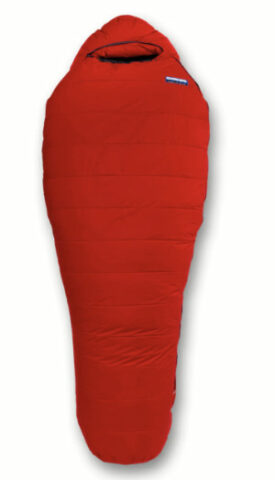
The Feathered Friends Snow Goose ES -40 is a premier expedition sleeping bag designed for high-altitude mountaineering. It has an efficient contoured shape that keeps full loft of the 900+ fill down around the head for maximum warmth with a 15d Pertex Shield water-resistant shell. The bag has a #5 YKK two-way zipper with locking sliders and a generous draft tube, including overlapping dual-webbing zip guard guides to keep the shell fabric away from the zipper. Side-block baffles maintain a 60:40 top to bottom insulation distribution and prevent downshift, while a permanent collar with waterproof facing prevents breath condensation from entering the bag. Unisex.
Winter Sleeping Bag FAQs
Mummy Sleeping Bag or Quilt?
A mummy sleeping bag is warmer and more comfortable than an ultralight down quilt under 20 degrees Fahrenheit. While quilts are popular for warm weather use, mummy bags are far less drafty when the mercury drops below 20 degrees. They also provide a warm overnight space where you can keep water, filters, and footwear overnight to prevent them from freezing. This is harder with an ultralight quilt, which is usually shorter and narrower to save weight. Sleeping in temperatures below freezing definitely changes your behavior and requires a different skill set and gear list than regular three-season camping or backpacking in warmer weather.
Down vs. Synthetic Insulation
Down insulation is more compressible and warmer by weight than synthetic insulation. How much warmer? The best synthetic insulation is only equivalent to 600 fill power down. What about moisture accumulation inside the bag? If you're just going out for one night or a few nights in zero-degree weather, you're unlikely to perspire enough to significantly reduce the insulation value of a down bag. It's a very different story if you're on an expedition where you're sleeping out in -40 degree weather every night for weeks on end. Even then, most mountaineering guides and explorers still opt for down-filled sleeping bags over synthetic ones because they're warmer, pack much smaller, and weigh much less to carry. You can also dry out a sleeping bag during a trip in the sun to rid of it any extra moisture. People do it all the time.
Waterproof Down vs Non-Waterproof Down
There's no such thing as waterproof down. While so-called down waterproofing treatments allow down to dry faster if it gets damp from perspiration, most premium sleeping bag makers won't use it because it reduces the perceived insulation value of 800, 850, 900, and 950 fill power goose down.
Temperature Rating
What is the best sleeping bag temperature rating to get for winter backpacking? While regional differences exist, a zero-degree sleeping bag is usually a good baseline because you can easily make it warmer by 20 degrees with insulated clothes or a sleeping bag liner, which can save you a chunk of money. You can also use a zero-degree bag in warmer temps up to about 20-30 degrees by cracking open the zipper, loosening the hood, or venting it if you're too warm. The weight and packability of a zero-degree sleeping bag are also pretty reasonable compared to a minus 20-degree or minus 40-degree bag, and it usually doesn't require a larger backpack to carry.
Best Type of Insulation
If you plan to do any winter backpacking, you'll want a down-insulated sleeping bag because it's the warmest insulation available by weight. It compresses very well, making it very packable. Aim for down fill powers of 800, 850, or 900: the higher the better. Higher fill power down traps more warmth by weight than lower fill power down. People often wonder whether goose down is better than duck down. All down is graded the same way, in a species-independent manner. In other words 800 fill power goose down is as good as 800 fill power duck down, only more expensive because there's a smaller supply.
Sleeping Bag Dimensions
It is common to sleep with boot liners or boots, water bottles, and other items, like water filters, that should not freeze overnight. This means you'll want some extra space in a cold-weather sleeping bag to store the gear while still maintaining your personal comfort. In addition to added shoulder, hip, and foot width, some people get a longer sleeping bag so they can store gear below their feet. Winter nights are long and it pays to be comfortable, especially if you have to sleep with cold, damp boots and water bottles.
Gender
Most zero-degree winter sleeping bags are unisex. The one exception to this is Featured Friends, which makes seven women's-specific sleeping bags by our last count, including 0, -10, and -25 degree winter sleeping bags.
Must-have Features
Winter sleeping bags should have, at a minimum, a draft collar, zipper draft tubes, and snag-free zippers. Partial-length zippers, continuous baffles, vents, and even water-resistant down are nice-to-haves, but you can do without them to save money or because they're not strictly necessary.
Draft Collar
Most winter sleeping bags have draft collars and I consider it a cold-weather essential. A draft collar is a tube of insulation that drapes over your chest and neck and seals in the bag's warmth. Without it, the warm air inside the bag will rush out around your neck when you move around inside. The simplest draft collar is a down tube that covers the front of your chest. Higher-end bags add a second draft collar around the back of your shoulders and neck and provide additional controls, so you can tighten or loosen it.
Zipper Draft Tubes
Draft tubes are down-filled tubes of fabric that cover up the side zipper so your legs don't come in contact with it (because it's cold). They also prevent cold air from leaking into the bag through the needle holes that are created when sewing the zipper to the bag. Most winter bags have at least one zipper draft tube, although some have two, both top and bottom, that fall into place when you zip up your bag.
Snag Free Zipper
Snag-free zippers prevent the side zipper's teeth from tearing the shell fabric of your bag and spilling its insulation. The zipper is usually bordered by stiff fabric tape, to keep it away from the down baffles and prevent it from getting snagged on the bag's outer shell.
Nice-to-have features
Water-Resistant Down
Water-resistant down is a nice-to-have, not a must-have in a winter sleeping bag. Most people can keep their sleeping bags dry. If you notice moisture on the outside of your sleeping bag in the morning, it doesn't mean that the down inside is wet. Simply drape it over your tent in the sun while you eat breakfast, and it will dry in no time.
Continuous baffles
Continuous baffles usually run horizontally across a bag. They allow you to shake the down in the baffles and move it to a different location. For example, if you're too warm, you could shake the down so it fell down the sides of the bag, rather than keep it on your chest. While continuous baffles let you customize down distribution for different needs, many people prefer baffles that keep the down in one place reliably and permanently. It's one less thing to worry about.
Partial length zippers
Partial-length zippers are often used to save weight; however, they can reduce use across a wider temperature range by limiting your venting options.
Vents
Vents like NEMO's Thermogills can increase a sleeping bag's temperature range, but they're just one way to do that.
Which is better in winter, a mummy sleeping bag, or a rectangular sleeping bag?
Mummy bags tend to be lighter weight because they're form-fitting, making them better for winter backpacking when you want a lightweight, compressible sleeping bag. Rectangular sleeping bags can be just as warm, but they're more appropriate for winter camping, not backpacking, because they're not as form-fitting, they're heavier, and have less efficient hoods to keep your head warm.
Can you use a quilt instead of a sleeping bag in winter?
It really depends on how cold you want to go. Most people switch from quilts to mummy sleeping bags around 20 degrees Fahrenheit because sleeping bags block cold drafts much better than quilt-pad attachment straps. A quilt can certainly work down to 0 degrees if you augment it with a down hood (effectively replicating a mummy bag hood and draft collar) to keep your head, neck, and upper chest warm. Below zero, you can try stacking quilts but I highly recommend testing out this strategy at home before trying it someplace where it counts.
What's the best insulation, down or synthetic?
If you're interested in winter backpacking, your best bet is to get a down sleeping bag with the highest down fill power (see below) you can afford because it is ounce-for-ounce lighter weight and more compressible than a winter sleeping bag filled with synthetic insulation. Winter backpacking gear is very heavy when you add up the weight of insulated boots, a high-capacity backpack, a four-season tent, winter sleeping pad(s), a liquid fuel stove, fuel, snowshoes, crampons, etc. so it really does pay to save as much weight and pack space as you can by using the lightest and smallest winter sleeping bag that will keep you warm.
Which is better, waterproof down, or regular untreated down?
So-called waterproof down isn't actually waterproof, but water-resistant. If you dunk it in water, it will fail to insulate, although it will dry faster than untreated down. Therefore, if you plan on sleeping in snow caves or out in the open in a bivy sack, waterproof down is probably a better option since the down will dry faster if the fabric shell of your bag gets wet. If you're sleeping in a cozy tent with a waterproof floor, it probably doesn't matter that much, except if you're on a multi-day trip where the accumulation of perspiration passing through your insulation and out the breathable shell of your sleeping bag can accumulate in the down, degrading its loft and ability to retain warmth. Waterproof down would be better in those circumstances.
What is down fill-power?
Down consists of fluffy filaments that are a lot like human hair. A single ounce of average quality down contains about 2 million of these filaments which interlock to keep warm air in and cold air out. This layer is very springy so you can scrunch it up by compressing it, but it will spring back into shape almost immediately. Fill power measures the lofting power of goose down which is its ability to trap air. To measure fill power, one ounce of down is compressed in a small glass cylinder. When the weight is removed, the down’s ability to spring back can be measured. Down with a higher fill power rating is more resilient to compression, lofts better, and can trap more air. Besides being warmer, this also means that sleeping bags or parkas with higher fill ratings require less insulation by weight to provide the same level of warmth than an item made with lower quality down.
Is there a warmth difference between goose down and duck down?
No. Fill power is measured the same way across different animals and species. In other words 750 fill power goose down provides the same level of insulation as 750 fill power duck down.
Is there a cost difference between different down fill-powers?
Yes. The higher the fill power, the more expensive it will be. Prices have dropped in recent years however since there is a worldwide surplus of down, the higher fill powers remain the most expensive.
What's the best down fill-power for a winter sleeping bag?
The lightest weight, most compressible winter sleeping bags are insulated with 800, 850, 900, or 950 fill power down. A 950 fill-power down bag is top of the line.
How trustworthy are winter sleeping bag temperature ratings?
While warm weather sleeping bag ratings have become much more objective in recent years with the adoption of international temperature rating standards and third-party testing, the same can't be said about winter sleeping bag temperature ratings. While the EN and ISO temperature ratings published for warm weather sleeping bags rated to 10 degrees and higher have proven to be reliable, studies have shown that it is not a statistically reliable way to rate the temperature rating of sleeping bags rated below 10 degrees, including all winter sleeping bags.
Instead, sleeping manufacturers rate their own sleeping bags by having people sleep in cold rooms, basically walk-in freezers, to see if they stay warm at different temperature settings. This can generate very subjective results depending on who does the testing, whether they're male or female, what their body weight is, how well a sleeping bag fits them, the warmth of the long underwear they're wearing, whether they're wearing a hat or not, what sleeping pad they're using, when they last ate, and so on.
So who can you trust? Your best bet is to buy a winter sleeping bag model that's been on the market for a while and has a loyal following of people who will attest to the accuracy of its temperature rating.
Feathered Friends and Western Mountaineering have built their business around word-of-mouth testimonials, which is why people prefer their winter sleeping bags over all others. No one else provides the range of selection or technical features provided by these two manufacturers.
Can you use a 0-degree winter sleeping bag instead of a -20 degree winter sleeping bag?
There are all kinds of tricks to extend the range of a 0-degree sleeping bag for colder weather, especially if gear weight or bulk is a big concern:
- by wearing insulated clothing inside your sleeping bag in order to boost its effective temperature rating
- sleeping with hot water bottles
- sleeping with chemical hand warmers
- using a sleeping bag liner
- stuff all of your spare clothing inside so your body has to heat less open space
- eat a heavy dinner with lots of fat and protein before going to bed
- and so on…
It is best to experiment with these in your backyard or within walking distance of your car before you need to count on them in a wilderness survival situation.
If you are on a major expedition and your guide requires a -20 degree or -40 degree bag for sustained frigid weather, you should consult with them about using a winter sleeping bag rated for warmer temperatures. Many guides rent cold-weather bags, which can save you the expense of buying one for one-time use.
Another option is to cancel trips where you know the weather will be too cold for your sleeping bag. As a winter backpacking trip guide, my partners and I routinely cancel trips where the weather forecast calls for -20 nighttime temperatures since it's really no fun to sit outside and melt drinking water in weather like that. There's no shame in bailing on a trip when it's too cold outside to enjoy yourself.
Do women need warmer winter sleeping bags than men?
Women tend to sleep colder than men, so it's recommended that they get a sleeping bag that is 10 degrees warmer when buying a unisex or men's sleeping bag. For example, women should buy a -10 degree winter sleeping bag in order to stay as warm as a man in a 0-degree winter sleeping bag. However, that's not the case, if you buy a winter sleeping bag designed for a woman. A women's 0-degree winter sleeping bag should keep you as warm as a men's 0-degree sleeping bag.
What's the difference between men's and women's sleeping bags?
Women's sleeping bags are often shorter in length, narrower in the shoulders, and wider in the hips. They may also have extra insulation over the chest, in the hood, and in the footbox, since women have a harder time keeping their heads, hands, and feet warm.
How do you size a winter sleeping bag?
Sleeping in a winter sleeping bag is different from sleeping in a three-season or summer sleeping bag because you need to sleep with some of your gear from freezing overnight (boots, water bottles, electronics) or because you need to wear additional insulated clothes in your sleeping bag like a down parka and down-filled pants.
To size up, people typically get a longer-sized sleeping bag or one that has a wider shoulder girth. Shoulder girth measures the circumference of the sleeping bag at shoulder height. When fitting a winter sleeping bag, you want to minimize the amount of extra interior free-space that your body has to heat up while not compressing the loft of your insulation by getting a bag that's too tight.
For example, a 5′ 10″ tall man might opt to get a 6′ 6″ long bag instead of a 6′ long sleeping bag in order to store some of his gear in the sleeping bag foot box. Alternatively, you can opt to get a bag with wider shoulders or chest measurements so you can hug your extra gear at night to keep it warm or tuck it behind your back (if you're a side sleeper.) That's always been my preference, instead of getting a longer-length sleeping bag.
How do you determine your needs and preferences? Try on lots of sleeping bags while wearing your overnight gear, even if it means buying bags and returning them to retailers if they don't fit.
What are the most important features to look for on winter sleeping bags?
After fit, the most important features are having a draft collar, draft tubes, zipper guards, and a well-fitting hood. It's also important to get a sleeping bag with a breathable external shell that can vent perspiration but is water-resistant. Sleeping bags with waterproof/breathable shells are often less breathable than those without a waterproof/breathable external fabric.
What is a draft collar?
A draft color is an insulated tube of insulation that covers the top of your chest and back and seals in all of the warmth below it in your bag so it can't escape. It prevents what's called the “bellows effect”, where the warm air around your legs and core is forced out through the top of your sleeping bag when you move around at night. You can achieve a similar effect by wrapping a weather or down jacket around your upper chest or neck as well.
What is a draft tube?
A draft tube is an insulated tube of insulation that runs along the zipper and prevents cold air from leaking in your sleeping bag or warm air from leaking out. Some sleeping bags like the Western Mountaineering Puma -25 have two interlocking draft tubes, one above and one below the zipper.
What is a zipper guard?
A zipper guard is a piece of fabric or stiffened fabric tape that runs along a zipper and prevents it from snagging on the inside lining of your sleeping bag. It's an important feature of a sleeping bag since it eliminates snags that can prevent you from closing the zipper in frigid weather.
What is a sleeping bag baffle?
A baffle is a fabric tube containing down or synthetic insulation. They're usually oriented horizontally or vertically in sleeping bags.
What are continuous baffles?
Continuous baffles are fabric tubes filled with down insulation that usually run horizontally around a sleeping bag. They let you shake the down inside them to move it where you want it, usually to the top of a sleeping bag, or down the sides. Found in high-end quilts and sleeping bags like those from Feathered Friends or Western Mountaineering, continuous baffles are a highly desirable feature for some people that lets you move the insulation to the parts of you that are cold. For others, it’s a curse, because the down insulation can shift where you don’t want it to go, creating cold spots.
What are block baffles?
Blocking baffles, also called side block baffles or V-block baffles are used in high loft, winter expedition sleeping bags to prevent down from shifting from the top of a sleeping bag to its sides.
What are the pros and cons of sleeping bags with waterproof, breathable exterior shells like Gore-Tex?
Unfortunately, they're mostly cons. The idea of covering a sleeping bag with a waterproof/breathable shell fabric is appealing because it would mean that you don’t need to carry a bivy sack to sleep in a snow shelter or worry about getting internal condensation on the outside of your sleeping bag when you touch your tent’s walls at night. But experience has shown that covering the exterior of a sleeping bag with a waterproof, breathable shell tends to trap more perspiration inside the insulation than a much lighter shell fabric.
Contrary to what you’d expect, waterproof/breathable fabrics are far less breathable than most non-waterproof shell fabrics used on the exterior of sleeping bags today. You can get the same waterproof benefit by spraying a DWR coating on the outside of these lighter-weight, more breathable fabrics, which repels water droplets that fall onto the bag, causing them to bead and roll off, just like a rain jacket. Most sleeping bag manufacturers already do this at the factory. But if the DWR coating wears off, you can apply it at home using Nikwax TX Direct or similar products.
In addition, most sleeping bag manufacturers don’t tape or seam-seal all the seams in their bags, which is required for true waterproofing. Think about all of the tiny needle holes in the baffling of a down bag. Taping or seam sealing them all would be very costly. In contrast, most bivy bags made with waterproof/breathable fabrics have taped seams or can be easily sealed with a seam sealer. You really can’t do the same with a sleeping bag.
What is the best external fabric for a winter sleeping bag?
You want an external shell fabric that is tough enough to be durable and breathable, with a tight enough weave and/or a DWR coating that makes water roll off its surface. Pertex Shield and microfiber calendared nylon are good examples of fabrics with these properties.
How should a winter sleeping bag hood fit?
This is an area of personal preference, but you want a hood that will fit around your head without any air gaps that leak warmth. It should be easy to adjust (many aren't), move with you if you roll onto your side, and not become saturated with water vapor when you exhale at night through your mouth. The best way to determine hood fit is to get inside a sleeping bag and try it out. It's important to get a hood that you can spend 12 hours or more in comfortably since winter nights are so long.
How important is a high R-value sleeping pad?
A winter sleeping bag without a high R-value sleeping pad is like a sheep without wool. Without one, your body heat will be sucked into the cold ground. We recommend using a sleeping bad with an R-value of 5 or better. R-values are additive, so you can also use two sleeping pads, one stacked on top of the other to achieve a higher composite R-value. Many winter backpackers will carry a foam pad, which can be used as a seat when cooking or snow melting, in addition to an inflatable sleeping pad for comfort. When choosing winter pads, we recommend using ones that have been rated using the new sleeping bag standard, such as the Therm-a-Rest XTherm, which has an R-value of 6.9
SectionHiker never accepts payment for gear reviews or editorial coverage. When you buy through affiliate links on our site, we may earn a small commission at no extra cost to you. Help us continue to test and write unsponsored and independent gear reviews, hiking and backpacking FAQs, and free hiking guides.









 English (US) ·
  French (CA) ·