

 4 hours ago
2
4 hours ago
2
PROTECT YOUR DNA WITH QUANTUM TECHNOLOGY
Orgo-Life the new way to the future Advertising by Adpathway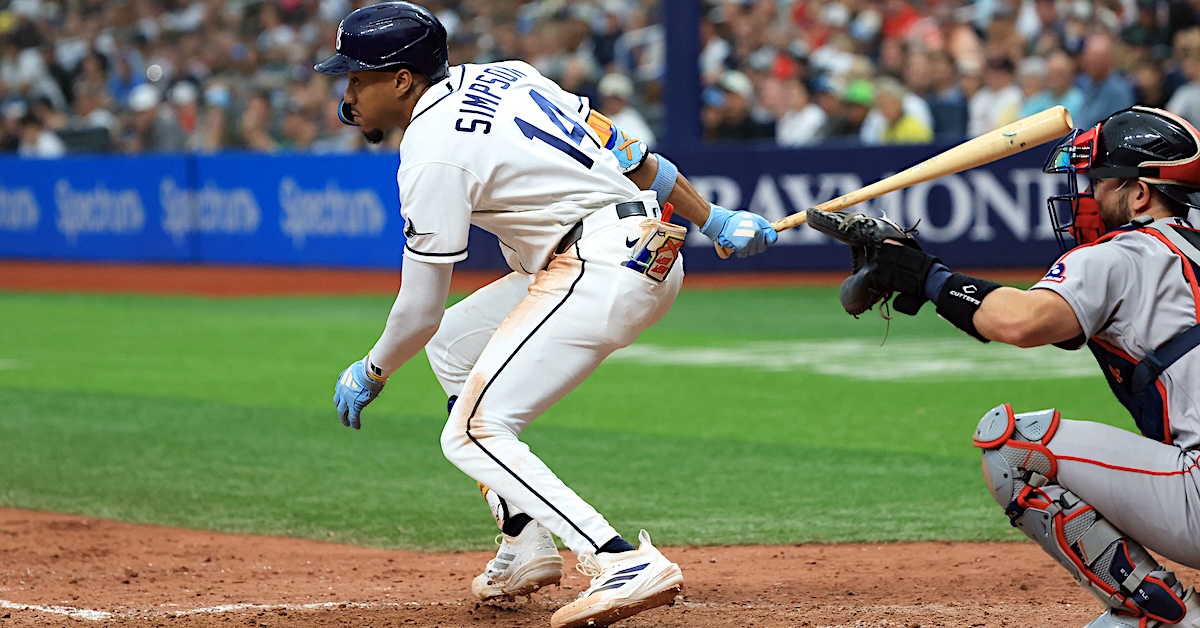 Kim Klement Neitzel-Imagn Images
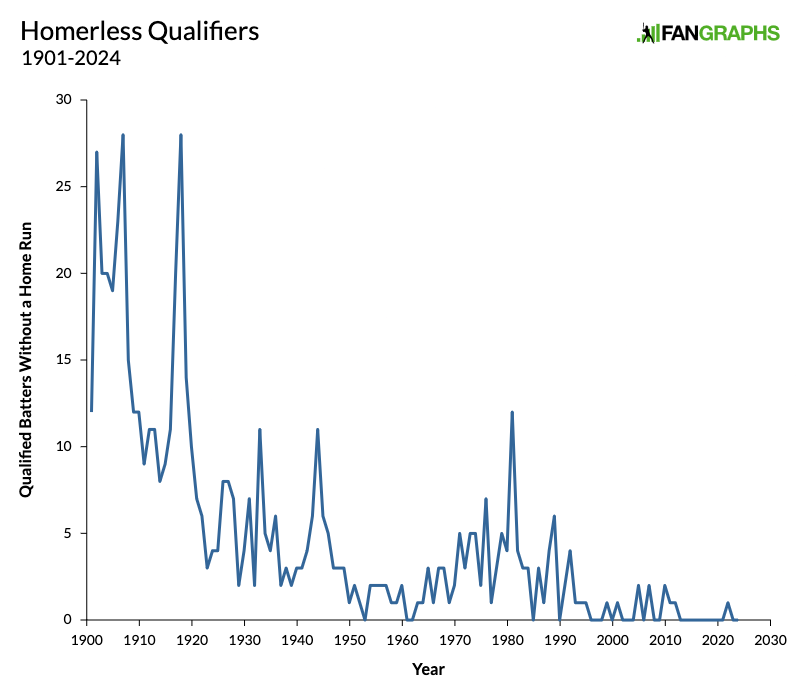
Well, I jumped the gun by a year. Last year, I got excited that the Homerless Qualifier Club might be reopening. Nick Allen was playing every day for the Braves, and Nick Allen’s approach to impacting the baseball is sort of like Atticus Finch’s approach to parenting: It’s composed almost entirely of occasional, gentle nudges in the right direction. If Allen could just get enough plate appearances, I figured, he’d qualify for the batting title without a single home run to his name, making him just the second new member since 2012. The problem was that Allen didn’t just lack punch; he couldn’t get on base at all. The Braves batted him last and pinch-hit for him every chance they got, then gave his spot to waiver wire pickup Ha-Seong Kim. Allen never homered, but he ended up 86 plate appearances short of qualifying. This year is different. This year it’s in the bag. Chandler Simpson has already qualified for the batting title, and he is about to finish the season without a single home run.
As was the case for Allen, the reason that the Homerless Qualifier Club has been closed for business for so long is that it’s really hard for a regular baseball player to be playable without any power whatsoever. Allen’s a defensive specialist whose game has never been built around the home run ball, but he still needs some base level of power to keep his offense from sinking the entire profile. Think of your favorite contact hitter – Luis Arraez, Steven Kwan, Nico Hoerner – these guys are much better at avoiding strikeouts than Allen, and they still hit the ball hard enough to rack up a bunch of doubles and at least a handful of home runs a year. Meager though it is, if that power production were to disappear, their offense would simply be too much of a deficit to overcome. They’d stop getting enough plate appearances to qualify for the batting title. That’s why the pipeline has dried up.
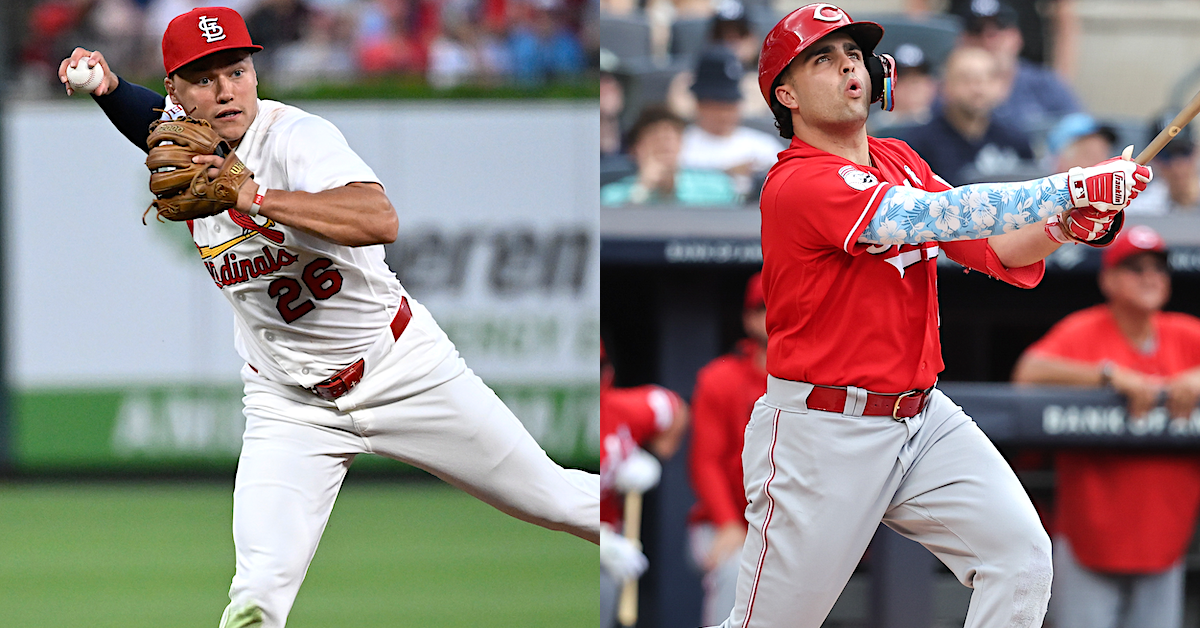
This season, Allen has just 161 plate appearances with the Astros, but he’s betrayed us to the tune of a whopping three home runs. Stretch that over 500 plate appearances and he’s nearly in double digits. My point is that although these are extreme examples of contact hitters, they still have plenty in common with the rest of the league. They are still looking to drive the ball, at the very least, over the infield. Simpson may as well be playing a different sport.
Simpson has an ISO of .050, the lowest among qualifiers. In fact, his career ISO+ is the 16th lowest of all time among non-pitchers. (In case you’re curious, our database also lists 132 pitchers who had a higher career ISO+, including John Smoltz. If you work for Fox and Smoltzy ends up calling a Rays game, please make sure he learns this information.) Simpson has six triples this season, and his 16 doubles rank eighth from the bottom among qualifiers. His average and 90th-percentile exit velocities are both second from the bottom. His hard-hit rate is less than half of Nick Allen’s. Nick Allen’s!
Simpson hasn’t recorded a barrel all season. In fact, over 1,041 recorded batted ball events in the majors and the minors, he’s never once been credited with a barrel. Over that time, he’s been credited with 155 hard-hit balls, but not a single one of them was hit at the right launch angle to qualify as a barrel. This year, across nearly 600 plate appearances, he’s only reached the wall on the fly twice. It’s not unusual for him to go more than a week without hitting the ball 300 feet in the air; before the All-Star break, he had a stretch that lasted more than two weeks.
That doesn’t happen by accident. Simpson doesn’t want to hit the ball a long way. Hitting the ball far means hitting it in the air. The longest ball he hit this season was a 355-foot double. Of the 24 longest balls he has hit this season, it’s one of just two that actually turned into a base hit. The other 22 ended up like this.
You Aren't a FanGraphs Member
It looks like you aren't yet a FanGraphs Member (or aren't logged in). We aren't mad, just disappointed. We get it. You want to read this article. But before we let you get back to it, we'd like to point out a few of the good reasons why you should become a Member. 1. Ad Free viewing! We won't bug you with this ad, or any other. 2. Unlimited articles! Non-Members only get to read 10 free articles a month. Members never get cut off. 3. Dark mode and Classic mode! 4. Custom player page dashboards! Choose the player cards you want, in the order you want them. 5. One-click data exports! Export our projections and leaderboards for your personal projects. 6. Remove the photos on the home page! (Honestly, this doesn't sound so great to us, but some people wanted it, and we like to give our Members what they want.) 7. Even more Steamer projections! We have handedness, percentile, and context neutral projections available for Members only. 8. Get FanGraphs Walk-Off, a customized year end review! Find out exactly how you used FanGraphs this year, and how that compares to other Members. Don't be a victim of FOMO. 9. A weekly mailbag column, exclusively for Members. 10. Help support FanGraphs and our entire staff! Our Members provide us with critical resources to improve the site and deliver new features! We hope you'll consider a Membership today, for yourself or as a gift! And we realize this has been an awfully long sales pitch, so we've also removed all the other ads in this article. We didn't want to overdo it. In case you didn't read all that, here's the short version. Membership includes:
✓Ad-free browsing
✓Unlimited FanGraphs & RotoGraphs articles
✓Historical & platoon projections
✓Leaderboard & player-page stat heatmaps
✓One-click data exports
✓Customizable player-page dashboards
✓Dark & Classic site modes
✓Weekly Members-only mailbag
✓FanGraphs Walk-Off, your year in review
✓Optional homepage photo removal
✓Gift articles to non-members
It’s not just that they were caught; they were cans of corn. This season, 222 different players have put the ball in play at least 250 times. Pete Crow-Armstrong leads them all with 64 base hits on fly balls. Although he ranks fourth in baseball with 531 balls in play, Simpson is dead last with just three base hits on fly balls. That’s a rate of 0.6%. The next-lowest rate belongs to Luis Rengifo, and it’s more than three times higher than Simpson’s. Simpson swings so softly that a fly ball is to him what a popup is to every other hitter: an automatic out. He’s batting just .042 on fly balls, and again, everyone else on the list at least doubles that mark (and all but five triple it). The gap is even larger if you look at wOBA. You know how some hitters, when they’re talking about their goal to hit a line drive over the shortstop, will tell you that home runs are accidents? That’s the way Simpson feels about any ball he hits with a launch angle over 25 degrees.

I don’t mean to say that Simpson is incapable of hitting the ball hard. He wants to hit the ball hard. When the Rays drafted him, Simpson was initially reluctant to add muscle in the weight room out of fear that it would hurt his speed. The team worked with him to find the right combination. “I came in very light, and they told me I needed to lift and I needed to get stronger,” he told our Matt Martell on Wednesday, “so those balls that I can hit at a certain exit velocity can get through the holes and a defender can’t get to them.”
All the same, he doesn’t hit home runs in batting practice either, not necessarily because he can’t, but because he’s working on spraying line drives all over the field. “You don’t appreciate it until you see it every day,” Rays manager Kevin Cash told The Athletic’s Ken Rosenthal last year. “There is no intent to play the long-ball game.” Matt also asked Simpson whether, now that the Rays have clinched the division, he might go for a home run just for the pleasure of wrecking the premise of this article. “Go for a homer?” he replied. “No, no, no, no.” “I’m sure there are times he wants to pull the ball in the air for a homer,” starter Drew Rasmussen told MLB.com. “And who doesn’t, right? Hitting homers is cool. But, no, he knows exactly who he is.”
If you go to Simpson’s Baseball Savant page and click the Random Video button over and over and over again, as I did on Tuesday, you’ll start to focus on his legs. He has a very simple leg kick, but that’s the only pre-pitch movement going on at all. He effectively has no stride and no load. His swing is more rotational than linear, but only because it’s not linear at all. He looks like he doesn’t get into his legs at all. He treats them the way other hitters treat their head. He just wants them to be still and quiet so they don’t get in the way of the work his arms are doing. He’s effectively shortening up his swing by cutting out his lower half altogether, and somehow, it works. He’s got the third-highest squared-up rate in baseball. He looks like he’d gladly hit while sitting in a chair if the rules allowed it.
This is obviously something of an exaggeration. When asked about it Wednesday, Simpson said, “I’m definitely in my lower half when I swing. The foundation of the swing is the ground. You have to use the ground to be able to adjust. So I use the ground for adjustability, for sure. I look like that, but I definitely have to use my legs to create strength for those line drives that can get through holes and groundballs, to stay in my approach, because if I don’t have my legs then I don’t have anything.”
This focus on using the ground for adjustability is clearly visible. The only time Simpson’s legs ever really get going is if he realizes mid-pitch that he’ll be able to lay into one, at which point he’ll get some push going from his back leg. The truth is that we don’t really know how far Simpson is capable of hitting the baseball because we’ve never seen him try. In case you’re wondering, while I was using the Random Video tool, I got curious what would happen if I clicked the Home Run button. The answer: The Random Video tool just disappears from your browser altogether, like it’s censuring you for your cheek. Leave it to Baseball Savant to find a way to make a passive-aggressive website. I actually asked someone who works there if the box was supposed to function that way.

At least they weren’t passive aggressive.
Conversely, I also don’t think we should necessarily think about Simpson the way we think about other contact hitters, because his swing is so different from theirs, too. Let me show you what I mean. Below are Statcast’s wireframe models of the swings of both Arraez and Simpson. I picked Arraez because Simpson has voiced his admiration for his game. “I use his drills in my hitting regimen,” he told Rosenthal last year. On Wednesday, Simpson explained to Matt that he’s more focused on Arraez’s approach: “Really just make sure I’m finishing my swing with my head down on contact, make sure I’m trying to stay inside the ball. Make sure I’m staying low line drives in the cage, not rolling over balls.”
Knowing all that, the differences between the two swings are jarring. First, look at the back foot. Arraez’s is pushing off hard enough that when he transfers his weight forward, the momentum pulls his back foot off the ground and toward the pitcher. Simpson’s back foot doesn’t move.

Now look at the front leg. Arraez is pushing off his front leg hard. The force pushes his heel off the ground. At the moment of contact, his front leg and his torso are in perfect alignment so that he can transfer the energy it generates up the kinetic chain. At the moment of contact, Simpson’s torso is still almost completely vertical. It’s not getting any of that energy. Arraez’s front foot is planted firmly, whereas Simpson’s rotates outward, leaking power.
Lastly, look at the shoulders. When Arraez’s swing gets going, you can tell because his back shoulder is driving forward toward the ball. When Simpson’s gets going, you can tell because his front shoulder is pulling back away from it. On some level, that’s the difference between a linear swing and a rotational swing, but remember who we’re talking about here. Arraez is the most contact-oriented player in today’s game by a mile, but next to Simpson’s, his swing looks like it belongs to a power hitter.
My point in taking you through all these differences is not to denigrate Simpson’s swing, but to emphasize that it’s designed to do something else entirely (which is why MLB.com, to the chagrin of English speakers everywhere, keeps using the phrase “most unique” to describe him). Frankly, I think it’s a testament to his athleticism that he hits the ball as hard as he does while putting less of his body into it than any batter in the game. In the same way that I have no idea how hard Simpson could hit the ball if he focused on that goal, I have no idea whether he could do what Arraez does. Although he’s learning from Arraez, his swing is still different on a very fundamental level, and it’s designed to get him on base in a fundamentally different way.
When Arraez squares the ball up according to the Statcast definition, he has a 30% line drive rate. That’s actually not all that high a number; Kwan leads the league at 38%. Simpson is down at 25%. That’s because 61% of his squared-up balls are grounders, the second-highest mark in the game. You’ve heard plenty of players talk about their goal being to hit a line drive right over the head of the shortstop or the second baseman. Simpson says his goal is lower, “Trying to stay low line drive, hard groundballs.”
Simpson gets to first base faster than anyone else in the game. He leads the AL in steals (46) and bunt hits (14) and the majors in infield hits (40). In fact, since Sports Info Solutions started tracking infield hits in 2002, only three players have ever put up more in a season than Simpson’s current mark of 40: Ichiro Suzuki (who did it in seven different seasons and got a nice plaque to show for it), Norichika Aoki in 2013, and Luis Castillo in 2006. Simpson has the highest groundball rate and lowest fly ball rate in the game. SIS, which uses a different methodology from Statcast, credits him with the lowest hard-hit rate – nearly three points below Steven Kwan in second place – and the highest medium-hit rate in the game. The important thing is that what Simpson is doing is working.
Simpson won a college batting title with a .433 mark as a junior at Georgia Tech. He started this season strong, batting .407 through his first 16 games, before he fell into an ugly 54-game slump; from April 15 through June 19, he hit just .215. However, he has batted .352 across his 79 games since then, bringing his overall average up to .309, seven points behind Yordan Alvarez in the AL race. If he completes the comeback, he’ll be the first player since Buster Posey to win a batting title in both college and the majors. Simpson’s approach of putting the ball either on the ground or just over the infield gives him a 95 wRC+. Combine it with all that baserunning value and his much-improved defense, and he is up to 2.5 WAR on the season.
I imagine that some people will read this and wonder whether Simpson isn’t just today’s version of Billy Hamilton. That’s perfectly understandable, but Simpson’s approach is different even from Hamilton’s. Hamilton hit 24 career home runs, all of them over the fence. He never qualified for the batting title with fewer than four homers. His career-long batted ball traveled 417 feet, 52 feet farther than Simpson’s longest. His strikeout rate was nearly triple Simpson’s, and his fly ball rate was nearly 15% higher. He never had half as many infield hits as Simpson has this year. He also never ran a wRC+ above 79 (except during a 13-game cup of coffee in 2013).
Right now, it looks like Simpson will be able to keep on racking up homerless seasons until either his speed or his contact skills start to decline, but I’m curious to see what will happen over time. He’s still in just his second year in the majors, and I don’t think it’s out of the question that he might slowly work toward a more fluid swing that makes more use of his strength. That’s not to say that he’d fundamentally change his approach, but that as he improves, he might see the upside in trying to drive the ball for extra bases more often. After all, as you remember from spring training, he is definitely capable of hitting a home run over the fence.
However, Simpson said Wednesday that he’s never had any pressure to adjust his launch angle. “I feel like all the coaches in my career have been very understanding and know what my game is,” he told Matt. “They haven’t really tried to change that much. Maybe they’ve tried to get me to tap into a little bit more power in the sense of hitting the ball harder so they can get through holes through the infield, things like that, but not really lifting the ball.” We just need him to hold off for another week.









 English (US) ·
  French (CA) ·