

PROTECT YOUR DNA WITH QUANTUM TECHNOLOGY
Orgo-Life the new way to the future Advertising by Adpathway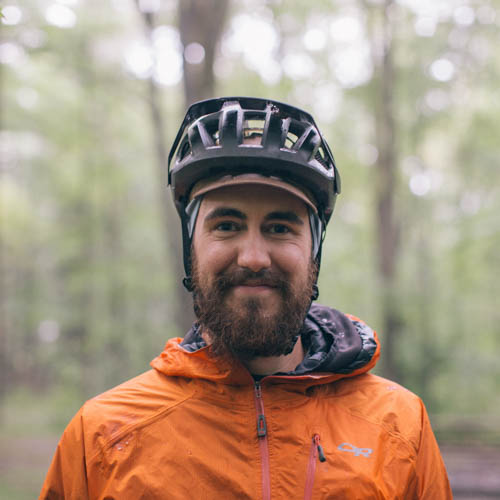
Mountain biker, gravel rider, roadie, alt cyclist, bikepacker—cycling has a knack for sorting us into increasingly specific groups, each with its own bikes, clothes, rules, and expectations. In this piece, Miles asks where he fits among them and makes the case for being a “civilian cyclist” and how borrowing a little from each might make us happier…
Unlike many people I’ve met in the bicycle industry, I didn’t grow up BMXing or racing mountain bikes. In fact, when my peers were learning to wheelie, I was quite terrified of riding a bike and actively stalling my parents’ attempts to teach me. I like to blame the rough side road and long gravel driveway we lived on, but in retrospect, I was afraid.
That hesitancy I felt as a kid has followed me into adulthood. I’ve never been one to backflip off a dock or do sweet tricks. A true jack of all trades, master of none, I like to think I can be thrown into any activity and hold my own, but I’m rarely the best. My avoidance of risk, whether it’s actual or perceived, has limited my number of injuries and kept me moving. I’m proud of that.
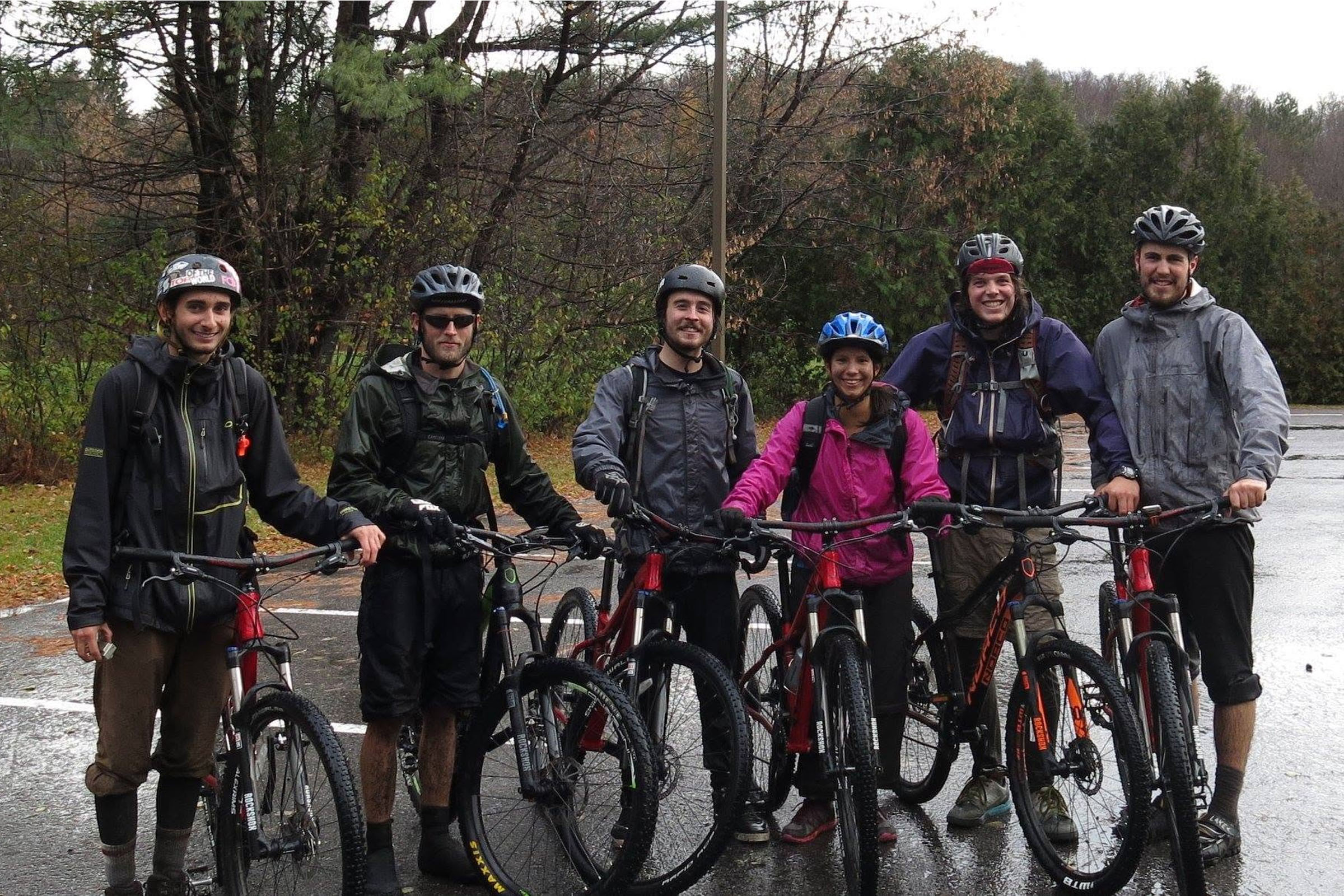
Top: Baby Miles, Bottom: Algonquin College’s Outdoor Adventure Program, 2015
I’ve pedaled bikes a lot over the past decade; more than any other activity. I think most people would call me a cyclist, but when it comes to additional labels and categories, I’ve never felt truly connected to any of them. In a recent Reader’s Rig, Noah Wilcox described himself as a “civilian bicyclist,” and that struck a chord with me. It made me reflect on the various genres of cycling, where I fit in (and don’t), and why being a multi-disciplinary and open-minded cyclist is the best thing you can do as a bikepacker. Before we dive in, though, we have to talk about community, because, after a lot of discussion with friends, I believe it’s where everything stems from.
Seeking Community
Anthropologically speaking, community is, and has been, everything. Through virtually any lens, you’ll see it at the center of our well-being, decision-making, religion, and our species’ evolution. What started as a survival requirement has evolved into groups of people who share common interests and values. Sharing interests makes us relatable, and experts say that sense of belonging is crucial to our well-being. Psychologists Edward Deci and Richard Ryan, in their book Intrinsic Motivation and Self-Determination in Human Behavior, talk about three basic human needs that must be met for sustained motivation: autonomy, competence, and relatedness.
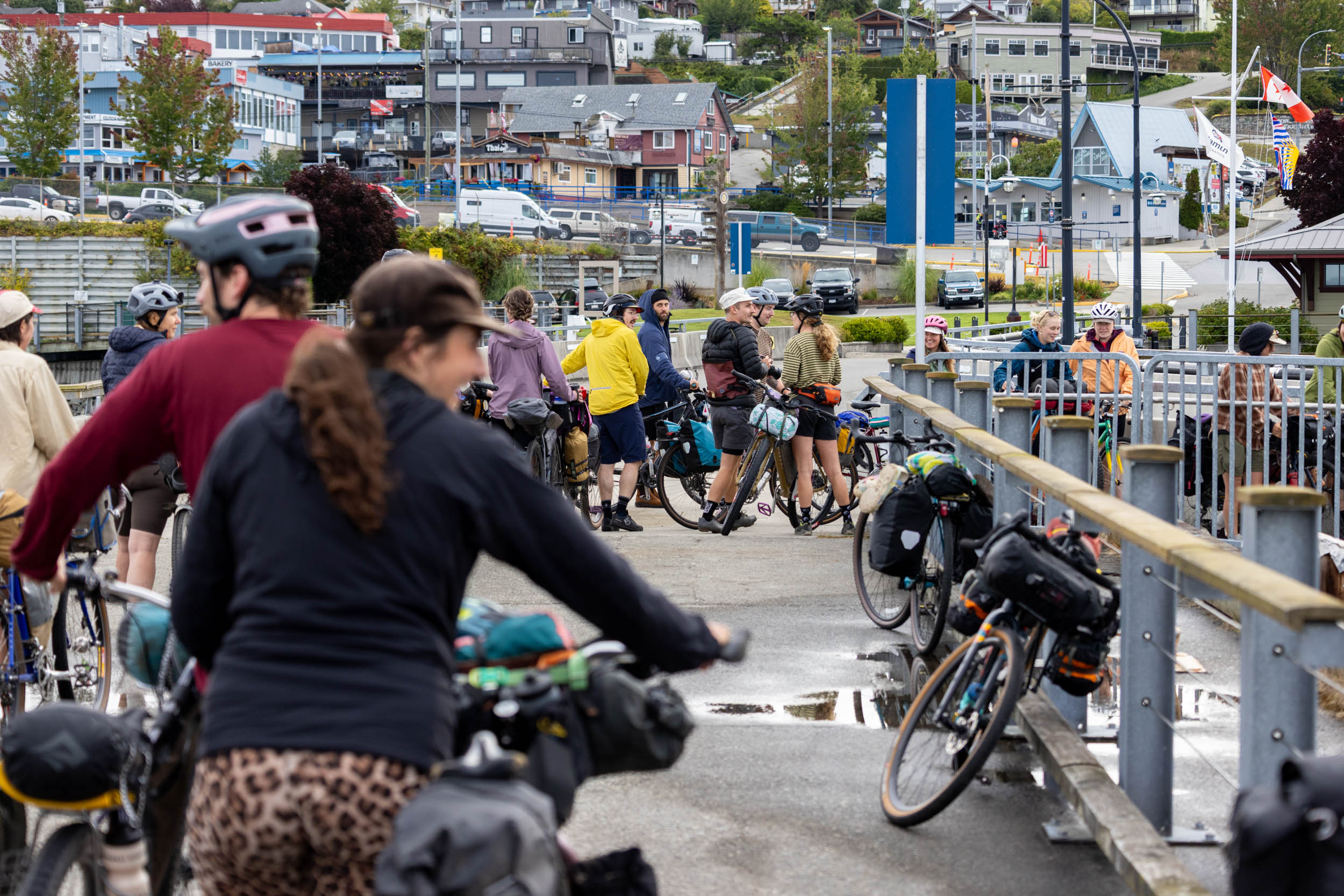
Top: 2026 Slow Coast event, Bottom: 2019 Bikepacking Summit
Larger city centers support a wealth of diverse cycling communities and sub-communities. There’s not just a single group of cyclists; there are road cyclists, dirt-jumping groups, mountain bikers, and even more specific groups within these categories, depending on when or where they ride. I’ve never lived in a large city, so I’ve mostly just assumed that everyone who rides bikes is part of my community. As the town we live in expands and evolves, this feels like it’s changing. That’s not to say I’m not surrounded by amazing people, and ones that I’m proud to call my friends, but it often feels hard to compare against the picture-perfect world I see on Instagram.
I’ve come closer to finding my cycling-specific community during our van travels, interacting with bikepacking-adjacent folk all across North America, but I also don’t think digital communities can replace in-person relationships and gatherings. I find myself craving both, but have learned to value the interpersonal connections more than the bicycle that might have brought us together. At the end of the day, it’s the friends who pop by unannounced, remember birthdays, and lend a helping hand that make a community. It’s the connections between the noise on social media that matter, at least for me.
For those who want to play along: how would you define your community?
Who Am I?
A few years ago, at our local enduro trail system, an acquaintance approached me and said something like, “Wow, Miles riding Mount Mahony?!” By then, I had been riding Mount Mahony much longer than they had, but as the trails evolved and more and more mountain bikers moved to town, I started to feel less and less like one of them.
Modern mountain bike culture, at least here in British Columbia, isn’t what I envision when I think of riding bikes. These days, injuries are overglamorized, fueled by crash reels on social media, and I want nothing to do with it. People like to say “Crashing is part of it,” “Injuries are unavoidable,” or “If you’re not crashing, you’re not pushing hard enough,” and to that I say, “I’ll pass, thanks.”
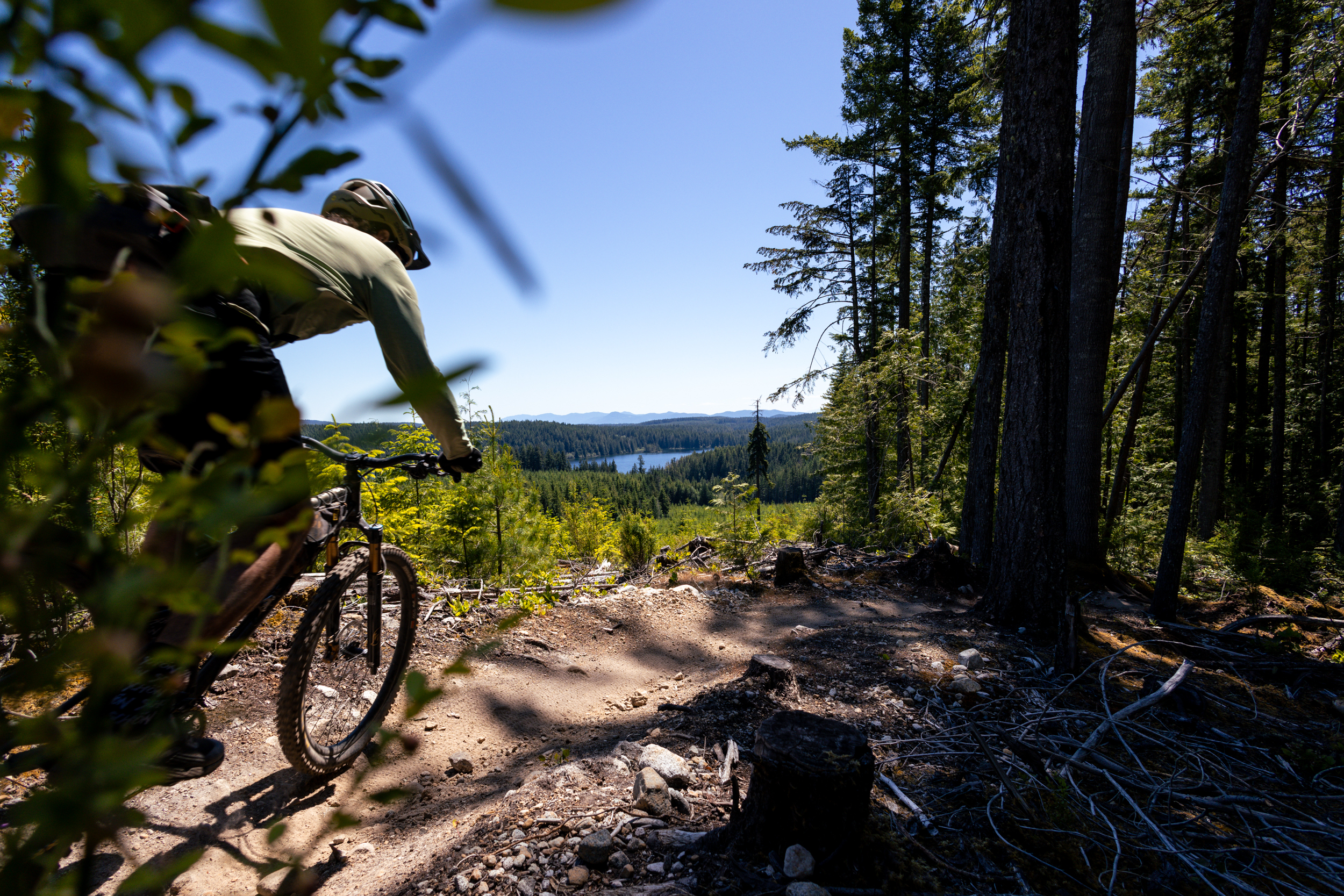
When my ego starts to creep in, I think back to a mountain bike clinic led by a local rider, Lindsey Gosnell. One of her first pieces of advice when considering tackling a new feature was to take a moment to ask yourself whether you’re doing it because you want to or because of peer pressure or another outside influence. For me, it’s often the latter.
Sometimes during the year, I push myself to ride more technical features and trails, but that’s not why I ride. I love the climb up, and I get by just fine without massive gap jumps and rock rolls. Working remotely and spending a lot of time traveling in our van has allowed Emily and me to ride in so many regions around North America. Still, it’s hard not to feel like an imposter when I’m not shredding the gnar and ignoring people at trailheads, as seems to be customary.
A few years ago, I teamed up with The Driveside in Ontario on a limited run of “Be Brave, Give a Wave” hoodies, and I live by this sentiment fully, especially when mountain biking. I’m not sure when it became cool to ignore people doing the same activity as you, but I get a lot of pleasure out of saying hello to strangers, asking how their ride is going, and simply acknowledging that we’re all having fun on bikes.
Maybe I’m bitter. Maybe I’m not a mountain biker.
Identity Grinder
Before I did much mountain biking, I rode gravel. One of the first bikes I reviewed, nearly a decade ago, was the Norco Search XR. Before that, I purchased a Norco Threshold cyclocross bike because I liked the idea of a speedy drop-bar gravel bike. I gradually sought after bigger tires and flat bars, finding gravel bliss on my Surly Krampus before upgrading to the Surly Karate Monkey, with its dropper post and front suspension.
Those days, I didn’t go mountain biking. I’d leave from our tiny micro-apartment in Kelowna, take paved roads toward the hills, climb mountain bike trails through Myra-Bellevue Provincial Park, and then hop onto the Kettle Valley Rail Trail. I suppose it was all-terrain riding at its core, but I didn’t call it that, either.
Now that I live on the coast, I regularly drive to trailheads to save time and work around my schedule. On less busy days, I’ll leave from my front door, hit logging roads, and then hop onto singletrack for a few hours before heading home. With so much gravel in between home and trails, you’d think maybe I’d identify as a gravel cyclist or even a gravel grinder. I’ve probably worn spandex riding bibs and a jersey five times in my life, so that can’t possibly be at the core of who I am as a cyclist, right? I mean, if you call yourself a gravel rider, you’ve gotta look a certain way, and your speedy drop bars better be slammed.
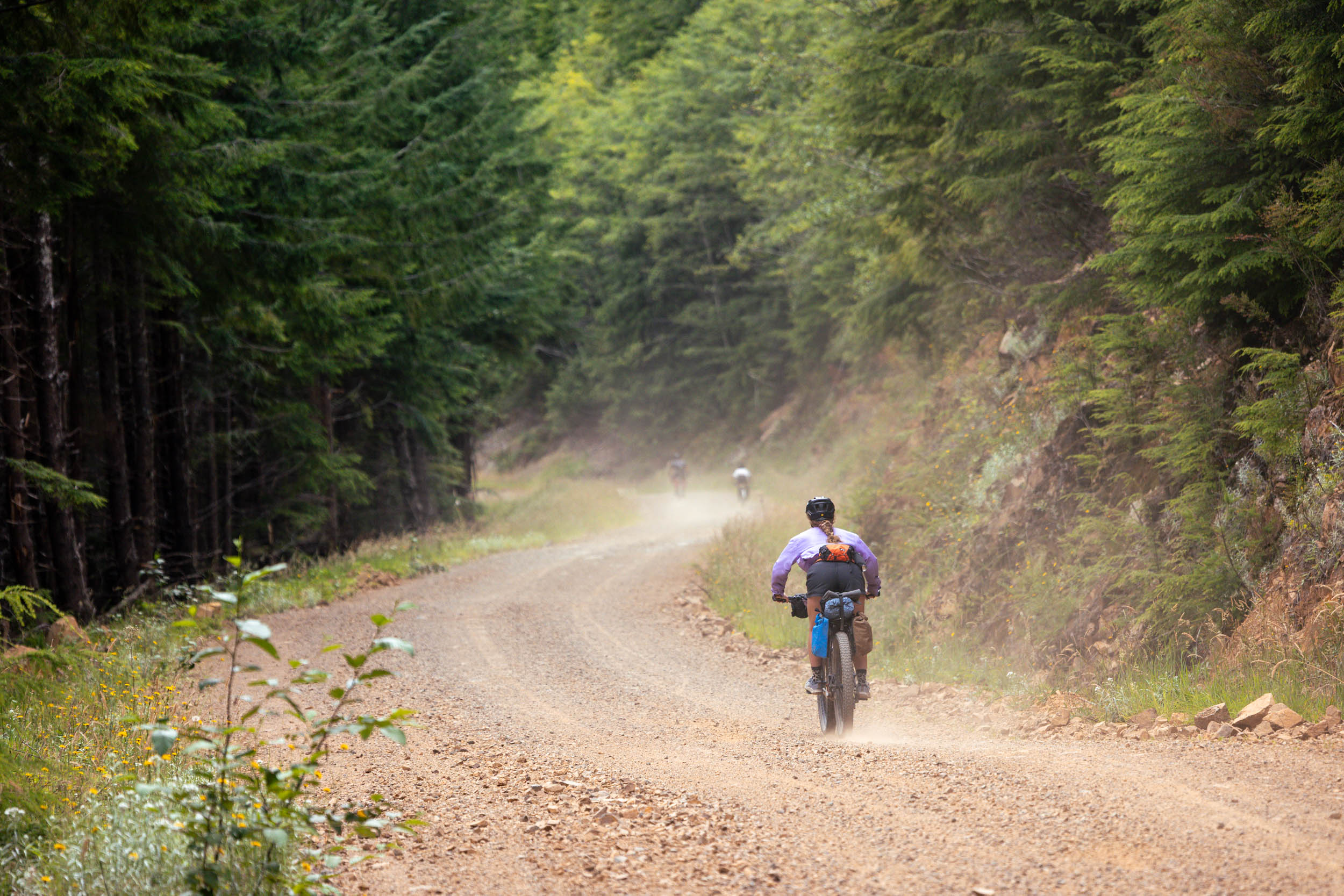
On the other hand, it’s hard not to be jealous of organized weekly gravel rides and riders committed to their cycling community. It’s not as common in small towns, but when I see these big group rides on social media, I can’t help but wonder if that’s something I wish I had. When I was on our local cycling association’s board of directors, one of my main arguments was that group rides are as much about socializing as they are about riding, and that we should find ways to get more people out to them. When you ride with friends, is it about the ride, building community, or both?
Gravel is for athletes, and I’m not that athletic.
The Dreaded P-Word
I bikepack, so I’d rather drag my loaded rig through swamps and thick salal before surrendering to the siren song of pavement. Here on the site, we prefer bikepacking routes that are at least 75% off-pavement, but in reality, I spend 75% of my time on it.
As someone who travels by bike, I consider pavement the lifeblood of cycling. Paved roads are like the intercellular bridges that connect adjacent cells in our bodies, and without them, everything falls apart. I, for one, love the feeling of leaving a rough gravel road for the smooth, effortless bliss of pavement. Here in town, nothing beats bombing a paved road, sneaking glimpses over the Pacific Ocean toward Vancouver Island, weaving between cars, and popping off curbs.
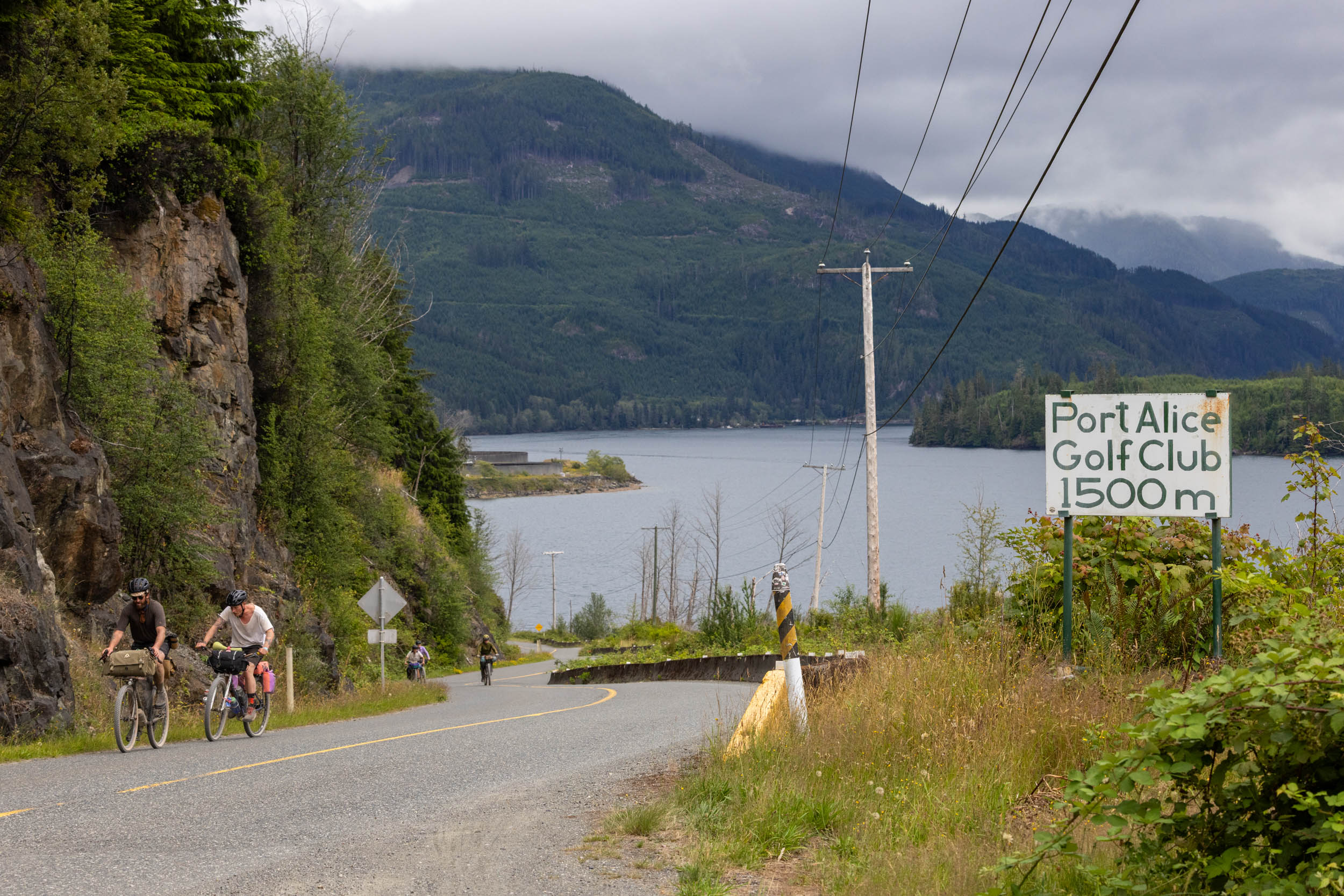
Sure, I might prefer flat bars, and no, I don’t own a bike with less than 2.2” wide tires, but you better believe I’m all about the pavement. Although maybe I wouldn’t bike to the bakery as often if it required riding a double-black downhill trail to get there.
We’re all road cyclists.
Expectations vs. Reality
Different cycling cliques or genres come with unique expectations. There are visual cues, like specific clothing, helmets, or gear, as well as subtler hints, like how you’re supposed to act or ride in a group. Not all riding groups or regions fit these stereotypes, but I think we can all agree the broader cycling community has unspoken expectations, depending on what type of bike you’re riding.
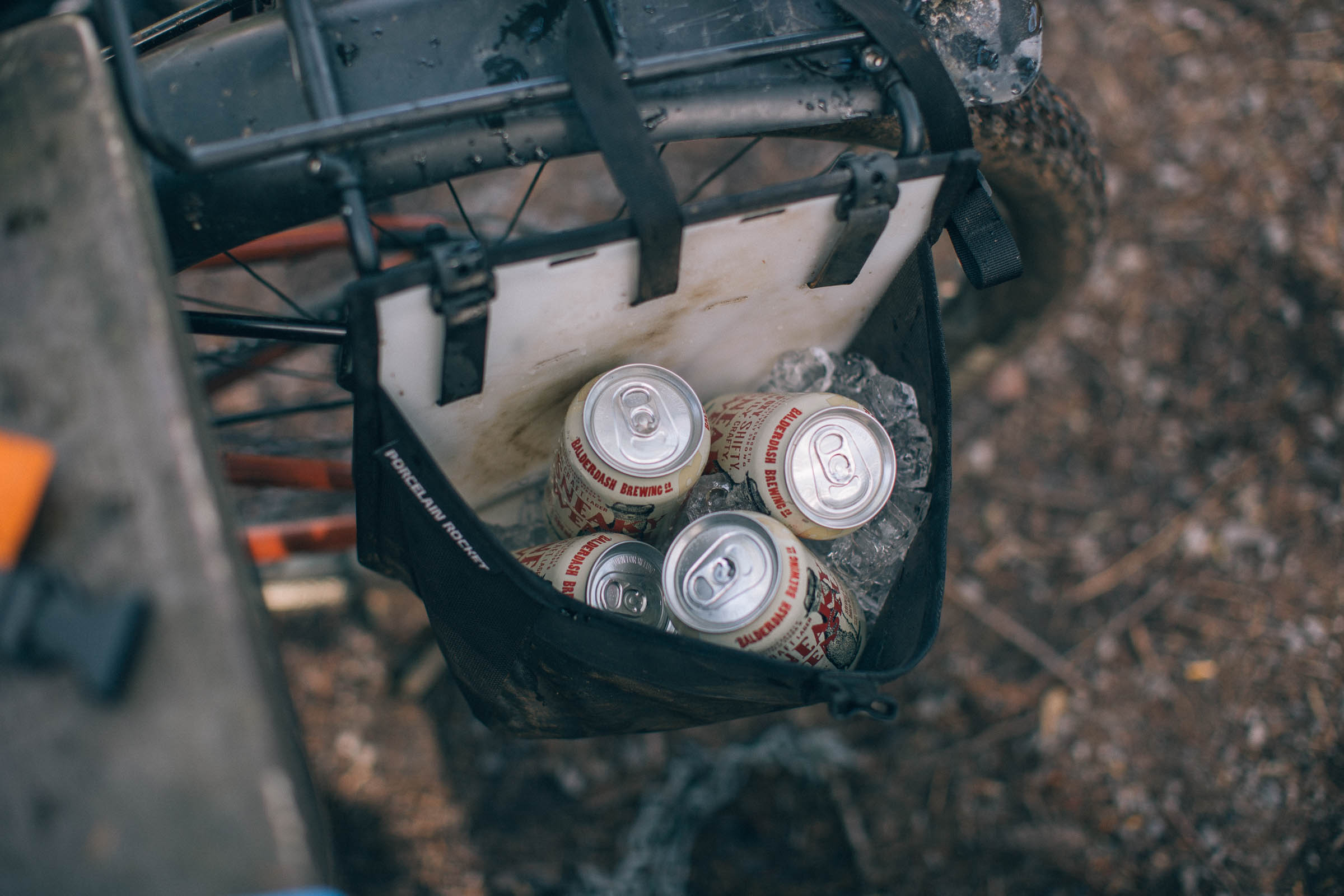
Something that has always rubbed me the wrong way is the way drinking alcohol is ingrained in mountain bike culture. If you’re not having a post-ride beer, then you’re not one of the boys. You have to look a certain way to join a road ride; otherwise, you’ll stand out. It goes the other way, too: if you’re caught riding trails on a drop-bar gravel bike, for example, you’ll get nothing but confused looks and disapproving glances.
The way brands try to sell us gear by telling a certain story makes it hard to know what’s legit advice, like running road tires and drop bars on a road ride, versus marketing speak. There are plenty of nuances that actually hold a lot of truth, but there’s also a lot of noise.
These days, the self-titled “alt cyclists” should be the ones fighting against these expectations, but they’re failing. Being anti-mountain bike or anti-gravel bike is cliquey in its own way, and it paints an unrealistic picture of what it means to be alternative. I prefer our agnostic approach to running this website, which leaves us curious about everything, rather than bashing certain styles of riding, dressing, packing, or being. You don’t need to run a front basket and wear no helmet to convey your disdain for larger cycling cliques. Just do what feels right. But, for what it’s worth, I don’t believe not wearing a helmet makes you “alt.” Rather, it simply puts you at a higher risk for brain injuries.
Putting it all Together
I love Noah’s interpretation of his mixed riding style, much like mine, as civilian cycling. The more I think about it, the clearer I can see the benefits of partaking in a bit of each rather than being hyperfixated on one riding style.
Take mountain biking, for example. My favorite bikepacking trips generally include some singletrack, but riding singletrack on a loaded bike often requires bike-handling skills and balance that are best honed while mountain biking. Being comfortable on blue- and black-rated singletrack opens up a whole new world of potential bikepacking opportunities that I don’t think I’d be inclined to attempt if I never rode trails.
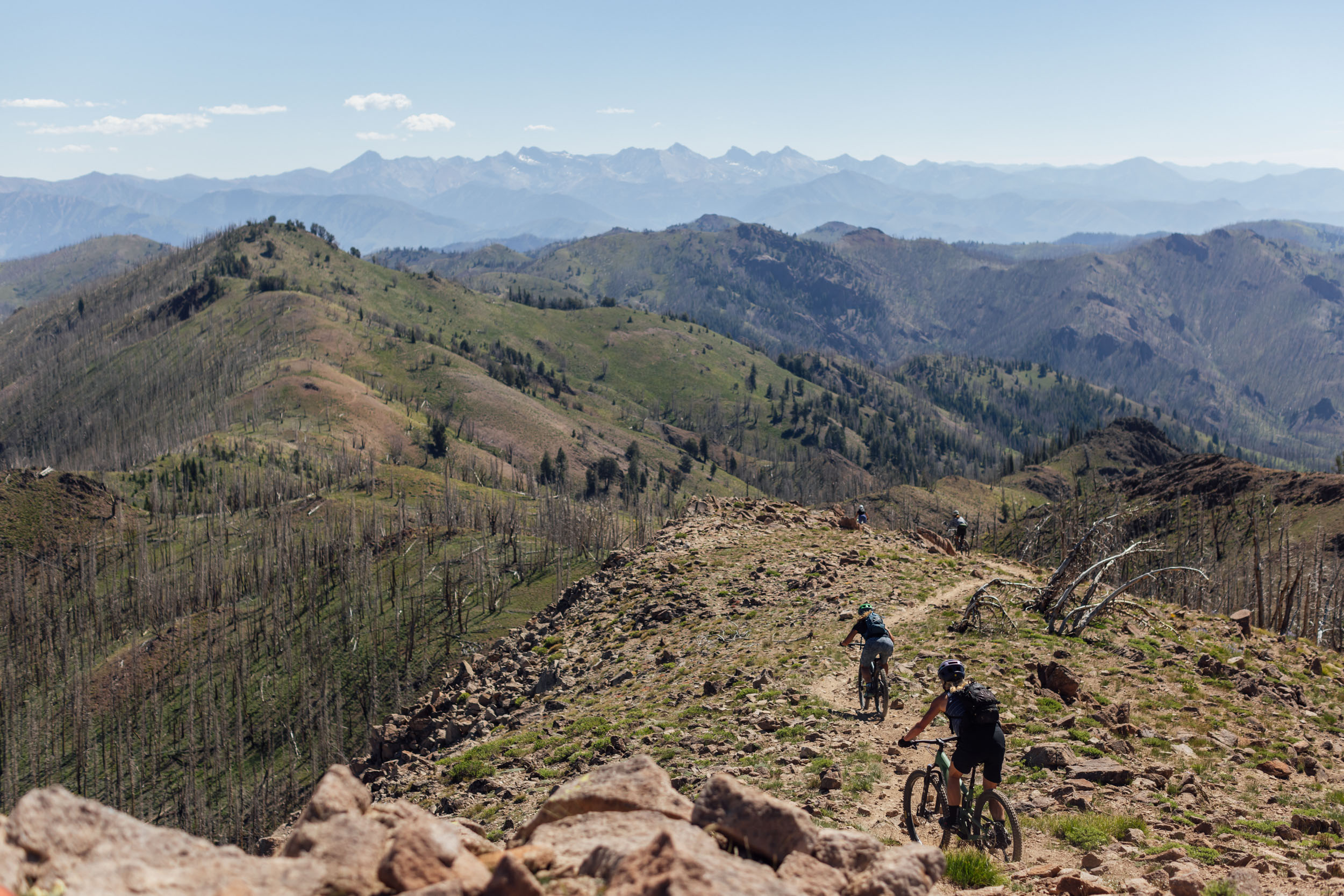
Singletrack also tends to uncover loose straps and floppy bags and rattle bolts and racks loose. If your gear can handle the rigors of mountain biking, you’ll likely be ready to tackle any terrain. Mountain biking has made me a better bikepacker.
Time in the saddle is probably one of the most obvious ways to get your body ready for bikepacking. That’s where gravel riding comes in handy. Most gravel rides are spent sitting on the saddle, not perched above it, so it’s a great way to reveal issues related to bike fit, touch points (like saddles, grips, and bars), and how your body feels after multiple hours of riding. It’s also an effective way to test various fueling options, water filters, and ways to manage layers in changing weather conditions.
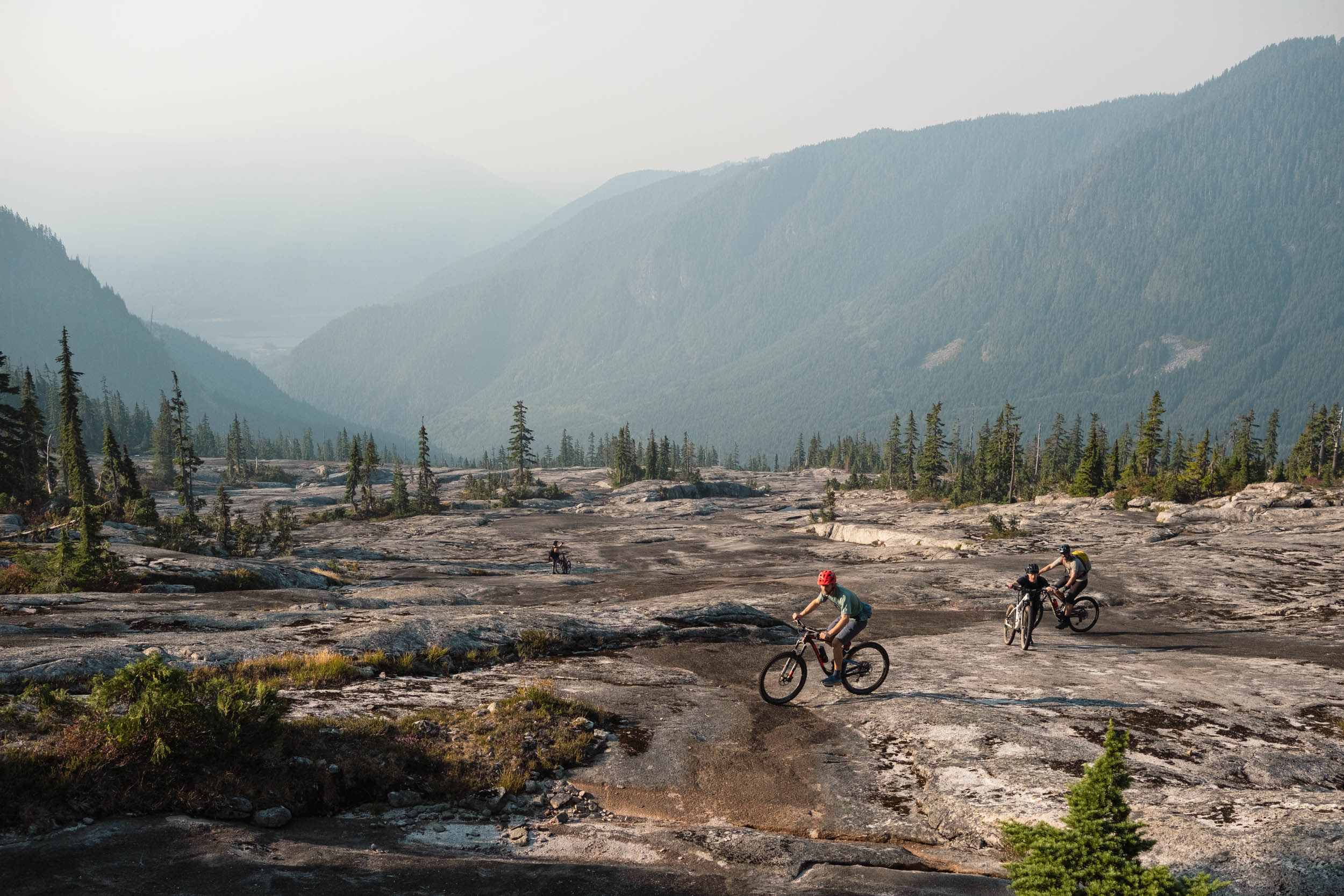
Looking the part is a common theme in hobbies like riding bikes. Perhaps the best part of not belonging to a single group is that you start thinking about what you need a little differently. For me, the gear and clothing I use for mountain biking are essentially the same as what I use on gravel rides and commutes in town. I’ve ridden 1,000 kilometers on Vancouver Island on my Hudski Doggler, but I’ve also ridden it to the coffee shop more times than I can count. These days, my older brother uses it to get to work and tow my niece to the park.
I can’t help but think back to Cy Turner, owner of Cotic Bikes in the UK, and the reel he posted in November 2025. He talked about a ride that involved a little bit of everything, including gravel paths, and how he rode it comfortably on his full-suspension mountain bike. He said brands that market gravel are great at painting a picture of rides to the coffee shop or loops close to home, which is exactly what he did on his mountain bike. Marketing in the cycling industry does a great job of pigeonholing customers into specific riding genres and groups, but I doubt that that’s the reality for most of us. Cycling is inherently personal, and there’s no right way to do it.
Final Ramblings
I don’t own a road bike, I’ve never broken a bone mountain biking, and I prefer to ride flat bars over drop bars. Yet I still find myself riding on pavement, mountain biking almost every day, and finding joy on all types of bikes. I don’t identify with any specific cycling discipline. Instead, I take pieces from all of them and fit them in wherever they make sense to me. Part of what is so fun about bikepacking is how inherently multidisciplinary it is. My favorite rides and routes vary, mixing terrain and riding styles.
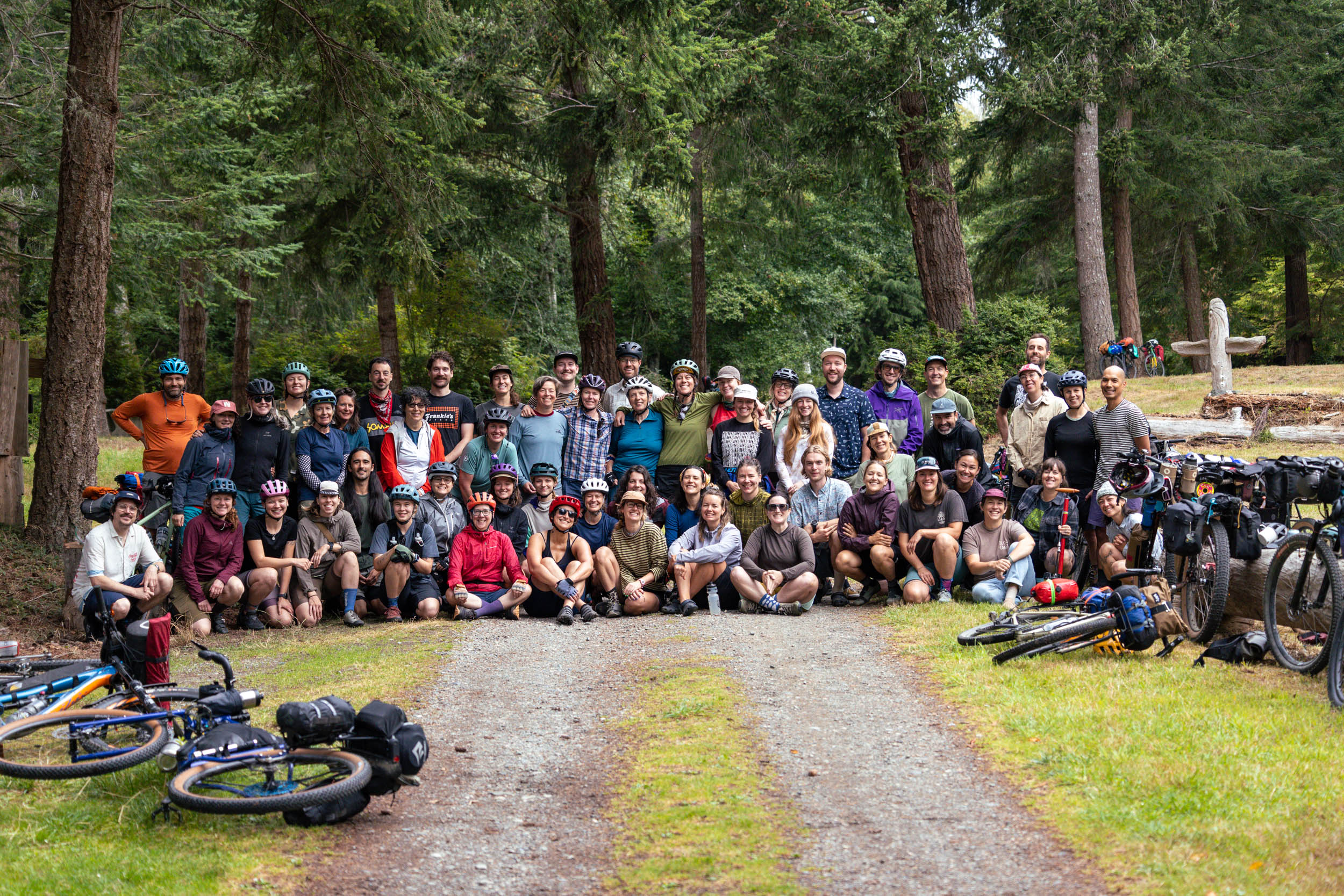
When I first started writing this piece, I focused on our differences and the aspects of groups I don’t align with. On further reflection, everyone craves the same thing: community. Even though the cycling subgenres I wrote about may not be for me, I’m jealous that they bring people together. Taking an honest step back has me thinking about how great it is that people find community through bikes, and how I have a community too—it’s just not as loud or as large as those in cities or with dedicated Instagram pages.
I sometimes catch myself judging other riders based on their appearance, gear choices, or bike. Recently, I’ve challenged myself to stop this and replace every interaction with curiosity and friendliness—after all, we’re all just riding bikes. Do it however you like, and let others do the same.
I’m curious to hear where our readers think they fit in, and whether there are specific components of different riding groups or genres they relate to. Even bikepacking, as a cycling discipline, has so much variation, but maybe that’s the best part.
Further Reading
Make sure to dig into these related articles for more info...
Please keep the conversation civil, constructive, and inclusive, or your comment will be removed.










 English (US) ·
  French (CA) ·