

 1 day ago
2
1 day ago
2
PROTECT YOUR DNA WITH QUANTUM TECHNOLOGY
Orgo-Life the new way to the future Advertising by Adpathway Clifford Oto/The Stockton Record/USA Today Network via Imagn Images
News out of the Women’s Pro Baseball League has been sparse ever since the league’s draft back in November, but with the inaugural season set to start on August 1, the league recently announced team names and confirmed who will manage each of the four squads that will take the field this year.
I’ll get to a full breakdown of the managerial hires shortly, but first, a quick refresher on the WPBL’s plan for its first season. Teams representing San Francisco, Los Angeles, New York, and Boston will play all of this year’s games at Robin Roberts Stadium in Springfield, Illinois, then take up residence in their home cities next year. Currently, all four teams are owned and operated by the WPBL itself, though that may change in the future. The league will play a six-week, 30-game regular season (15 games per team), followed by a two-week postseason during which each team will play a three-game series in the semifinal round, with winners advancing to a five-game championship series.
This is where I would like to tell you how to watch the games, but that information is nowhere to be found on the league’s website. As a result, fans have taken to the comment section of the league’s official Instagram account to try and get some answers, but all the replies from the account’s admin simply say details will be shared soon. I reached out to the league’s PR contact over the weekend, but have yet to hear back; we will update this piece if I do.
While we wait to learn how we’ll be watching the action later this week, we can evaluate the managers appointed to lead each team as it attempts to bring home the league’s first championship title. Hiring managers is a tricky business even under the best of circumstances because of how difficult it is to measure a manager’s impact, but a league like the WPBL faces a few additional challenges. When an MLB team looks to hire a new manager, they frequently opt for a candidate with previous experience managing in the league. But heading into year one, no one has WPBL managerial experience. Other new leagues have the luxury of pulling from the college ranks, but unlike sports such as basketball, soccer, softball, and volleyball, women’s baseball does not have a robust college infrastructure to draw from. The coaching pipeline isn’t as well-defined, so the pool of candidates is going to be less conventional. Furthermore, a brand new, unproven league that’s running an eight-week season and probably isn’t offering very high salaries is going to have a hard time luring current coaches away from their existing positions.
Coaching in the new league also comes with certain day-to-day challenges. The clubhouses will be shared among all four teams, so there’s no getting too comfortable. Previously the home of several minor league affiliates, Robin Roberts Stadium is currently the home ballpark for a collegiate summer ball team, meaning the facilities aren’t exactly state-of-the-art. The advance scouting reports won’t have the benefit of years of play-by-play and Statcast data (though some coaches might prefer that), and there probably won’t be a video intern to pull tape and edit together clips. On the plus side, there won’t be any traveling to road games, the crowds are sure to be enthusiastic, and this might be the most highly motivated group of players any coach has ever laid eyes on, as they’ll be living out a dream thought to be impossible until very recently.
Given the unique situation, the rubric I’m using to gauge the quality of each manager will focus on three components: playing experience, coaching experience, and ability to handle the challenges of managing in a league that is both unestablished and for women.
You Aren't a FanGraphs Member
It looks like you aren't yet a FanGraphs Member (or aren't logged in). We aren't mad, just disappointed.
We get it. You want to read this article. But before we let you get back to it, we'd like to point out a few of the good reasons why you should become a Member.
1. Ad Free viewing! We won't bug you with this ad, or any other.
2. Unlimited articles! Non-Members only get to read 10 free articles a month. Members never get cut off.
3. Dark mode and Classic mode!
4. Custom player page dashboards! Choose the player cards you want, in the order you want them.
5. One-click data exports! Export our projections and leaderboards for your personal projects.
6. Remove the photos on the home page! (Honestly, this doesn't sound so great to us, but some people wanted it, and we like to give our Members what they want.)
7. Even more Steamer projections! We have handedness, percentile, and context neutral projections available for Members only.
8. Get FanGraphs Walk-Off, a customized year end review! Find out exactly how you used FanGraphs this year, and how that compares to other Members. Don't be a victim of FOMO.
9. A weekly mailbag column, exclusively for Members.
10. Help support FanGraphs and our entire staff! Our Members provide us with critical resources to improve the site and deliver new features!
We hope you'll consider a Membership today, for yourself or as a gift! And we realize this has been an awfully long sales pitch, so we've also removed all the other ads in this article. We didn't want to overdo it.
And to elaborate a bit on what I mean when I refer to the challenges specific to a women’s league, this isn’t me wondering aloud whether they’ll be too hard on these poor delicate women or if they might pull a Jimmy Dugan the first time someone cries in the clubhouse. No, I’m curious about the capacity to adapt after years of hard-programming that has trained all of us, regardless of gender, to operate within a sport played by and for men. How will they take to the subtle shifts in culture and aesthetics? Are they willing to examine their own internalized biases that may have gone unacknowledged until now? How will they advocate for their players and the league when certain sectors of the media and general public try to claim that the women’s version of baseball is lesser and that no one watches women’s sports? Will they default to uneducated, bigoted talking points when asked whether trans women should be allowed to participate in the league? If, as happens in the WNBA or NWSL, two players start dating, how will they handle it? Will they pressure them to keep it a secret and hide who they are while they’re at work? Will some managers view the league as a stepping stone to get into (or back into) coaching men’s baseball?
Granted, we won’t always have super strong evidence hinting at whether a manager will excel at this part of the job. These managers are being put into a unique position, so it’s difficult to predict with any certainty how they will respond. A few indicators that might serve as useful litmus tests are things like the way they publicly speak about and interact with women, the existing personal relationships they have with women, how they manage personal relationships more broadly, an awareness of the history of women’s sports, and a general respect and acknowledgement of women’s athletic ability. Understandably, there will be a learning curve to all of this, but a good managerial hire should at a minimum enter the job open to learn.
So with some criteria established, let’s meet the managers.
Boston Hunters: Keith Foulke
Playing Experience
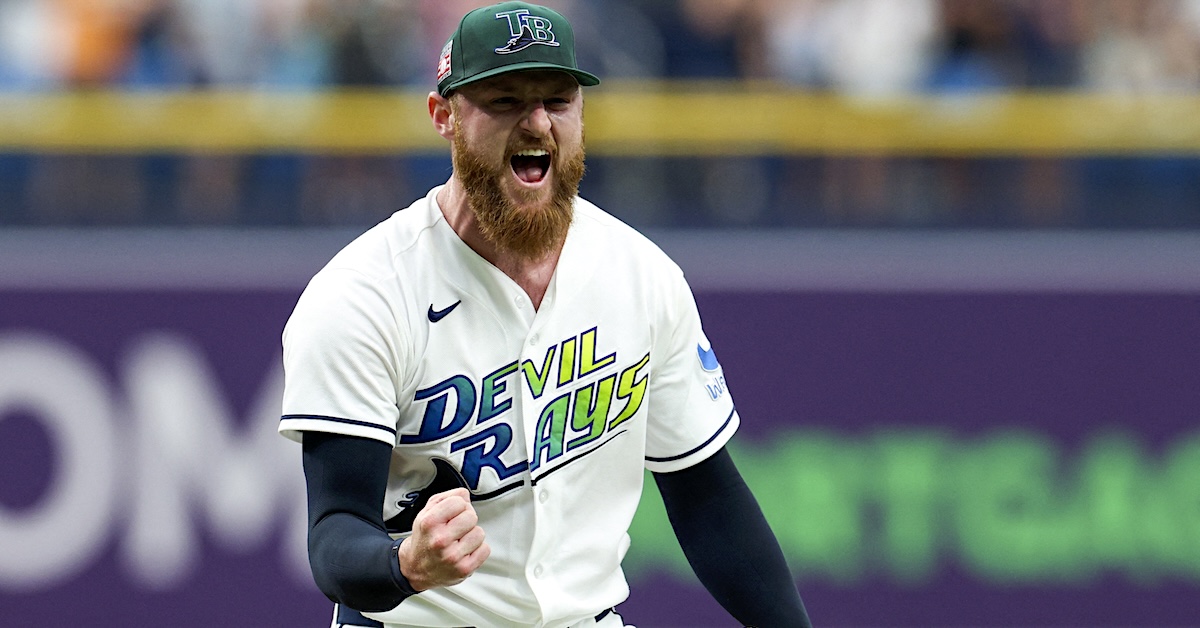
A right-handed reliever, Keith Foulke played 11 seasons in the big leagues, totaling 786 2/3 innings pitched with a 3.33 ERA. He is best known for his performance during the 2004 postseason, when he helped the Red Sox to their first World Series championship since 1918. He threw six scoreless innings against the Yankees in the ALCS (the one where the Red Sox had to win four straight after going down 3-0), appearing in five of the series’ seven games. Foulke tacked on another five scoreless innings over Boston’s four-game sweep of the Cardinals in the World Series and fielded the title-clinching out.
From 1999 to 2004, Foulke was the rare back-of-the-bullpen reliever who could be relied upon to pitch more than one inning. As opposed to the flamethrowers closing games today, Foulke was a command-and-control pitcher who relied on a distinctive circle changeup with a downward action that paired well with his four-seam fastball. He led the league in saves while pitching for Oakland in 2003, before going on to play a crucial role for Boston the following season. Injuries derailed the last few years of Foulke’s career, and he eventually lost the closer role to Jonathan Papelbon in 2006, then retired following the 2008 season.
Coaching Experience
Foulke’s coaching experience is pretty limited. Starting in 2016, he spent four seasons working as a player development consultant with the Red Sox. That type of advisory position typically involves working with minor leaguers during spring training and perhaps fall instructs, but overall, it’s not a very labor intensive role. Beyond that, Foulke has several years of experience as a member of the coaching staff for Red Sox Fantasy Camp, and while I’m sure some actual instruction goes on at fantasy camps, Vibes Ambassador might be a more accurate title, since the “coaches” are mostly there to make sure everyone has a nice time. The retired reliever does have sons who play baseball, but he explained in an interview that he chose not to coach their teams because he wanted to focus solely on his role as a parent.
Of the former big leaguers who go on to manage, most are position players. It’s rare for a pitcher, much less a reliever, to be named to the top job. Add in Foulke’s relative lack of interest in coaching to this point, and it’s fair to wonder how he made it onto the league’s shortlist of candidates. Maybe this video clip of Foulke teaching his signature changeup to a young pitcher proved to be enough to land an interview?
Equipped to manage in an unestablished women’s league?
Foulke’s style of pitching, with its focus on control and offerings that pair well together from a pitch design perspective, may lend itself well to a league that’s likely to place a slightly higher value on finesse relative to the men’s game.
As for whether Foulke can handle the sociocultural environment he’s walking into, there’s not much to go on. He doesn’t have any glaring red flags. His Wikipedia page doesn’t have a “Scandals and Controversies” section. But he also doesn’t have a history of advocacy or any demonstrated interest in women’s sports prior to now. He does have a young daughter, so perhaps the Girl Dad of it all influenced his decision to take the job. But the simple act of having a daughter has not yet been shown to reliably indicate an aptitude for coaching in women’s sports.
Los Angeles Queens: Eric Young Sr.
Playing Experience
Eric Young Sr. spent 15 years in the majors, playing for seven different teams and logging multiple stints with the Dodgers, Rockies, and Rangers. He slashed .283/.359/.390 over the course of his career and posted three seasons with over 50 steals. Though he was roughly a league average hitter, when a beat writer described him as a headache for opposing pitchers, he took that mantle and wore it proudly. He had a knack for working the count and rarely struck out. He finished his career with 660 walks and just 462 strikeouts. He was always a threat to bunt, and once he got on base, he was always a threat to run. He was something of a journeyman, but it’s clear teams saw value in his more niche skills, since several chose to bring him back after finding themselves in need of a pesky leadoff hitter.
Young’s most famous career highlight came after the Rockies selected him in the expansion draft prior to the 1993 season. In Colorado’s first home game, Young led off the bottom of the first inning with a home run in front of 80,000 fans at Mile High Stadium.
Coaching Experience
Young’s last season in the majors was in 2006, and after spending a few years as a TV analyst on Baseball Tonight, he returned to the field as a coach. His first gig was in 2010 as a minor league outfield and baserunning coordinator for the Astros. In 2011, he began a series of stints as a first base coach, first for the Diamondbacks (2011-2012), then the Rockies (2014-2016), and finally, the Braves (2018-2022). In 2024, he joined Ron Washington’s staff in Anaheim, this time as a third base coach. But part way through the 2025 season, Young went back to coaching first base, with Washington telling reporters, “I don’t know if you guys know, but (Young) is one of the better baserunning (coaches) in the game. We can’t use his skill set at third base, so we’re moving him to first.”
Young departed the Angels’ coaching staff as part of a full overhaul following the 2025 season, leaving him available to take the managerial job with the Queens. And despite his long track record as a first base coach, Young has given thoughtful consideration to managing. In an interview with David Laurila, he detailed the characteristics he admires in the managers he’s worked with and played for, providing a wide-ranging list covering everything from their ability as tacticians, to how they maintained individual relationships, to how they handled the media. Young hasn’t just been around the game for decades, he’s spent those decades observing managers, noting what works and doesn’t work, and choosing the strategies he’d emulate himself if he ever got an opportunity like this one.
Equipped to manage in an unestablished women’s league?
As a player who couldn’t always rely on his raw athletic ability to find success, Young was forced to understand the nuances of the game and develop strategic baseball instincts that will likely serve him well in a league that won’t have as much technology and data available in the early going.
As for whether Young’s leadership and coaching experience will translate to a team of women, consider that Young credits his athletic ability to his mother, who he says was a great basketball player. Now since Young was born in 1967, his mother probably didn’t have a bunch of stats and titles to tell him how good she was because there really weren’t many organized, competitive leagues for women back then. Maybe he came to that conclusion while watching her play against men in some rec league and making them all look foolish. Regardless, he grew up believing that a woman’s athletic genes could carry him to the pinnacle of a sport, and that type of belief is all it takes for a good coach to be able to coach women. Because women don’t need special treatment, they just need to be treated with the same respect afforded to men.
New York Heights: Rachelle “Rocky” Henley
Playing Experience
Henley got her start in baseball at age 7 playing on Little League teams with boys. Early on she learned to play all positions, but because of her strong arm, she eventually settled in at third base. Like most girls, she switched to softball as she got older because it was easier to find opportunities to play. After playing softball in college, Henley returned to baseball in 1994, earning a roster spot on the Colorado Silver Bullets, a barnstorming team that existed from 1994 to 1997 and played against men’s minor league, semi-professional, and college teams. Henley next played in the short-lived Ladies Professional Baseball League that ran from 1997 to 1998. She finished her on-field career in the California Women’s Baseball League, playing for the San Francisco Fillies until around 2011, when she pivoted to more of a coaching role.
Coaching Experience
After transitioning from playing to coaching with the Fillies, Henley went on to found the San Francisco Bay Sox Girls Baseball Program in partnership with the San Francisco Parks and Recreation Department. The program began in 2015 with just one team, but it has since grown to eight teams with more than 150 girls participating each year. Teams from the program participate in tournaments with Baseball For All, including a trip to Manila in 2024 to play teams from the Philippines, Indonesia, and Japan. Henley’s involvement in Baseball For All extends to its Junior Coach Program, where she leads courses to certify players who are interested in coaching at Baseball For All events.
Equipped to manage in an unestablished women’s league?
Henley is the only manager with a background in coaching women specifically, and the only one with experience getting ramped up with brand new leagues and teams, both as a player and a coach. She has certainly already heard every criticism detractors might throw at her. She also has the advantage of not needing to adapt to the differences between the men’s game and the women’s game.
San Francisco Firebells: Matt Williams
Playing Experience
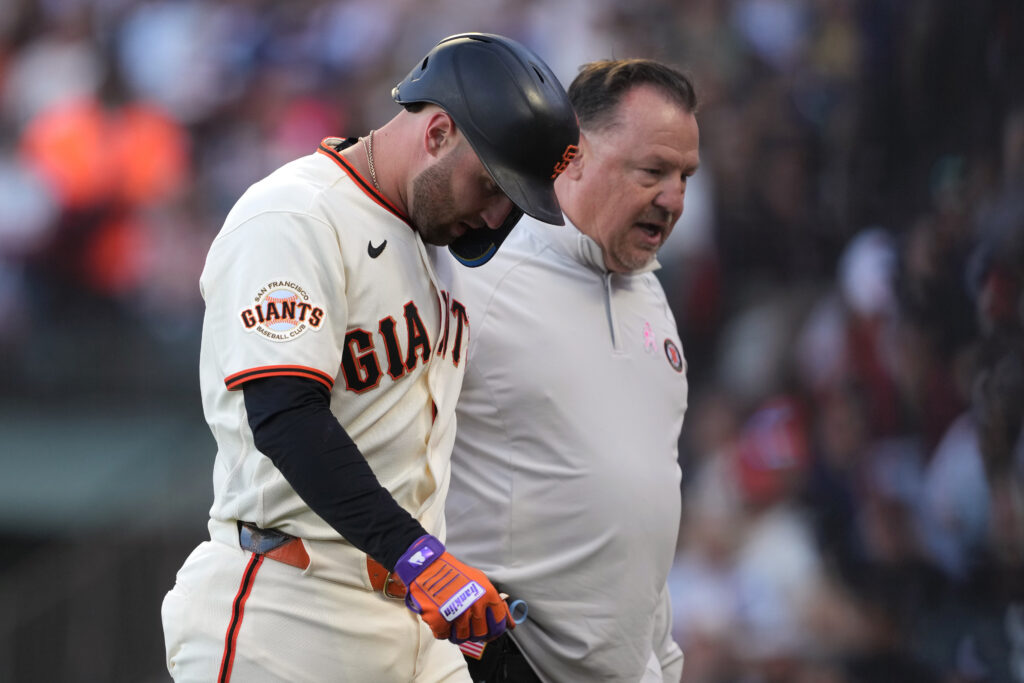
Matt Williams played 17 years in the majors with stops in San Francisco, Cleveland, and Arizona. He won four Silver Sluggers and four Gold Gloves at third base. A five-time All-Star, he finished with a .268/.317/.489 career slash line and retired after the Diamondbacks released him in May of 2003. He led the league in home runs during the strike-shortened 1994 season and was on pace to break the single-season home run record, which at the time was held by Roger Maris with 61.
Williams was at his peak during the early ‘90s with the Giants. By the time he got to the Diamondbacks in 1998, he was on the wrong side of 30 and a slew of injuries curbed his production. In 2007, he was named in the Mitchell Report and later revealed that he’d used HGH to recover from an ankle injury in 2002.
Coaching Experience
In 2005, Williams joined Arizona’s front office as a Special Assistant, which included some part-time coaching under manager Bob Melvin. In 2010, he officially joined the coaching staff as a first base coach, then shifted to coach third base from 2011 to 2013. He was named manager of the Nationals heading into 2014. The Nats went 96-66 that year, and lost to the Giants in the NLDS, but Washington’s impressive regular season record won Williams Manager of the Year honors. Williams was let go following a 2015 season where his team underperformed expectations and endured a dramatic collapse to end the season, going from 80% playoffs odds on August 1 to missing the postseason altogether.
After flaming out as a manager, Williams returned to coaching third base, first in Arizona in 2016, then in Oakland from 2018 to 2019, where he reunited with Melvin. In 2020, another opportunity to manage arose, this time in the KBO for the Kia Tigers. Williams spent two seasons managing the Tigers, going 73-71 in his first season and finishing sixth in the 10-team league. In his second season, the team dropped to ninth in the standings with a 58-76 record, leading to his dismissal. Upon returning to the U.S. in 2022, Williams also returned to coaching third base under Melvin, this time with the Padres. In 2023, Williams was forced to step away from coaching to undergo treatment for colon cancer, but by 2024 he was back to coaching third base, this time with Melvin’s Giants. Williams remained with the Giants until their coaching overhaul this past offseason.
Williams has established a long coaching résumé, but both of his stints as a manager have been short-lived and largely unsuccessful. And it says something that despite winning MOY, what is most remembered about his tenure with the Nationals is a dugout incident between Papelbon and Bryce Harper in which Papelbon was caught on the broadcast grabbing Harper by the throat and pushing him back against the dugout wall after Harper chose not to run hard to first on a shallow fly ball. Obviously, Papelbon and (to a lesser degree) Harper carry most of the blame for what happened, but it was Williams who removed Harper from the game for jogging to first, and let Papelbon go back out to pitch the ninth. Later, Williams said that in the moment he wasn’t fully aware of the severity of what happened when he sent Papelbon back to the mound, which if true, just means Williams failed in a different way than originally thought. Because it is his job to know when his players are physically fighting one another in the dugout.
His sustained track record as a third base coach is perhaps a more promising indicator, but it’s unclear how much of his continued employment is due to coaching acumen and how much is owed to his relationship with Melvin. In this video, Williams does get a ringing endorsement from Giants third baseman Matt Chapman. The video also shows Williams speaking very humbly and respectfully about his influence on Chapman’s success before breaking down Chapman’s game in a very detailed and thoughtful manner.
Undoubtedly, Williams has continued to learn and grow as a coach since his last managing opportunity, and he’s already at work preparing for the start of the WPBL season. “They’re very serious about this, and so am I,” he told the Bay Area News Group last week. “I’m going to take a few days to learn everyone’s game and we’re going to go out there and play our best.”
Equipped to manage in an unestablished women’s league?
Additional quotes given to the Bay Area News Group indicate that Williams understands the context of the league and appreciates the historic moment this is for women’s baseball. “It’s finally coming to fruition after they wanted to do this for a long time,” he said when the publication interviewed him on Thursday. “So now we get a chance to actually start playing and do all the things that they’ve been wanting to do for so long.”
Furthermore, Williams has three adult daughters within the age range of the players on his roster, which should make it easier for him to interact with a different type of player than he’s coached in the past. His experience coaching in Korea will add another connection point to his roster, as South Korean infielder Park Ju-a is set to suit up for the Firebells this season.
After coaching at Oracle Park, Williams may need some time to adapt to the facilities and resources in Springfield, Illinois, but he seems well-positioned to adapt to managing in a women’s league (assuming there are no Papelbon-sized egos on the roster).
…
Setting Henley to the side, it seems the WPBL’s hiring criteria was focused on manufacturing credibility by bringing in recognizable names from MLB, preferably with coaching experience, though if that was lacking, a tie to the team’s home city sufficed. Since the hiring was so last minute, and the league’s season is just two months long, they were limited to candidates without a current coaching commitment and with scheduling and financial flexibility. As such, it’s not surprising they wound up with a rather rag-tag bunch of former MLBers and just one coach with actual experience in women’s baseball. It remains to be seen how the strategy will play out for the league, but since training camp begins this week, we won’t have to wait long to find out.









 English (US) ·
  French (CA) ·