

PROTECT YOUR DNA WITH QUANTUM TECHNOLOGY
Orgo-Life the new way to the future Advertising by AdpathwayMore grip, better puncture protection and the ability to run tire pressures up to 0.2 bar lower, all without any meaningful weight penalty? That’s exactly what MAXXIS are promising with their new DH casing. We put the new casing construction through its paces both in the lab and out on the trail to find out how much substance there really is behind those ambitious claims.
For years, the DH casing has been the toughest, most uncompromising option in the MAXXIS range and a staple of the Downhill World Cup. But modern downhill bikes are getting faster, tracks are becoming rougher and the demands placed on tires continue to increase. So what do you do when races are decided by hundredths of a second, and a single puncture can cost not just a race but, in the worst case, an entire World Cup title?
MAXXIS’ answer is clear: a new, even more refined DH casing. The updated construction is designed to deliver a more progressive deformation characteristic, absorbing small impacts more effectively to improve grip and damping, while providing greater stability under heavy hits and high cornering loads. According to MAXXIS, a welcome side effect is that riders can reduce tire pressure by up to 0.2 bar.
At the same time, MAXXIS are claiming improved puncture protection with the new DH casing, all while keeping weight virtually unchanged. It’s a bold promise with no obvious catch, and one that should appeal to far more than just racers. But what’s changed technically, and do those claims stand up both in the lab and out on the trail?

The new MAXXIS DH casing in detail
With a trained eye, you can spot the new DH casing at a glance. Instead of the simple “DH Casing” lettering used on the previous version, MAXXIS have introduced a newly designed coloured logo on the tire’s sidewall. This brings the branding into line with the company’s other three mountain bike casing options, EXO, EXO+ and Double Down, giving the entire MTB casing range a more consistent look.
 New look: The new DH casing (bottom) is easy to distinguish from the previous version (top) thanks to its coloured logo.
Like its predecessor, the new MAXXIS DH casing relies on a dual ply construction, the standard approach for gravity tires. However, MAXXIS have revised this design in four key areas.
One of the biggest changes is the addition of two new reinforcement elements. A stiffer butyl insert around the tire bead is designed to increase stability at lower pressures while improving protection against pinch flats by an impressive 28%. The difference is already obvious before you even mount the tire. Compared with the previous DH casing, the bead feels noticeably stiffer.
In addition, MAXXIS have incorporated an extra sidewall protection layer designed to improve resistance to cuts and punctures. According to the manufacturer, sidewall durability has increased by 24%, while resistance across the tread has improved by as much as 28%.

The other two changes concern the casing construction itself. Instead of the previous two 60 TPI fabric plies, the new DH casing uses two much finer 120 TPI plies, a construction previously reserved for the dual ply Double Down casing. The finer individual threads are generally considered to be more supple and better able to conform to the terrain. Our assumption is that MAXXIS deliberately opted for the higher thread count to offset the stiffer butyl insert, allowing the casing to retain the compliance needed to achieve the progressive ride characteristic they were aiming for.
Finally, MAXXIS have significantly increased the overlap between the two casing plies, extending it further into the tyre’s shoulder area.
 120 instead of 60 TPI, a larger overlap between the casing plies, an additional sidewall protection layer and a stiffer butyl insert around the bead. The engineering changes made to the new DH casing are extensive.
The new MAXXIS DH casing in the lab test
To find out what those engineering changes actually deliver, we put the new DH casing through our uncompromising lab test. We followed exactly the same standardised testing procedure we used in our comprehensive tire group test. This allows us to compare it directly not only with the previous DH casing, but also with competing models from Schwalbe, Continental and Specialized.

To ensure the fairest possible comparison, we tested two MAXXIS Minion DHR II tires in a 29 x 2.4″ size with the 3C MaxxGrip compound. The only difference between them was the casing construction.
Let’s start with weight. MAXXIS claim that, despite its significantly more complex construction, the new DH casing adds virtually no extra weight and is even said to be marginally lighter than its predecessor. Our scales told a different story. At 1,394 g, the new version of the DH casing is around 63 g, or just under 5%, heavier than its predecessor. A second sample weighed 1,420 g, which makes it almost 90 g heavier. That said, these differences shouldn’t be overstated. In our comprehensive tire group test, we measured even larger weight variations between supposedly identical tires, a well known phenomenon that we discussed in more detail in this article. It also showed that improved puncture protection almost always comes at the cost of additional weight.
The key takeaway: despite its substantially reinforced construction, the new DH casing only gains a modest amount of weight. In practice, that small increase is unlikely to have any noticeable downside. Weight at the tire does affect handling more than the same weight in the bottom bracket area, since it’s both unsprung and rotating mass. But in downhill, the trade-off matters far less than the benefit of a more robust casing. Besides, now that many World Cup pros are deliberately adding weights around the bottom bracket area, chasing the last few grams has become far less relevant in downhill racing. You can read more about that topic here.
Rolling resistance may not be the top criterion for a downhill casing, but the result is still noteworthy. At the same tire pressure, the new DH casing recorded 50.5 W in our lab test compared with 52.2 W for its predecessor, reducing rolling resistance by around 3%. It’s not a dramatic difference, but in racing, those marginal gains can be the fractions of a second that separate victory from defeat. The stiffer construction is likely to play a role here, as the tyre deforms less under load, reducing energy losses.
At the same time, MAXXIS recommend reducing tire pressure by up to 0.2 bar with the new casing. In practice, that will likely offset much of the rolling resistance advantage. On the other hand, the stiffer construction is precisely what creates that extra margin. You can run lower tyre pressures for more grip and comfort, most likely without having to accept any meaningful penalty in rolling resistance.

The question that really matters with a downhill casing, though: when the trail gets properly rough, does it make it to the finish intact?
The biggest improvement comes in tread puncture protection. Depending on the test method, the force required to cause a puncture increased by between 13% and 38%. On average, that puts the improvement remarkably close to the 28% figure claimed by MAXXIS.
For sidewall protection, we measured an improvement of 16%. That figure is also slightly below the manufacturer’s claim, but it still clearly shows that the additional protective layer is doing its job.


Impact protection has improved measurably, too. In our test, the tire withstood the impact of the 19 kg test striker from a drop height around 8% greater before failing. While that’s well short of the 28% improvement claimed by MAXXIS, it still represents a clear step forward. With a maximum drop height of 640 mm, the new DH casing ranks among the very best performers in our test.
| Weight [g] | 1.331,4 | 1.393,8 | 99 | 105 |
| Rolling resistance [W] | 52,2 | 50,5 | Not specified | 97 |
| Maximum impact height before failure [mm] | 590 | 640 | 128 | 108 |
| Tread puncture test, 1.5 mm blunt probe [N] | 142,54 | 196,65 | 128 | 138 |
| Tread puncture test, 5 mm chisel [N] | 636,42 | 720,17 | 128 | 113 |
| Sidewall puncture resistance, 1.5 mm blunt probe [N] | 544,84 | 629,43 | 124 | 116 |
Overall, our lab results back up MAXXIS’ claims. The new DH casing outperforms its predecessor across every key metric. It offers better puncture protection, rolls slightly faster at the same tyre pressure and adds very little weight despite its additional reinforcements. The direction of travel is clear, even if the improvements we measured weren’t quite as pronounced in every category as the figures quoted by MAXXIS.
One important point: our lab results can’t be compared one to one with the figures MAXXIS publish. Different rigs and different procedures mean that variables like rig geometry, weight and tyre pressure all shift the absolute values. Our numbers are meant to give a consistent comparison within our own standardised protocol – and on that basis, the new DH casing performs extremely well.
How does the new MAXXIS DH casing compare with the competition?
| MAXXIS DH casing (new) | 640 | 579,2 |
| Schwalbe Super Downhill | 590 | 644,6 |
| Specialized GRID Gravity | 650 | 554,4 |
| Pirelli Race DH | 520 | 457,1 |
| Michelin DH | 520 | 471,2 |
| Continental Downhill | 440 | 537,1 |
When it comes to impact protection, the latest MAXXIS construction sits right at the top of the pack. It survived a maximum impact height of 640 mm before failure — almost level with Specialized’s GRID Gravity casing at 650 mm, and clearly ahead of the rest of the field.
The new DH casing also delivers an excellent level of puncture protection. With an average puncture resistance of 579.2 N, it’s beaten only by Schwalbe’s Super Downhill casing with its diagonal ply construction, which achieved 644.6 N. The trade-off is that the Schwalbe casing reaches its limit slightly earlier in the impact test.
Looking at both test categories together, MAXXIS, Specialized and Schwalbe currently offer the most robust downhill casings in our lab tests. MAXXIS and Specialized lead the way in impact protection, while Schwalbe set the benchmark for puncture resistance. By comparison, the offerings from Pirelli, Michelin and Continental delivered measurably lower overall performance.
The new MAXXIS DH casing on the trail
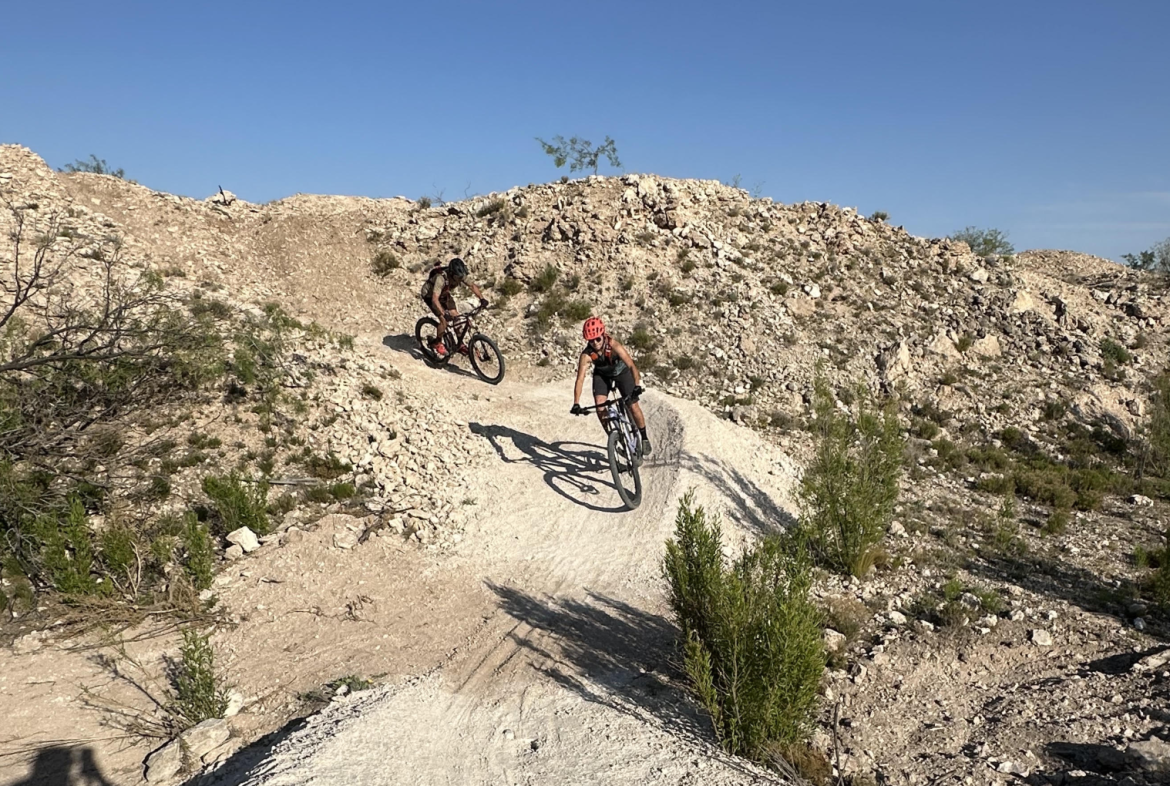
For our test, we had the opportunity to ride the new DH casing extensively long before its official launch, using pre production test tires across a range of different MAXXIS models over an extended period. Alongside established favourites such as the Minion DHR II and the Assegai, we also got our first experience of the brand new Minion DHX.

Every test starts on the workshop floor. Downhill casings are stiff by nature and can be a fight to fit, so the question with the new construction and its firmer bead is simple: is it any harder to mount than before?
To find out, we put several members of the editorial team through repeated fit-and-remove cycles on both tires. Plenty of sweat in the height of summer, and the same conclusion from everyone: there’s no noticeable difference in mounting effort between old and new. If you’ve never struggled with downhill tires, you won’t struggle with this one. And if fitting tires isn’t your favorite job, the new DH casing is no more intimidating than any other heavy-duty construction — MAXXIS tires remain among the easiest to mount in this category.


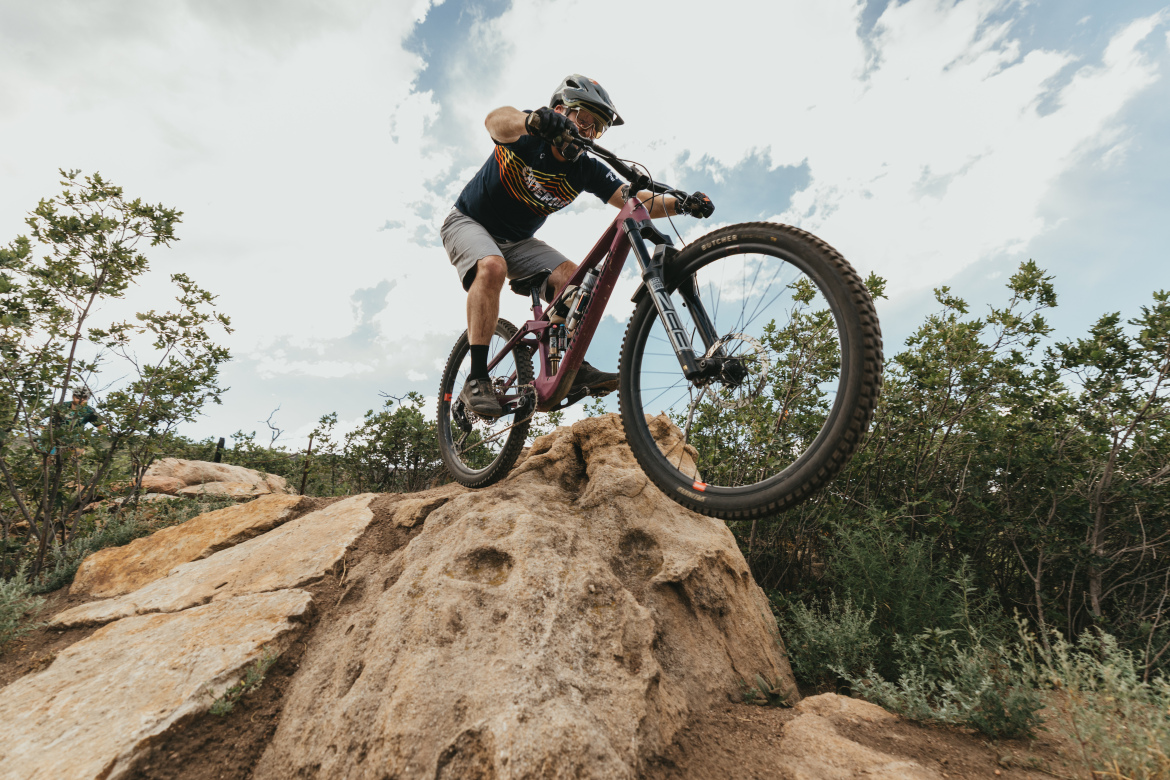
Now it’s finally time to hit the trail. In practice, the new MAXXIS DH casing delivers an impressively high level of vibration damping and genuinely lets you run lower pressures than its predecessor. At a rider weight of around 81 kg, we would typically run the previous MAXXIS DH casing at about 1.6 bar (23 psi) up front and 1.75 to 1.8 bar (25 to 26 psi) at the rear. With the new DH casing, we were able to drop pressures to around 1.4 bar (20 psi) at the front and 1.55 to 1.6 bar (22 to 23 psi) at the rear without any noticeable loss of cornering support.

The effect of the lower tire pressures is immediately noticeable on the trail. The tire literally mould itself to the terrain, generating an exceptional amount of grip. Corners, off camber sections and heavy braking zones all benefit from the improved ground conformity. At the same time, the casing remains remarkably composed. Even at these lower pressures, you can push hard through sculpted bike park berms without the tire folding over or feeling vague. Equally impressive is the absence of the characteristic “XX” crease marks on the sidewall, which on many tires are a telltale sign of excessive casing movement. Even with this setup, they take surprisingly long to appear.


Conclusions about the new MAXXIS DH casing
With the new DH casing, MAXXIS have clearly improved their toughest gravity construction. In the lab and on the trail alike, it resists punctures and impact damage noticeably better than before. The extra sidewall stability is immediately apparent from the first run, and it shows up as excellent cornering support, outstanding grip and the freedom to run lower pressures. If you ride bike parks regularly, race enduro or tackle demanding downhill tracks, this is one of the most convincing gravity casings on the market.

Tops
- Noticeably improved sidewall stability
- Measurably better puncture protection with only a modest weight increase
- Lower tyre pressures possible without sacrificing stability
- Reduced rolling resistance

Flops
- Improvements measured in the lab were not quite as pronounced as those claimed by MAXXIS
For more information, visit the MAXXIS website.
Did you enjoy this article? If so, we would be stoked if you decide to support us with a monthly contribution. By becoming a supporter of ENDURO, you will help secure a sustainable future for high-quality mountain bike journalism. Click here to learn more.
Words: Lars Engmann Photos: MAXXIS, Lars Engmann, Peter Walker











 English (US) ·
  French (CA) ·