

PROTECT YOUR DNA WITH QUANTUM TECHNOLOGY
Orgo-Life the new way to the future Advertising by AdpathwayOn Jul 16, 2026 Last updated Jul 17, 2026
BY MARK JOHNSON

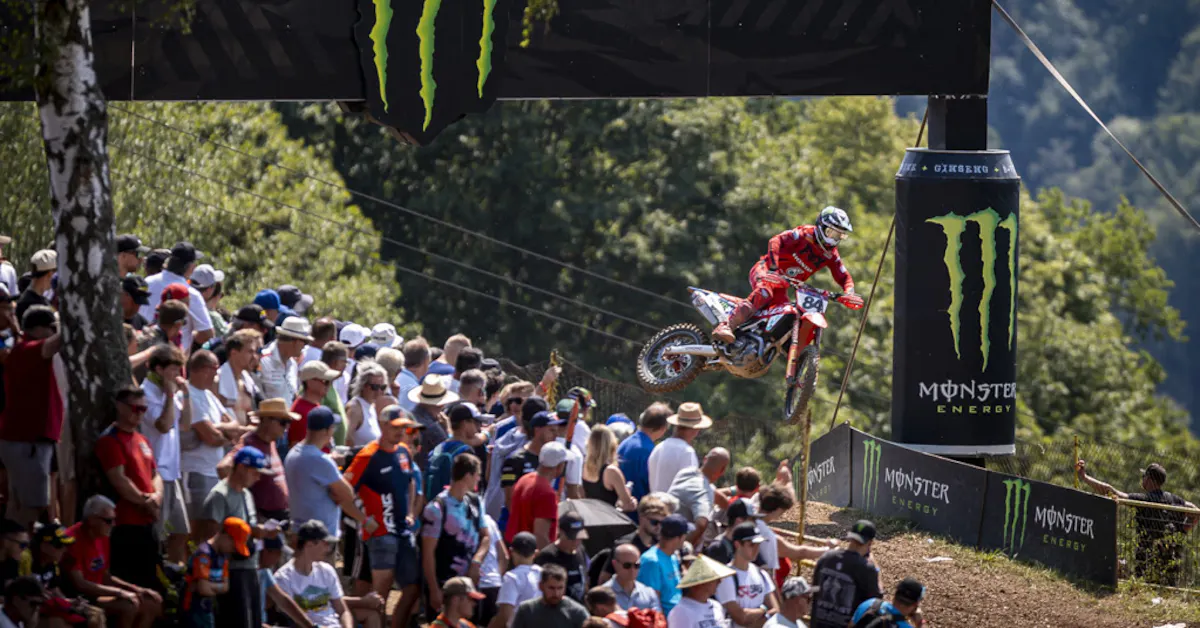
Recently, we had a customer come in to REP with a great question. He said, “I’m experiencing a rear-end kick issue through high-speed rollers, so I slowed the shock rebound to prevent the kick, but it did not solve my problem. Why is that?” While there’s no single answer to suspension issues, but the shock being too soft is often the culprit in this scenario. If the shock is too soft, two things can happen.
One, the shock gets too deep in the stroke, allowing the potential energy of the spring to build from being compressed further than it should and releasing with more force back to extension, causing the rear to kick up and unbalance the bike.
“THERE’S NO SINGLE ANSWER TO SUSPENSION ISSUES, BUT THE SHOCK BEING TOO SOFT IS OFTEN THE CULPRIT IN MANY SCENARIOS.”
Two, the shock is on the verge of being too soft, so every time it hits the next roller, it is almost passing into the danger zone that will build too much spring force until it either hits one roller that is just a bit sharper or one that is a little closer, not allowing enough time for the wheel to recover to a good position. Once this happens, your rear is kicking up and throwing you forward.
Now, for the first scenario, I would instinctively treat it by adding high-speed compression. High-speed compression is a great way to slow longer stroke impacts and maintain good dynamic ride height. The second scenario can also be treated with more high speed, but imagine what slowing the shock rebound would do in this case. If you are already on the verge of being too deep, slowing the rebound can bring you into a packing state where the rear will get lower every time you hit the next roller until it has nowhere to go but out.
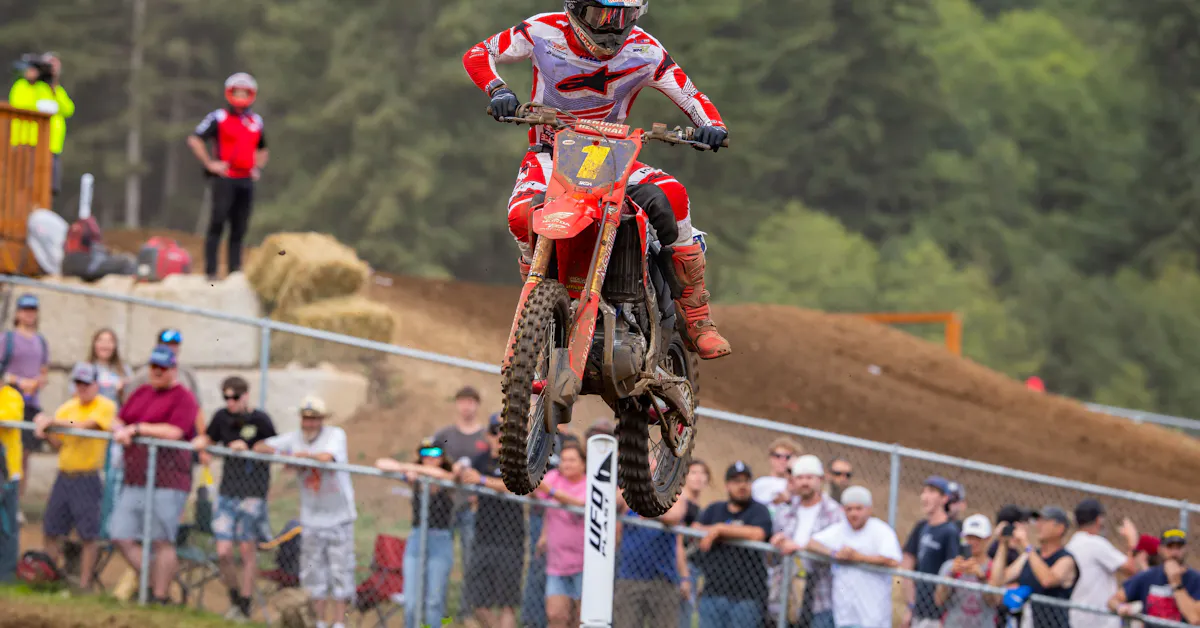
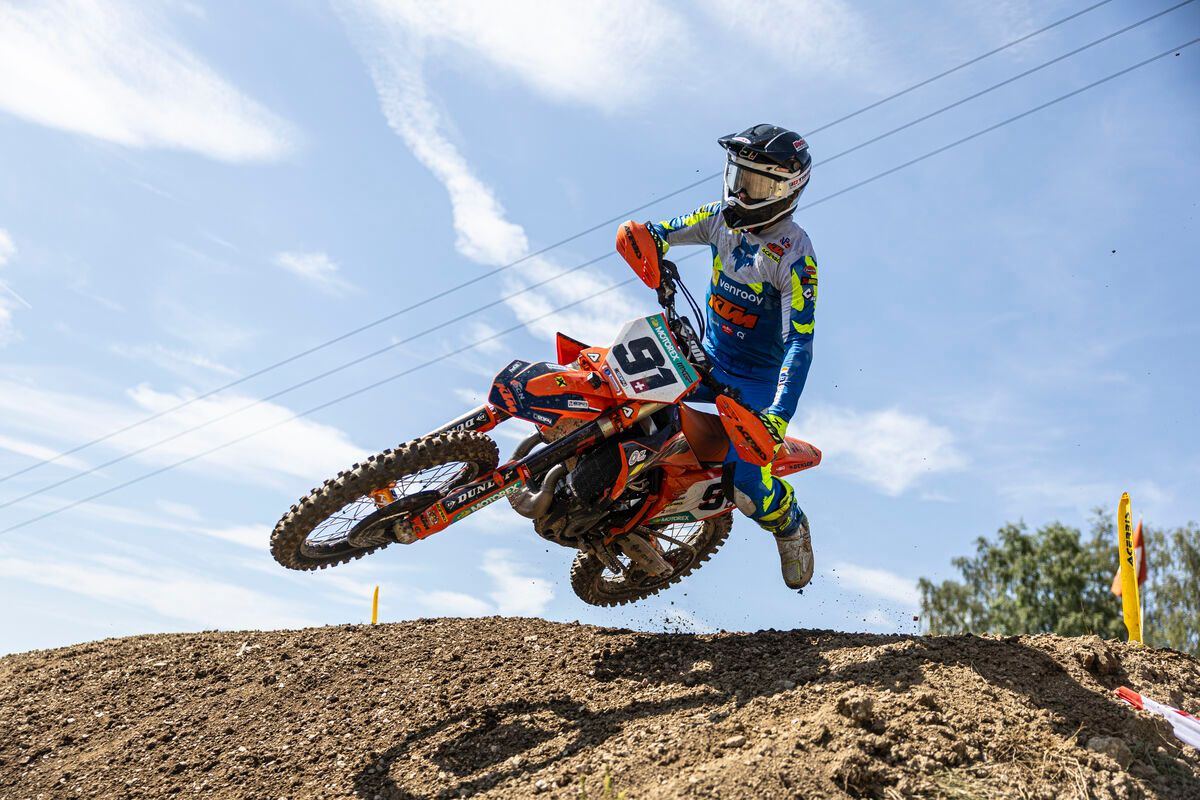
Another common mistake I see involves fork height. An example of this is the current Austrian chassis. I have seen riders push the fork down from 5mm to 2.5mm or even flush to prevent a tuck in the apex of the corner. Well, in my experience, it is what happens before the tuck that will bring to light the root cause. With the fork pushed out, the front end will be underweighted and begin to push as you initiate the corner, then tuck and grab in the apex. Also, I have seen it go the other way with the current Honda model. People think the front is harsh, so they raise the fork up in the clamps to alleviate some of the crust; however, doing that will create more problems than it solves by throwing off stability and balance. This bike gives the feeling of being too stiff because the fork is underdamped for many riders, causing them to ride in the deepest, harshest part of the stroke. The fix? Going stiffer on the fork will mitigate the harshness while keeping overall balance and stability intact.
Ultimately, the best approach is to make incremental changes and evaluate their effects. If a change doesn’t improve the issue, reverse it and try something else. If you don’t notice a difference, increase the adjustment until you do. Remember, there’s no such thing as going too far when you’re trying to find the right direction. You learn as much going in the wrong direction as you do going in the right direction.
MEET THE MAN: Mark Johnson was an in-house WP suspension technician at Red Bull KTM for 10 years. He has won championships in Supercross, motocross and off-road racing. Now, Mark’s shop, Research Engineering Performance or “REP” is based in Temecula. They offer factory-level experience to everyday riders. Visit him at www.repsuspension.com











 English (US) ·
  French (CA) ·