

PROTECT YOUR DNA WITH QUANTUM TECHNOLOGY
Orgo-Life the new way to the future Advertising by AdpathwayAfter decades of bikepacking, touring, and obsessing over gear, some of the things we once considered essential have become dead weight. In the first installment of The Cut List, Logan digs into 15 pieces of gear, habits, and strongly held opinions he’s left behind and why experience ultimately changed his mind. Find The Cut List Vol.1 here…
When I was a kid, I remember my grandparents proclaiming, “Your tastes change every seven years.” They were probably directing that useful tidbit at my brother or sister, both picky eaters. Not me; I’d eat almost anything. The one exception was melon—all of it: watermelon, honeydew, cantaloupe, you name it. Every once in a while, I’ll try watermelon again, remembering that adage and wondering if maybe my tastes have finally shifted. Nope. Still terrible. But I’ve come to think there’s some truth to the saying. If anything, I’ve learned that it’s probably best not to get too attached to an opinion or overconfidently declare that you’ll always love or hate something.
That’s been true of cycling. Over the last decade and a half of touring, bikepacking, testing gear, and endlessly tinkering with my setup, I’ve accumulated plenty of strong opinions and abandoned nearly as many. Experience has a funny way of whittling things down and making you more open-minded. Some gear gets replaced by something simpler or better; other things disappear from the kit altogether. Habits that once seemed essential start feeling unnecessary, and ideas I once swore by eventually get reconsidered. The Cut List is a new series about that process of subtraction: the things we’ve stopped carrying, using, wearing, and doing after untold miles spent figuring out what actually works for us.
All 15 things and practices on this first list are ones I advocated for at some point in my bikepacking career. I used some for years and defended others enthusiastically. For one reason or another—which I’ll try to explain—I’ve since changed my tune. That doesn’t necessarily mean they’re bad ideas or that you should cut them from your own kit. It just means they didn’t survive mine. Find the full list below.
Clipless Pedals
I’ll start with one sea change that regular readers might already know about. Long story short—you can read more about that in my recent review of the Tectonic Alibi pedals—I switched from clipless pedals to flats because of an injury. Before that, I held pretty staunch opinions about clipless pedals, often asserting something along the lines of, “I don’t know how anyone could do a big ride on flat pedals.” I’m sure many people reading this feel the same way. For me, the argument came down to two things: the perceived loss of power on the upstroke and the idea that you sacrifice some control and confidence when you’re not locked in. Taken together, that seemed like solid rationale for avoiding platform pedals on long rides over steep, rough, and technical terrain.

Several years after the effects of my injury subsided, I’ve completely reversed course. I now use flat pedals almost exclusively—long rides or short, singlespeed or geared, trails or gravel—and I can’t imagine going back to clipless pedals for a multi-day trip. For me, flats offer too many advantages: I’m more confident on technical terrain, my knees are happier, my shoes are more comfortable, and the whole system is simply more convenient. Perhaps most surprisingly, I think I’ve become a better rider because of the techniques I’ve learned and continue to refine on flats. At this point, I don’t feel like I’m giving up anything in terms of efficiency or performance, and I’ve gained quite a bit in return.
Always Making New Routes
For years, I rarely set out on bikepacking routes that were designed by other people. Unless I was re-scouting for documentation’s sake or going along with someone else to ground-truth their route, I always tried to create new routes of my own. If I wasn’t making something new, I wasn’t bikepacking. This was a work-driven habit, of course, and not a healthy one.
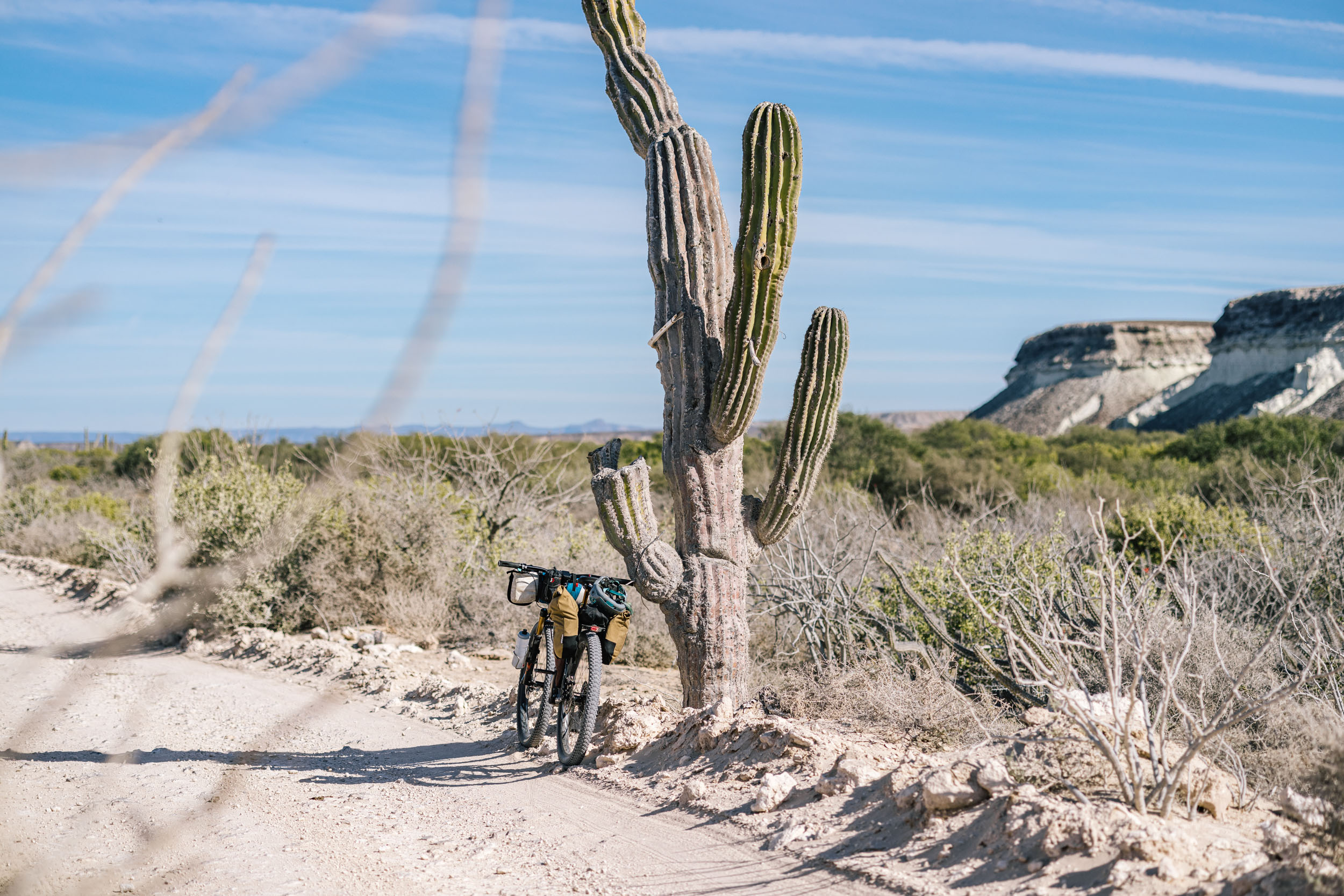
It all changed in 2022, when we decided to ride half of the Baja Divide to see what all the hype was about. It was refreshing to pedal a route that someone else designed and try to peer behind the curtain of why and how it was orchestrated. Since then, I’ve tackled quite a few routes designed by others, simply for the sake of enjoyment. It turns out, I love having the logistics largely spelled out for me, and I’m happy not worrying about finding the perfect segment or risking a trip-altering reroute. Highly recommended.
Full-frame bags
If you’ve spent any time on this website, you’ve probably heard one of us preach the gospel about prioritizing a low and centered placement of heavier gear on the bike. There’s no refuting this. Keeping as much packed weight as possible within the center of the bike’s frame is the best way to optimize handling, especially on singletrack and other technical terrain. The frame triangle is the most logical spot. This large, triangle-shaped void is the heart of my preferred packing method, and for years, I systematically outfitted every bike I reviewed with a full-frame bag. That mantra hasn’t changed for me, but I no longer care for full-frame bags.
I think the wedge design is superior for a couple of reasons. One, it places the heaviest item (water) in the most central position. Yeah, bottles aren’t always full, but if I’m carrying two or three bottles, the one stowed in this position is the last one I consume. Second, it’s a more versatile configuration for day rides and afternoon trail spins, as the water bottle stays accessible while pedaling and the wedge offers plenty of room for essentials, particularly on a hardtail. Third, the shorter bag helps minimize the risk of your knees or thighs rubbing against it when overpacked.
Letting Bosses be the Boss
That leads me to another fun fact. I used to be very particular about threaded eyelets when choosing a frame. If a bike didn’t have rack mounts on the seat stays or a pair of eyelets under the downtube, those were significant cons, and sometimes even dealbreakers. Neither is a requirement for me now, and that goes to show how technology has changed the landscape—and even made bikepacking gear evolve to work with more bikes.

A couple of reasons explain this shift in my opinion. Mounts under the downtube are nice to have, and I still consider them an upside on any bike frame. But I don’t rely on them as much for carrying a third or fourth bottle as I used to. One reason is what I discussed above—that having a pair of bosses on the seat tube matters more—and that’s where I usually carry a liter-sized bottle when bikepacking. The prevalence of three-pack mounts on rack uprights is another contributor. Lower bottle placement is better, but exposing a bottle to muck and manure was never the perfect solution, so I’d opt for a bottle cage on a rack any day of the week.
As for rack eyelets, I’m pro axle-mount rear rack, so there’s no real need for traditional seat stay bosses. For some reason, the idea triggers a lot of people, but I now have axle mounts on almost all of my bikes. I rarely have flats—because tubeless—and the perceived trade-off is worth the benefits: minimalism, the ability to quickly remove and attach, and the stability and strength of the axle load placement.
Weight Weenie Camp Kit
As I stated in an Editor’s Dozen at some point, I’m getting soft, and I’m perfectly fine with that. First came the camp chair, which I now won’t leave home without, and then I switched to wide, oversized sleeping pads (25” vs. the standard 20”). A few years ago, I probably would have mocked the current me, but both of these gear shifts have been transformative for comfort and rest—as has adding multiple pillows. I now carry an inflatable pillow and the pillow strap, which provides more loft and a much better sleeping situation. All three of these luxuries make a remarkable difference in camp, and at this point, there’s no going back to a standard pad, crappy weight-saving stuff-sack pillows, or sitting on logs.
Backpacks
For the better part of five years, I religiously wore a large Osprey pack or a Mission Workshop Hauser on bikepacking trips. The main reason was to carry my camera and a spare lens or two—mostly to keep it off the bike and protect it from vibration—but I also used it to stash extra food and rain gear. I gave that up after my back injury and haven’t looked back. No matter the number of portages or hike-a-bikes, I don’t think it’s worth the strain and potential chafing. At most, I’d carry a compressible ultralight Dyneema backpack for short-term food overflow. And a hip pack has since replaced the backpack for camera-carrying duties.
Fast Coffee
True story: on our 2016 trip in Kyrgyzstan scouting the Tian Shan Traverse, I recall bartering with packets of Starbucks Via. It became a currency among our four-person expedition crew, and I think one of us traded several sleeves of the brown powder for a Snickers bar at some point. On most trips over the years, Via or another mixable instant coffee was the norm. It was fast, light, easy, and you could drink it cold when trying to conserve stove fuel. Nowadays, instant swill no longer flies. I’ve become a bit of a coffee snob. If I’m going camping, I want a really good cup of coffee in the morning. My preferred method is a simple, lightweight pourover setup (find more about it here). No more bitter brown grog for me, please.

Seat Packs
I’ve largely abandoned standard seat bags for most bikepacking trips. This might surprise some people. There’s a general misnomer on the social interwebs that bikepacking = seat bags (or “ass-rockets” as they’re sometimes rudely described). That’s simply not true. Bikepacking isn’t a particular set of bags. It’s a way to reference the style of packing and the types of routes—minimal and dirt-first.
All of us on the team have experimented with a variety of bag setups, and over the last five or six years, I’ve prioritized running the longest possible dropper posts on my bikes. With that preference, I’ve shifted almost exclusively to racks. Lightweight racks have come a long way, and with the latest options from Tailfin, Hunter, Mica, Old Man Mountain, and Tumbleweed, the seat pack has all but vanished from my packing repertoire. Maybe 9.9 times out of 10, I use a rack and either a dry bag or a pair of small panniers on the rear of the bike.
Accessory Bags
There’s an inside joke a few of us here bat around from time to time: if someone loads up their bike with enough things dangling and strapped to various places, it might get called out as a rolling yard sale or a Christmas tree. We even made a sticker based on the idea: “Resist The Dangle.” That’s not to say there’s anything wrong with strapping gear wherever it fits. I get it; packing a bike isn’t always easy, and lashing things here and there can help conserve valuable bag space. Ten years ago, my own bikepacking rigs often looked like an eclectic junk show on wheels.
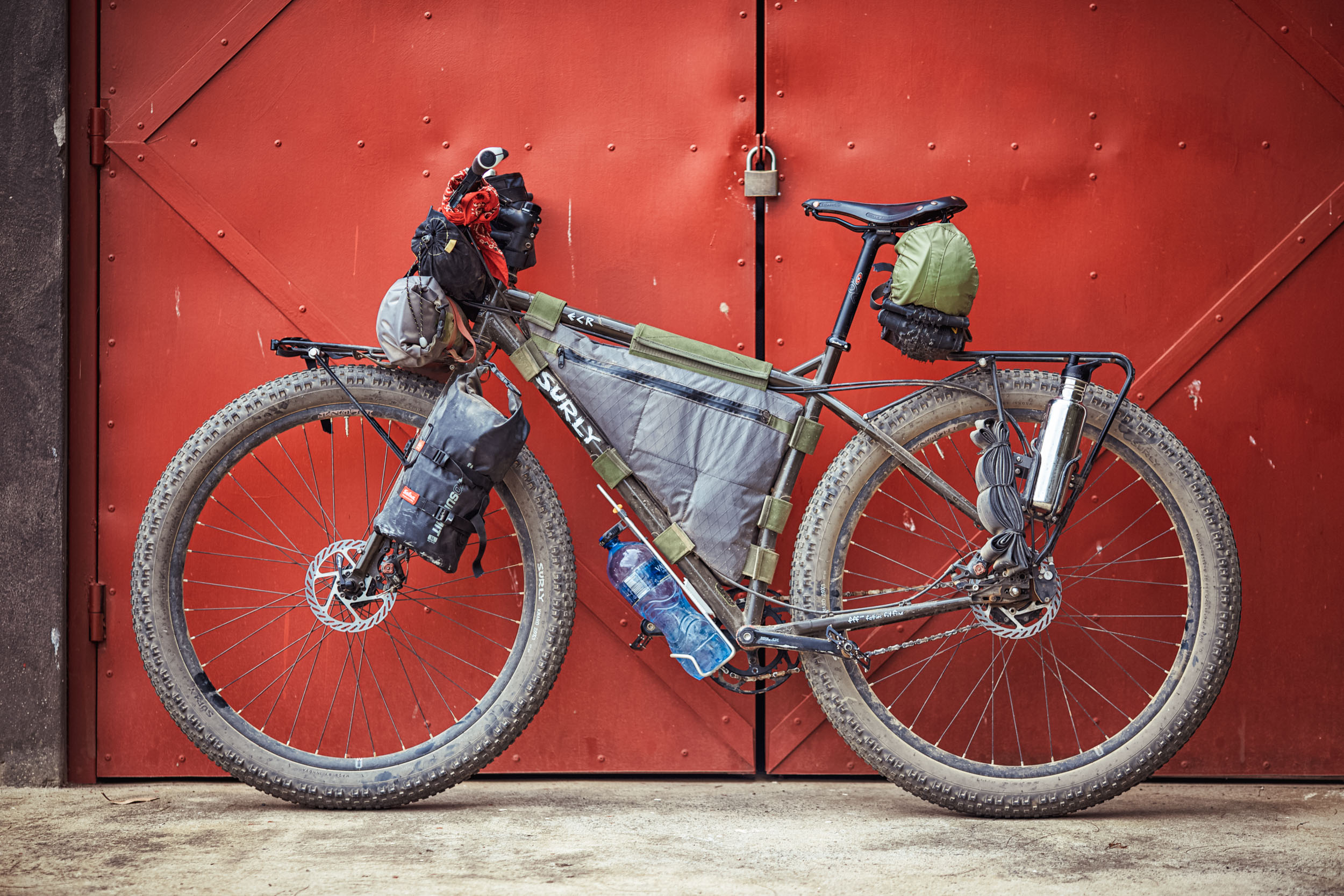
These days, I prefer to keep my setup relatively clean, and I pride myself on using fewer bags and strapping fewer things to the bike. Beyond streamlining the aesthetic, I’ve found that it makes organizing and repacking gear easier. Again, there’s nothing bad about accessory bags. Gas tanks, stem bags, downtube bags—I’ve used them all—are handy, and they’re a necessity for many folks. But, for whatever reason, I strive to go without them, save the occasional use of a Rogue Panda Bismarck Bottle Bucket, which is essentially a stem bag purpose-built for carrying a water bottle.
Camp Shoes
Speaking of lashing random stuff all over the bike. For the better part of a decade, you could always spot a pair of camp shoes strapped somewhere on my kit. It was usually attached to the top of a seat bag, on a rack, or on the front of a handlebar roll. However, camp shoes have all but disappeared from my pack list since I switched to flat shoes for all my multi-day rides. I don’t really need them, and that makes me happy. It’s one less mess.

Long Shorts
A lot of folks don’t wear cycling-specific apparel when they ride, which is understandable. It can be more expensive, for one, and the sporty aesthetic isn’t for everyone. But it’s hard to deny that the fabrics, construction, and details found in good cycling shorts are often better suited to many nights in the dirt and long days in the saddle than their pedestrian counterparts. I firmly believed in NZO shorts for that very reason. They proved absolutely bombproof on six-month tours through Africa and elsewhere, and for years, I assumed the classic knee-length mountain bike short was the way to go.
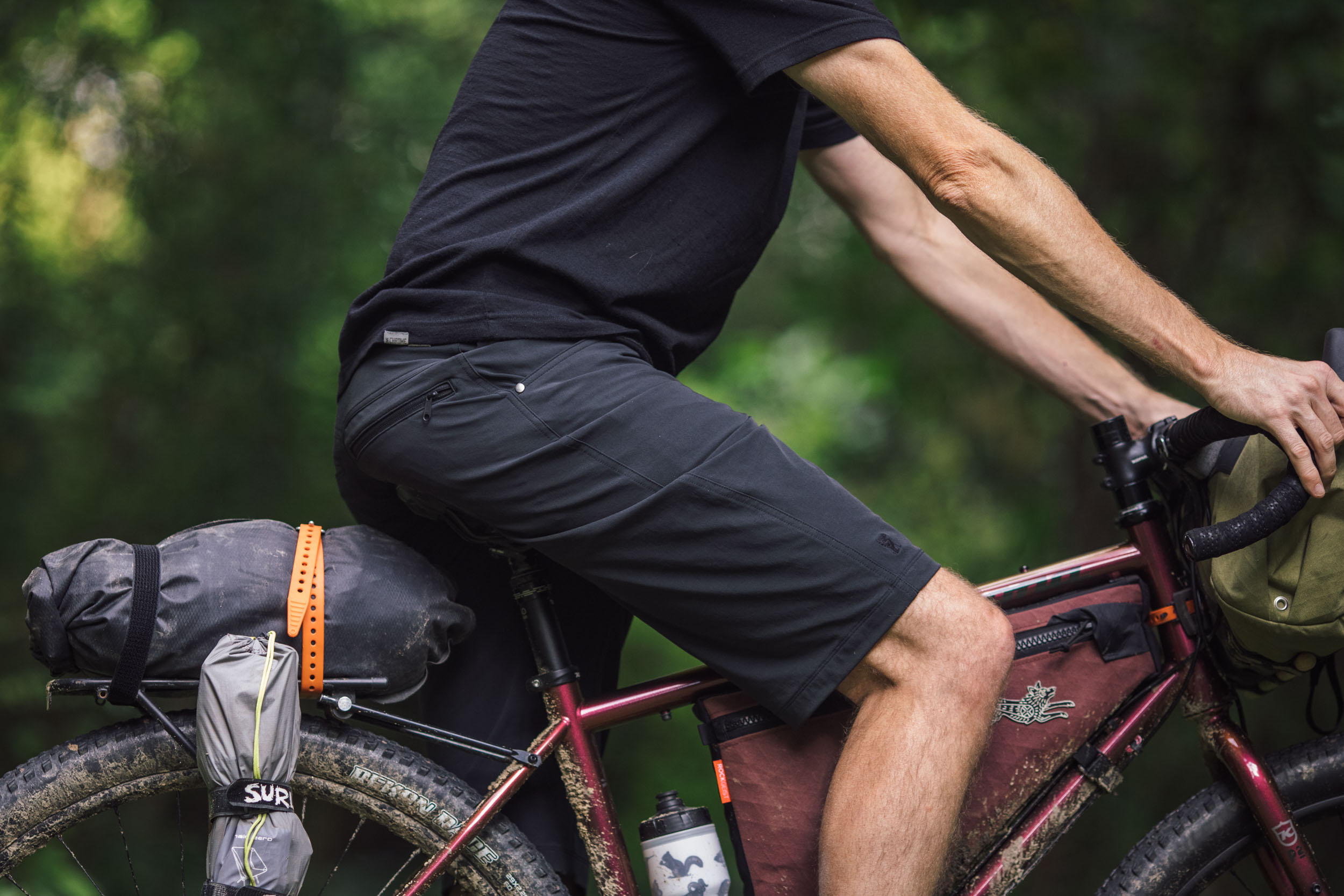
These days, though, standard MTB shorts get on my last nerve. They’re all way too long. Since I started practically living in Ornot Mission Shorts several years ago, I’ve come to appreciate a shorter cut—not just for the look, but because there’s less fabric bunching around my knees, they feel cooler in hot weather, and they generally disappear a little more when I’m pedaling. Now, anytime I pull on my old Chrome Union or Patagonia MTB shorts, all I can think about is the extra material flapping around my knees. It’s funny how something I never gave a second thought to for years can feel so wrong.
Dynamo Hubs and Lights
I realize there’s a time and place for dynamo hubs, but in my 15 years of bikepacking and touring, I can’t say I’ve ever absolutely needed one. At one point, I really liked the idea, and I used dynamos on various bikes for some very big trips. I suppose having a dynamo light on my Salsa Cutthroat came in handy during several 7- to-10-day scouting missions for the Eastern Divide Trail, when I was stringing together multiple 100-plus-mile days. But even then, it felt more like a luxury, because I didn’t have to worry about keeping my headlight batteries charged. I could have just as easily used my trusty Fenix BC26R and carried a couple of spare batteries. In fact, I did exactly that on one of my big pushes while scouting the Canadian section, and it worked perfectly well.
In my experience, the charging capability hasn’t really justified the added complexity, either. I ran a Shutter Precision PD-8 during our trip through Uganda and Rwanda, primarily to keep my Garmin GPS unit charged and occasionally top off cache batteries. It wasn’t terribly efficient, and I eventually found myself charging at lodges and campsites rather than fussing with the dynamo setup. That experiment came to an abrupt halt when the hub more or less imploded and stopped us in our tracks in Rwanda. Fortunately, I was extremely lucky and managed to find a replacement hub to rebuild my wheel and keep going.
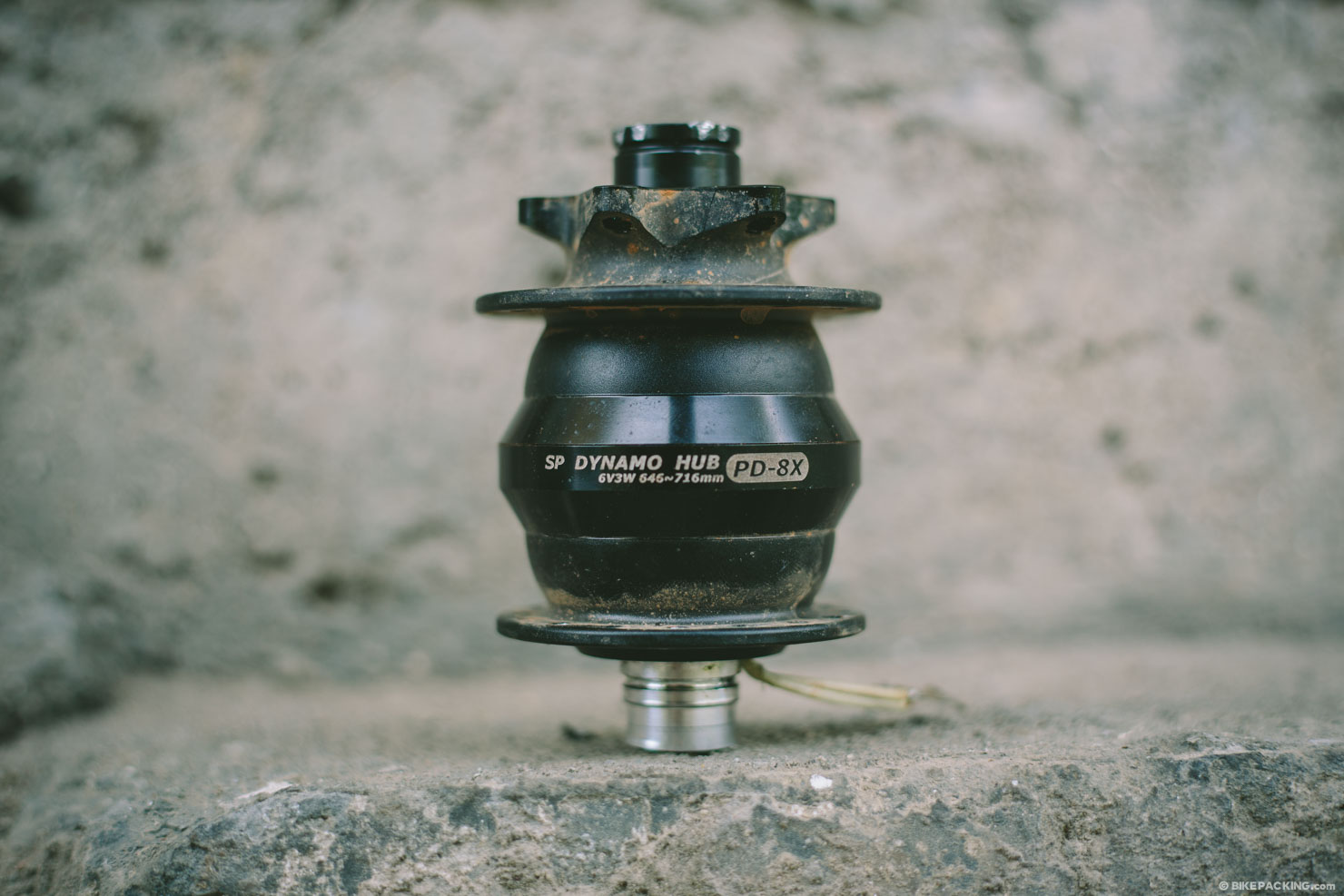
None of that is to say dynamos don’t make sense. For ultra-endurance racing, long stretches of night riding, or trips where access to power is extremely limited, I can see the appeal. But for the way I ride these days, the added cost, weight, wiring, and complexity don’t offer enough of an advantage over modern rechargeable lights and a couple of spare batteries. Unless I take on something like the Tour Divide, where I’m racing the clock and running from the broom wagon, I don’t foresee putting a dynamo on any of my bikes again soon.
Bikepacking in Sandals
I can’t say I was ever an apostle-level zealot when it came to riding and bikepacking in sandals—eh em, Cass Gilbert—but I did give it a fair shake. Several of my friends, including my wife Virginia, love and regularly ride in sandals. The gold standard (Bedrock Cairns) have their merits: ultra-tacky soles, seemingly invincible construction, and of course, the ability to free the toes and forego socks. I had to try them. I used them regularly one summer during COVID times for bikefishing outings and local overnighters, and I tried them in Oaxaca, where the benefits are pretty apparent in the rainy/shoulder seasons, when unpredictable drenchers pepper the hot and sunny afternoons.
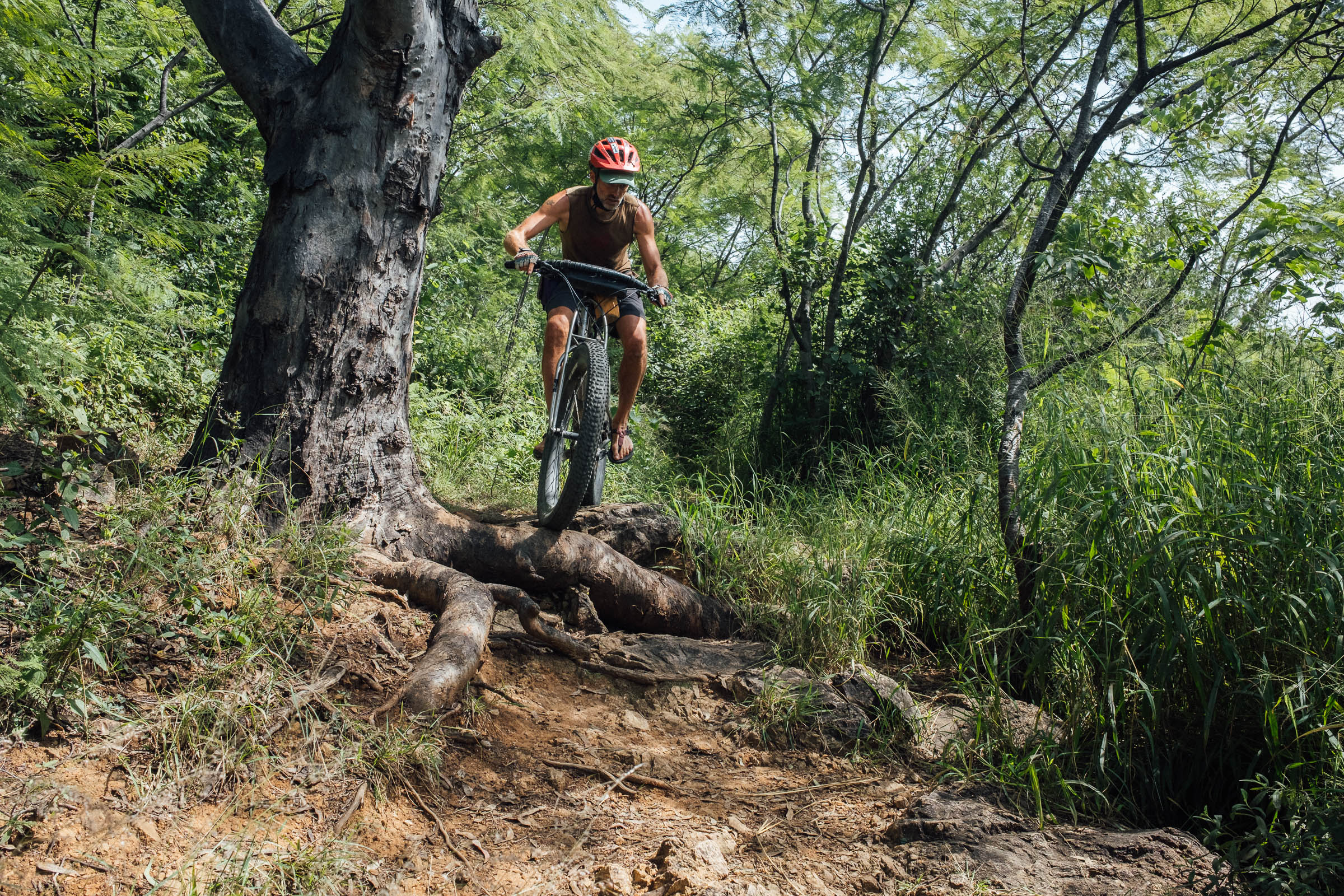
Truth be told, I was simply too paranoid about injury. I’ve seen two people nearly rip a toe off while riding technical trails in sandals. Plus, the threat of an errant stick, loose rock, or jumping cholla is ever-present on any dirt road, no matter the technicality. Kudos to everyone willing to risk their piggies, but not me.
Wing Grips
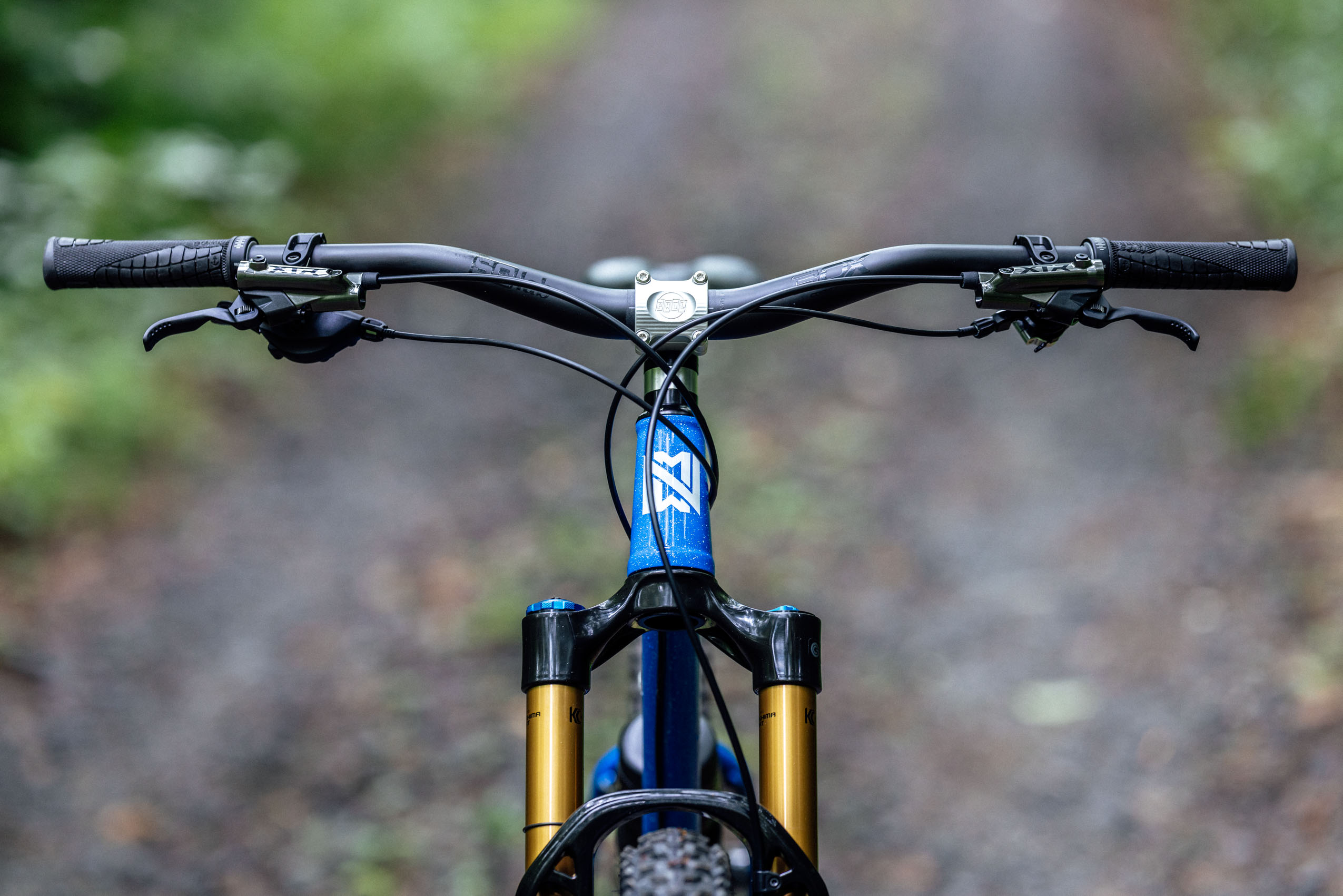
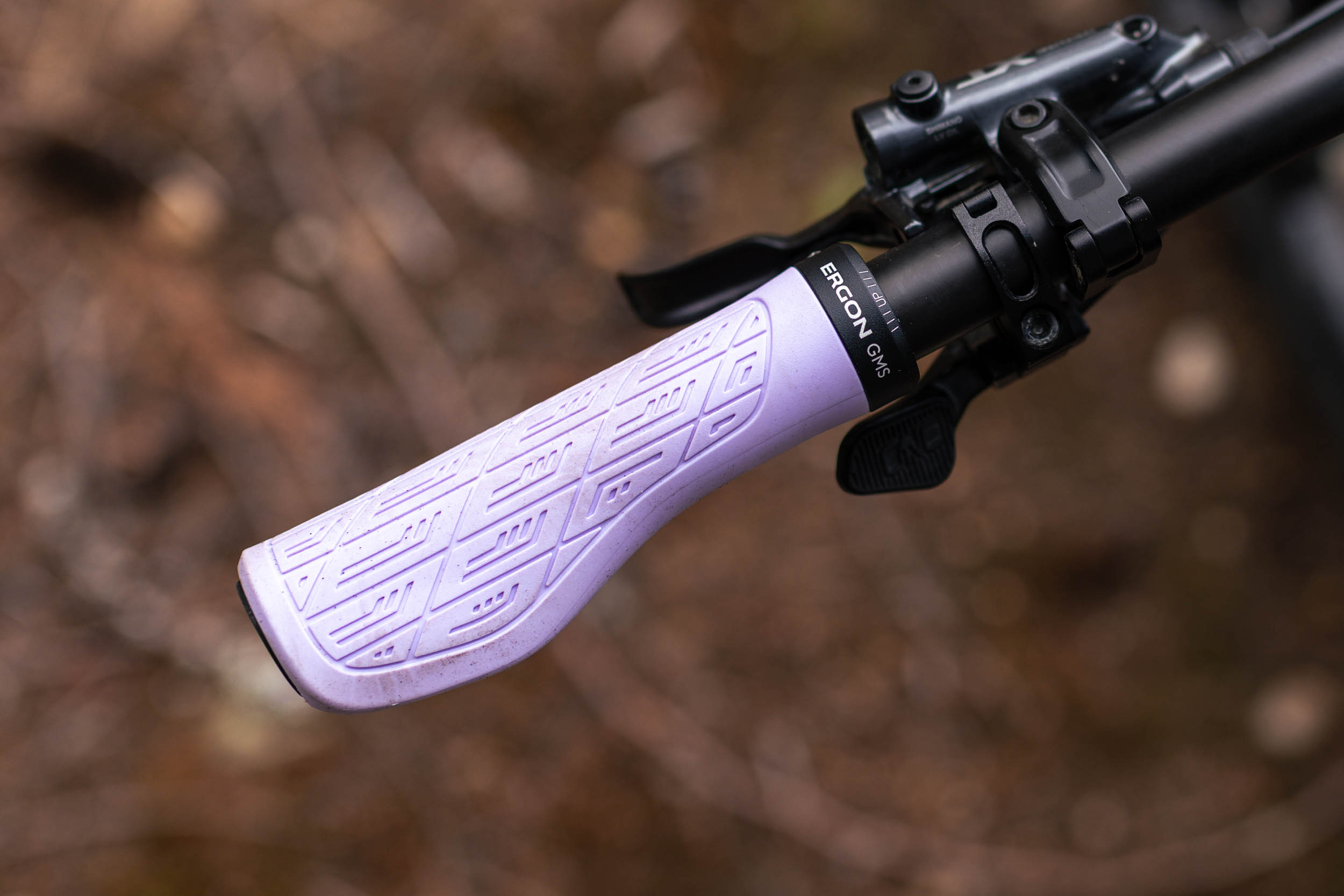
As with many of these changes, one shift in preference often cascades and requires adjustment to parts and kit elsewhere on the bike. Over the last four or five years, I started spending a lot of time on a singlespeed. With that, I began to fall out of favor with the once-loved “winged” grips. The Ergon GA3, for example, was a favorite of mine and has a minimal comfort “wing” that’s significantly smaller than their popular GP1 touring grips. But while singlespeeding, I couldn’t get it in the right position to work with both a seated hand placement and a more aggressive standing pedaling position. It’s still a great grip, and I may go back to it for longer trips, but I’ve found I prefer dialing in my handlebar fit and using comfortable, more cylindrical grips. My favorite right now is the SQlab 7OX 2.0 Pro. It’s a downhill grip, but its slight ergonomic shape and carefully placed soft rubber areas are very comfortable.
Chamois
For most of my bikepacking career, I rode in a padded spandex underlayer, otherwise known as a chamois. In 2024, I did a complete about-face when I lost one chamois and another one wore out. I decided to try a few different merino boxer briefs that were recommended, which I’ll share more about in a future post after comparing several, but all in all, I’m completely happy with this decision and can confidently say (I think) that I’ll never go back to the dreaded clammy chamois.
Further Reading
Make sure to dig into these related articles for more info...
FILED IN (CATEGORIES & TAGS)
Plan
Please keep the conversation civil, constructive, and inclusive, or your comment will be removed.




 English (US) ·
  French (CA) ·