

 14 hours ago
3
14 hours ago
3
PROTECT YOUR DNA WITH QUANTUM TECHNOLOGY
Orgo-Life the new way to the future Advertising by Adpathway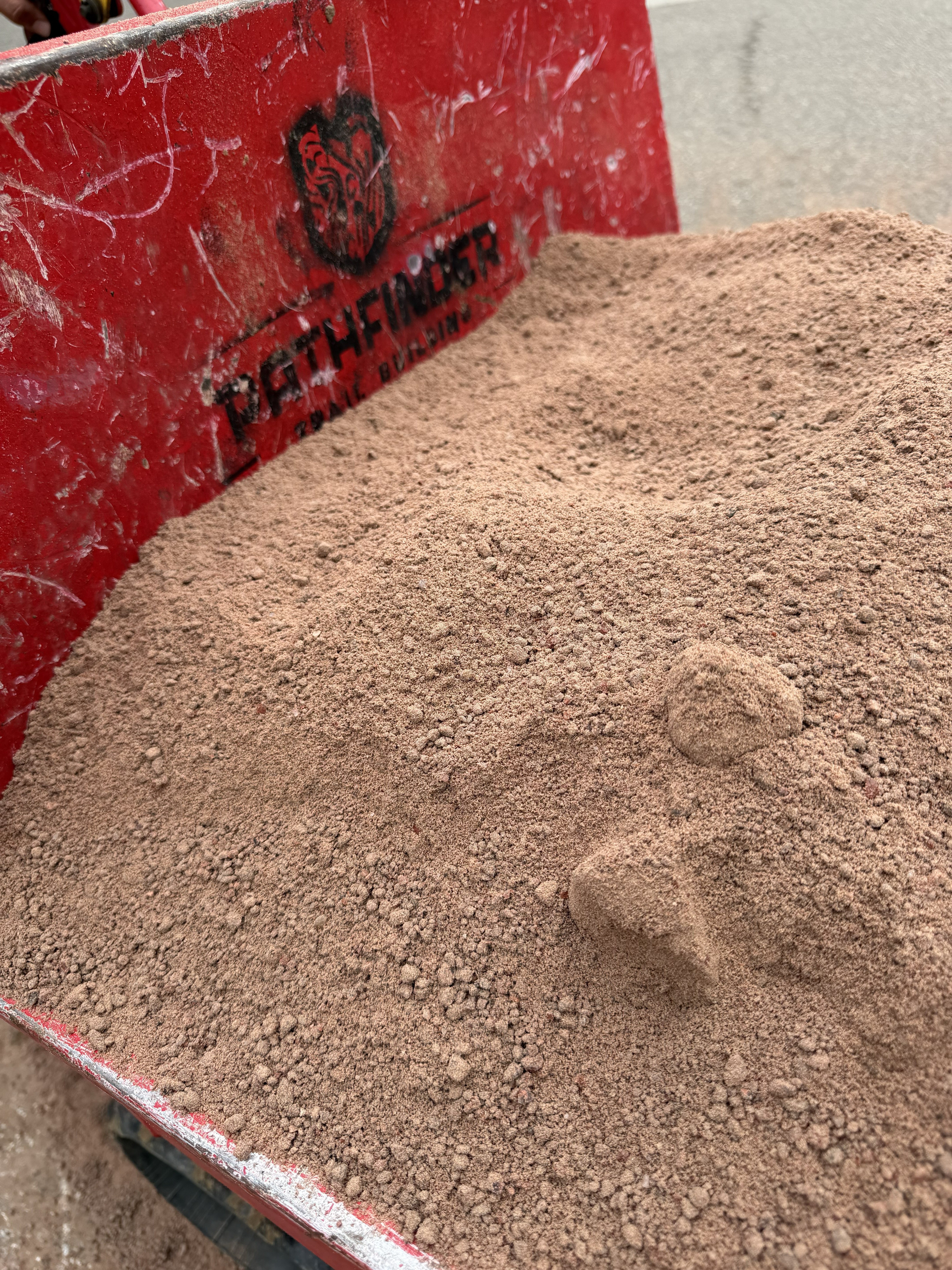
Singletracks recently came across a social media post by Pathfinder Trail Building that sparked our curiosity. In it, Adam Buck, the owner, mentioned using a new material called waxed granite to re-surface a jump line at Carver Lake Bike Park in Woodbury, Minnesota.
Having never heard of this material before, we were also curious about how and when trail builders and their clients decide to use non-native materials to build trails. We reached out to Buck, as well as Reed Smidt, the Recreation Operations Director for the city of Woodbury, to get their views on the topic.
Singletracks also spoke with Mike Carpenter, the Lead Bike Park Project Manager for American Ramp Company, to get his thoughts on using non-native materials on trails.
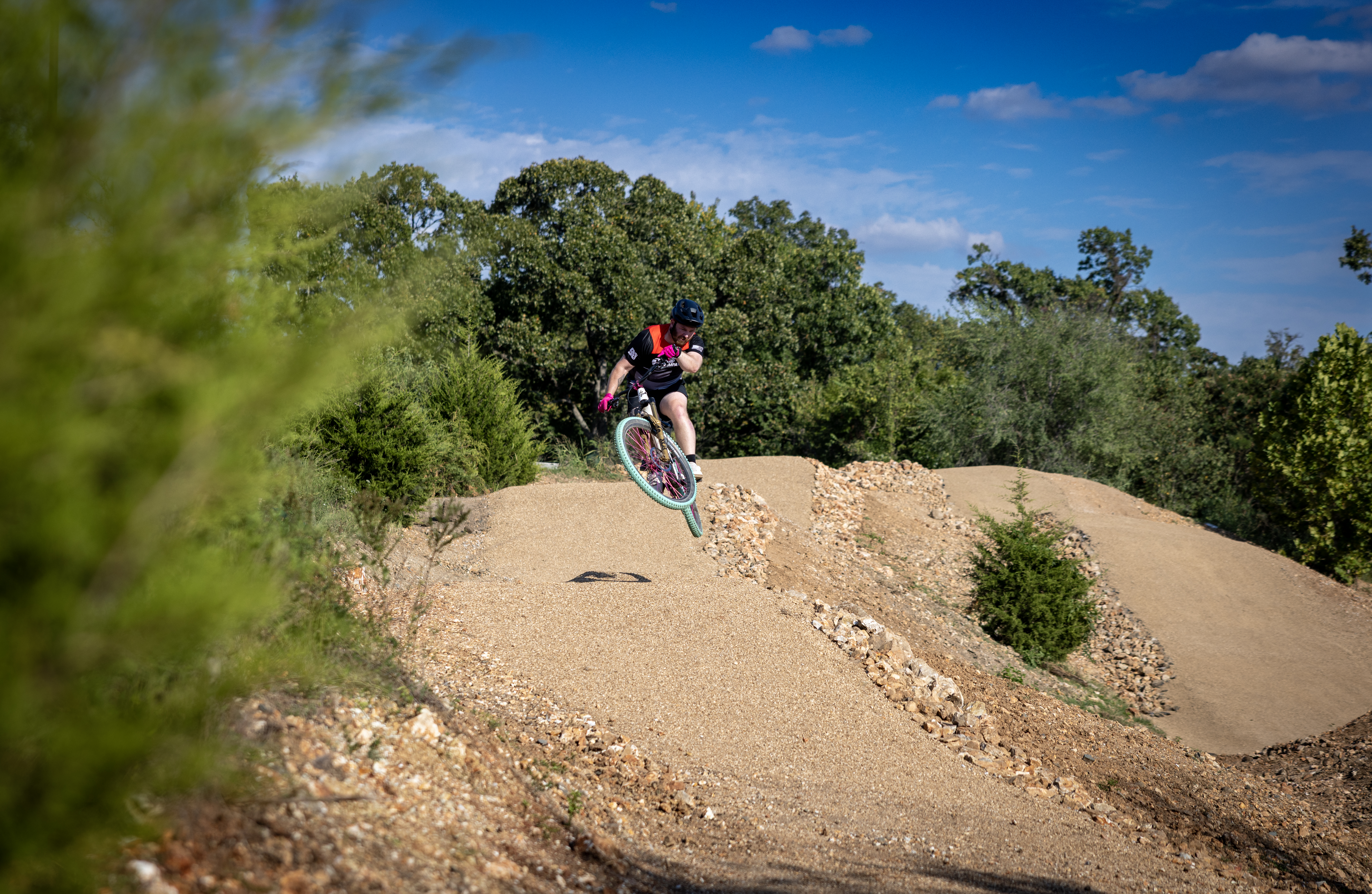 Buck needed a material that would be erosion-resistant, but he did not want to use chip seal like the trail above. Photo: American Ramp Company.
Central Minnesota, where Buck is based, has erosion-prone soil
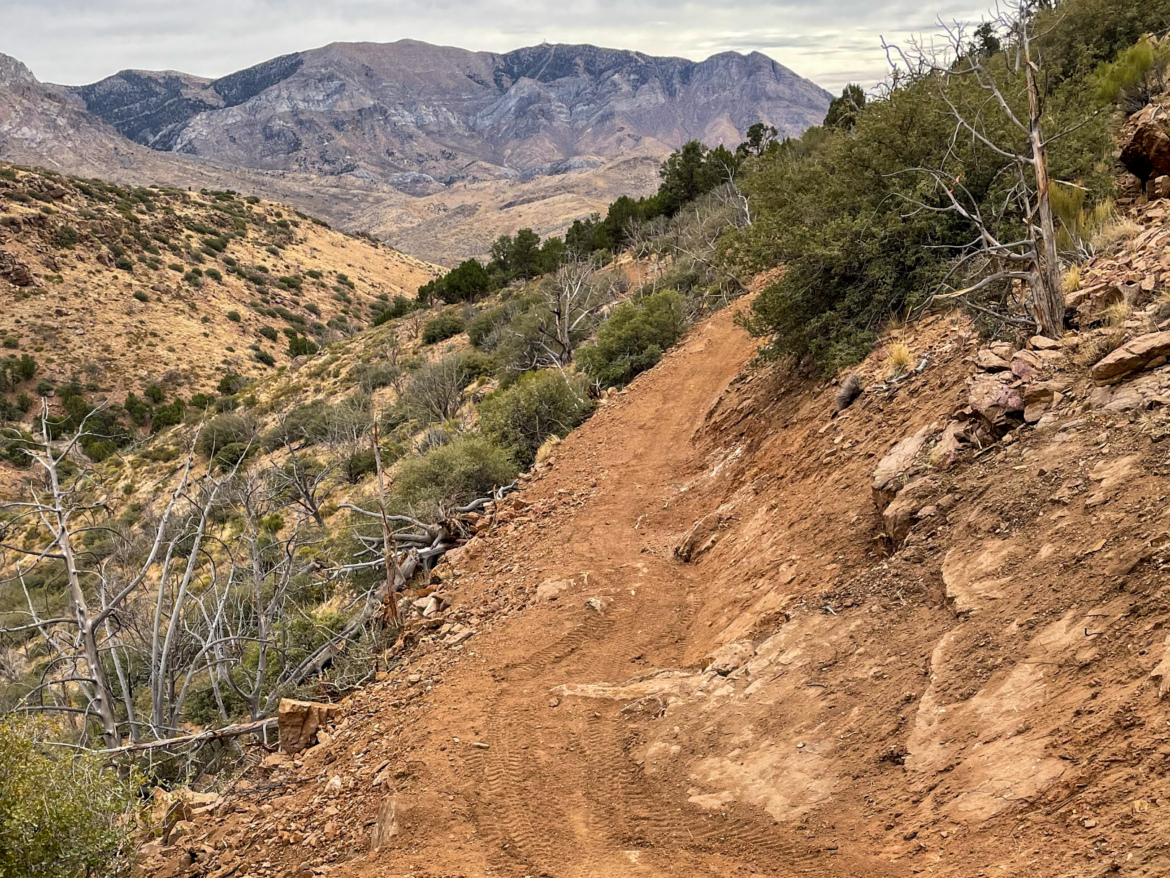
Buck told Singletracks that building trails in the Twin Cities area of Minnesota can be challenging. “It’s mostly sand or clay. There’s not much rock.” He said that land managers are always looking for solutions to armor existing trails.
When Buck is brought in on a project, he asks the client what their maintenance plan is, whether they have volunteers to help maintain the trails, and how they are going to take care of the trails he builds. “My perspective is that I want our work to look nice forever.”
Naturally, that means finding non-native materials to use when building trails there. However, both Buck and Smidt said that having a natural look is important to them, as well as to local riders. Buck told Singletracks that “I got a lot of feedback from riders about not wanting chip seal trails.”
That’s why one of Buck’s projects became a test site for a new non-native material called waxed granite.
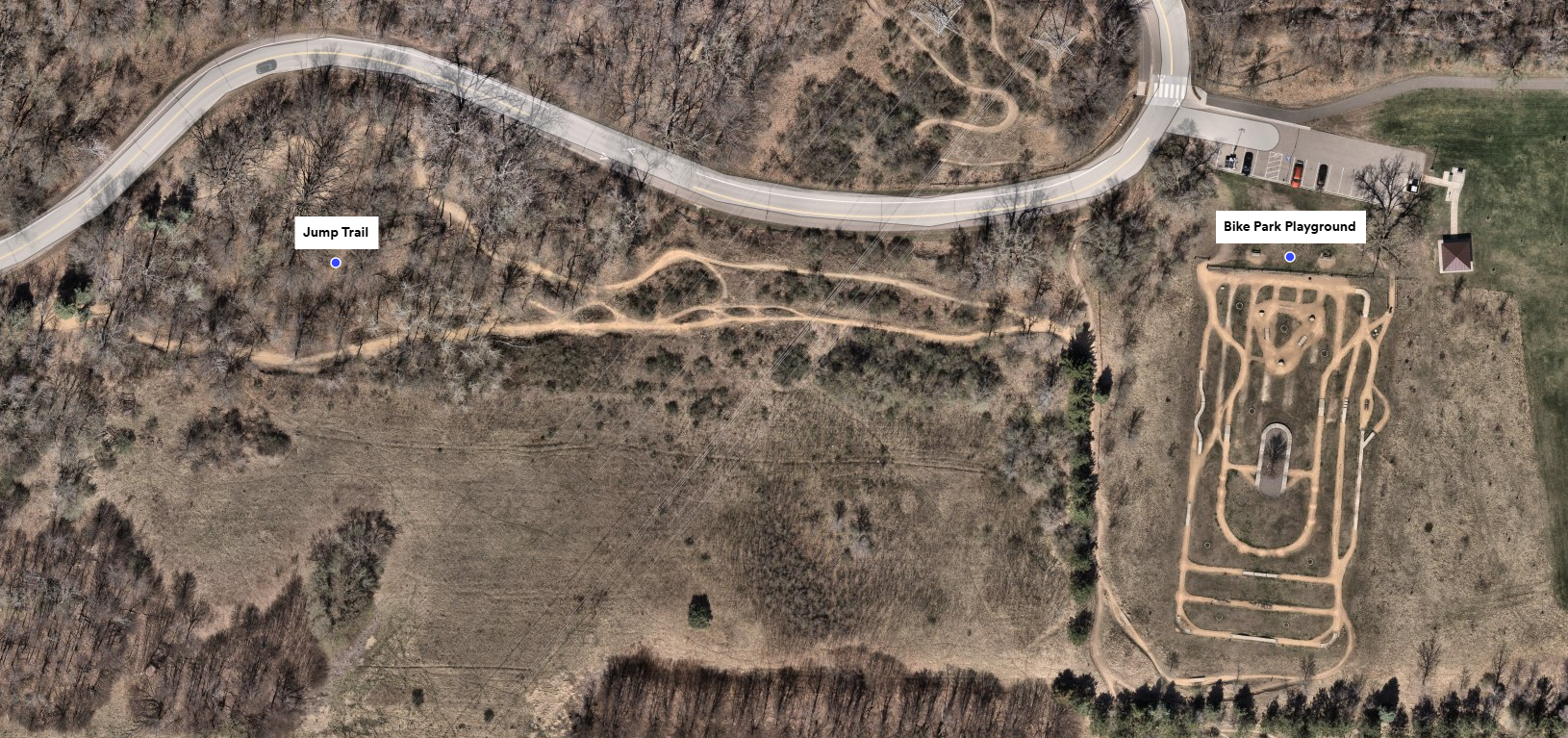 The jump trail at Carver Lake Bike Park was suffering from erosion issues and needed constant maintenance. Photo courtesy of the City of Woodbury.
Constant erosion on a jump line led to a search for more sustainable trail materials
Carver Lake Bike Park in Woodbury, Minnesota is part of a 130-acre community park that has a singletrack trail, a bicycle playground, and a jump line that was built in 2023 by Buck’s company. The jump line was built using natural soil capped with clay.
Smidt told Singletracks that water erosion on the back side of the jumps became a regular maintenance issue for both himself and the volunteers who helped him maintain it. “I noticed volunteers were burning out, and it started getting overwhelming for me.”
Smidt tried a couple of different materials to ease the problem. First, he tried using pond clay in a couple of test locations, but he quickly realized that it dried out slower than the original clay used on the jump line, which meant riders had to stay off it longer after rain.
Next, he tried a mixture of SoilTac and a red rock aggregate, which he had used on the bicycle playground with success. However, Smidt said that the mixture did not hold up well on steep grades during heavy rainfall.
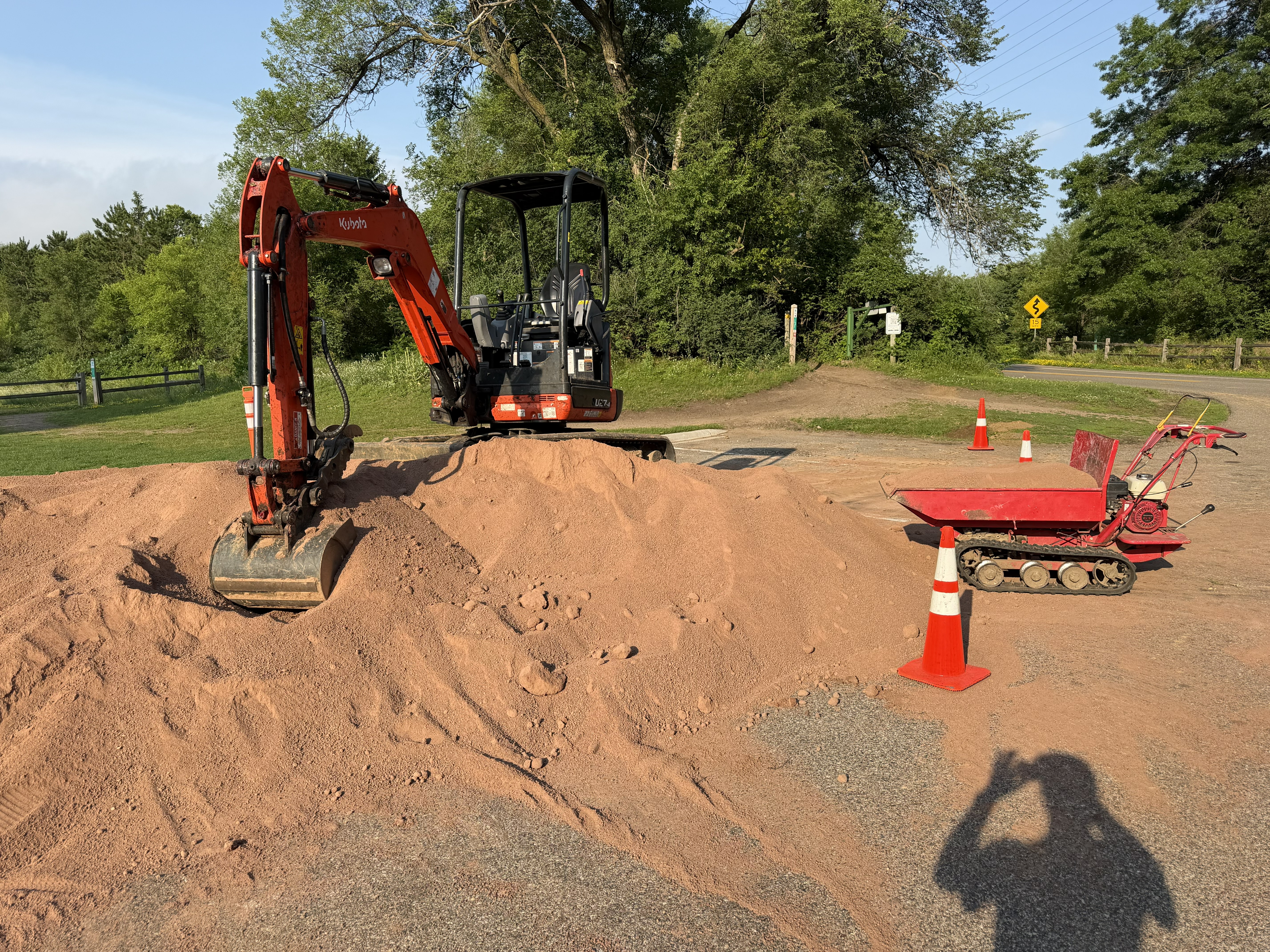 Waxed granite can be delivered by dump truck and spread out by hand, like dirt or clay, but it has a better shelf life. Photo: Pathfinder Trail Building.
Buck suggested using waxed granite to help fight erosion issues
Buck, who has been a trail builder off and on for 25 years, has seen a lot of progression and innovation when it comes to trails. Lowering the burden of maintenance is at the forefront of modern trail building. He suggested using a new material known as waxed granite to cap the jump line.
Waxed granite (or wax aggregate) is a proprietary material that was developed by Kafka Granite in Mosinee, Wisconsin. The patented material is a wax polymer pathway mix available in a few different colors.
According to Kafka’s website, the mix is an “erosion-resistant material [that] creates a dustless, sealed, non-permeable surface for pathways, patios, driveways and plazas — while remaining natural-looking and attractive.” It is created “by combining our natural crushed stone or decomposed granite with engineered wax polymers in a completely waterless process.”
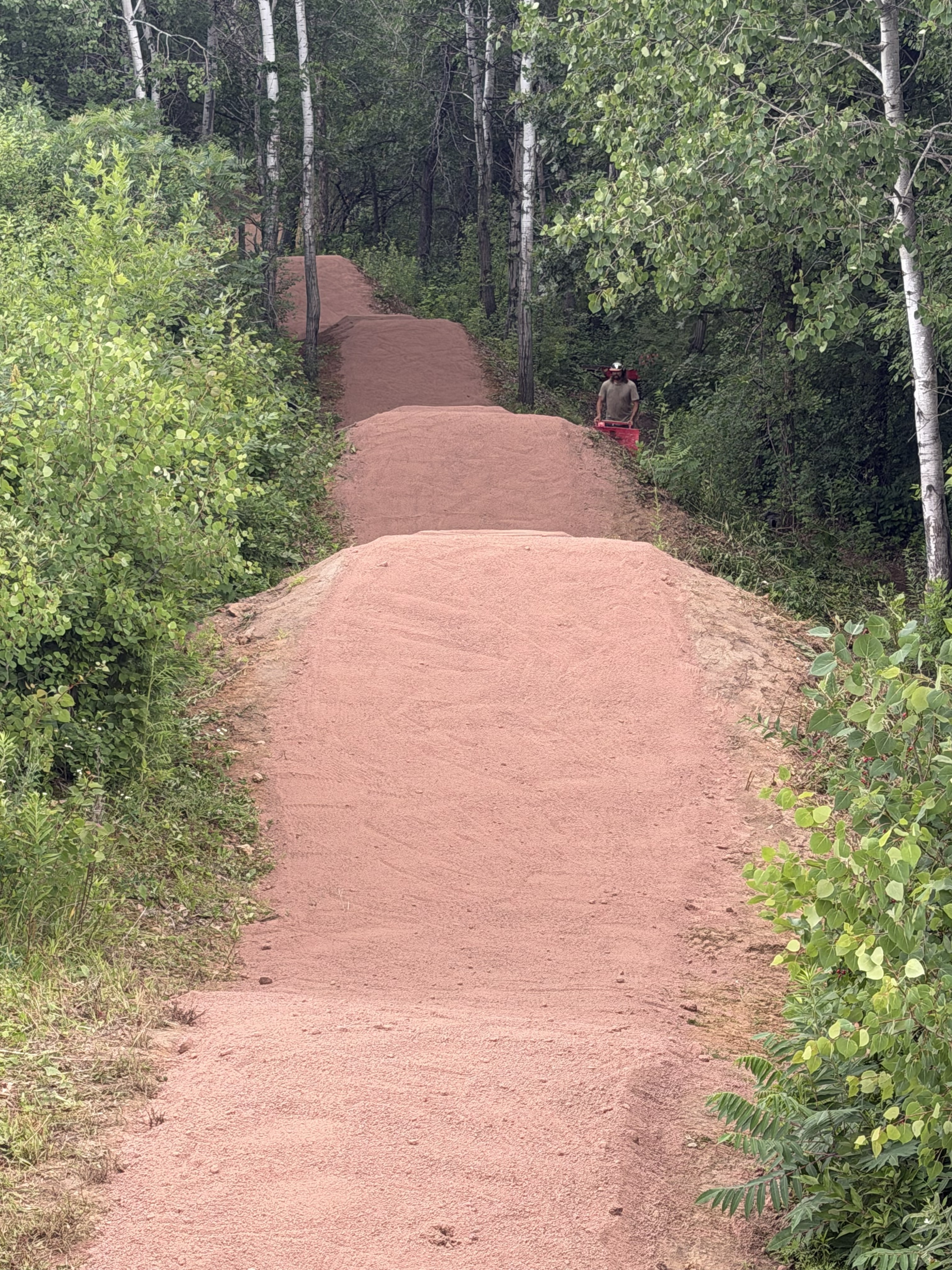
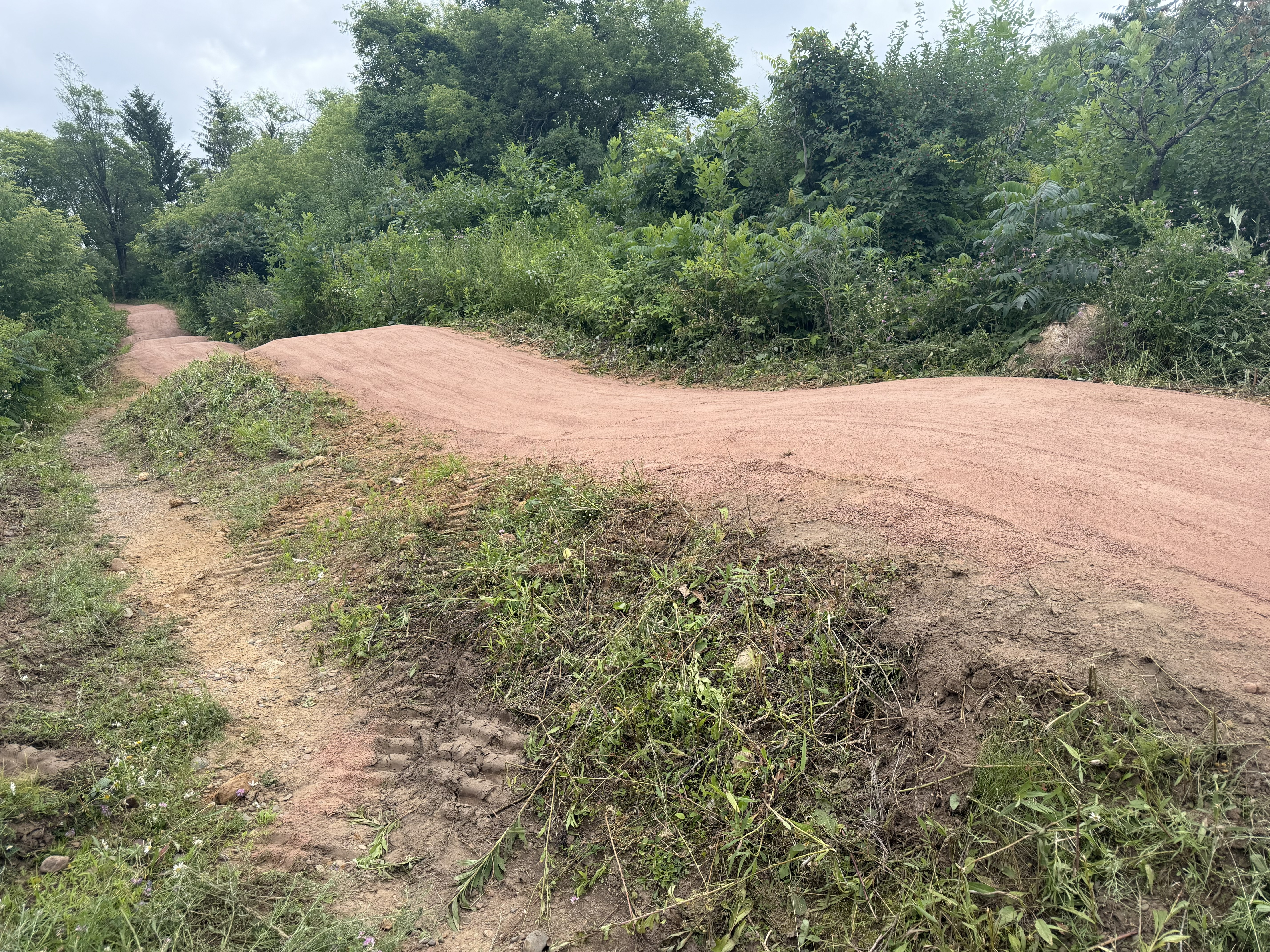 Buck put a two-inch thick layer of waxed granite on the surface of the jump line. Photo: Pathfinder Trail Building.
The jump line became a test case for both Buck and Smidt
While Buck had heard that the International Mountain Bicycling Association (IMBA) had been experimenting with waxed granite on trails in Wisconsin, he had personally never used it on trails. However, the city was willing to take a chance on it, especially if it would substantially decrease the amount of maintenance required in the years to come.
As Smidt told Singletracks, “the cost of doing it one time is worth it.” The City of Woodbury purchased enough waxed granite to put a two-inch cap on 875 feet of the jump line, which covered the hub, the line itself, and a series of rollers after the jumps.
The waxed granite was laid down at the end of June, and it has been through a few rain cycles since then, including one full day of heavy rain. “You can’t tell it’s been rained on,” said Smidt. Buck said that, “so far, it’s been holding up insanely well.”
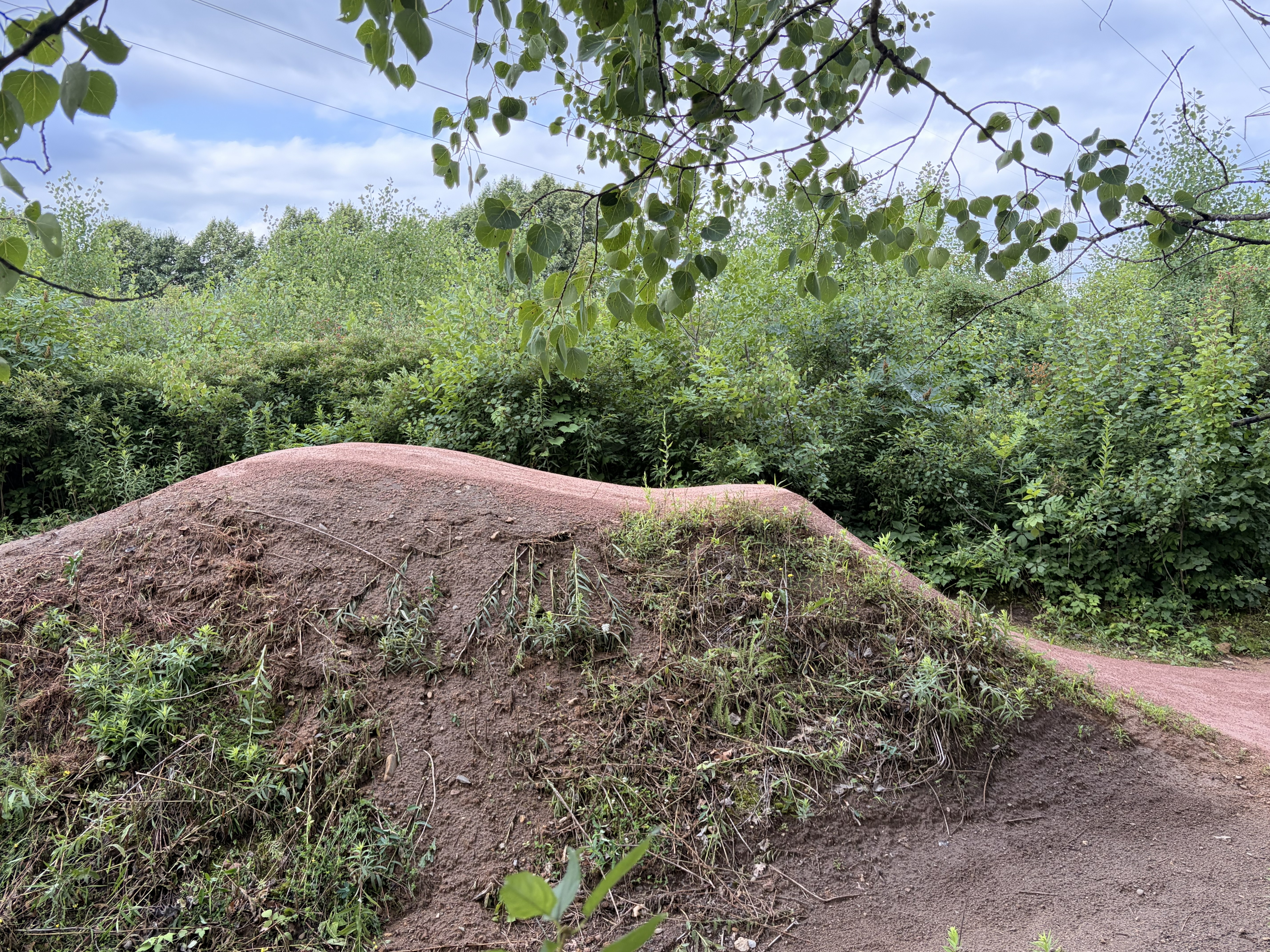 As Carpenter pointed out, even if the surface of the trail stays in great shape, the shoulders can still erode if not properly maintained. Photo: Reed Smidt.
Waxed granite and other non-native materials still require some level of maintenance
But the waxed granite is not completely perfect. Buck described it as being like granite dust. “It’s similar to working with sand.” The material needs to be packed down really well.
Smidt noticed that there are some granular pieces of the material that have been left on the surface. He said that it doesn’t impact traction, but tires do pick it up, which is noticeable by riders.
And low maintenance doesn’t mean no maintenance. As Carpenter pointed out, “all trails need some form of maintenance. The difference between native and non-native materials is the skill level and amount of time required for maintenance.”
For example, Carpenter noted that chip seal trail surfaces can stay fine for years, but the shoulders of the trail still need to be maintained regularly to prevent them from eroding. However, that’s less time- and labor-intensive than maintaining an entire trail surface made from native materials.
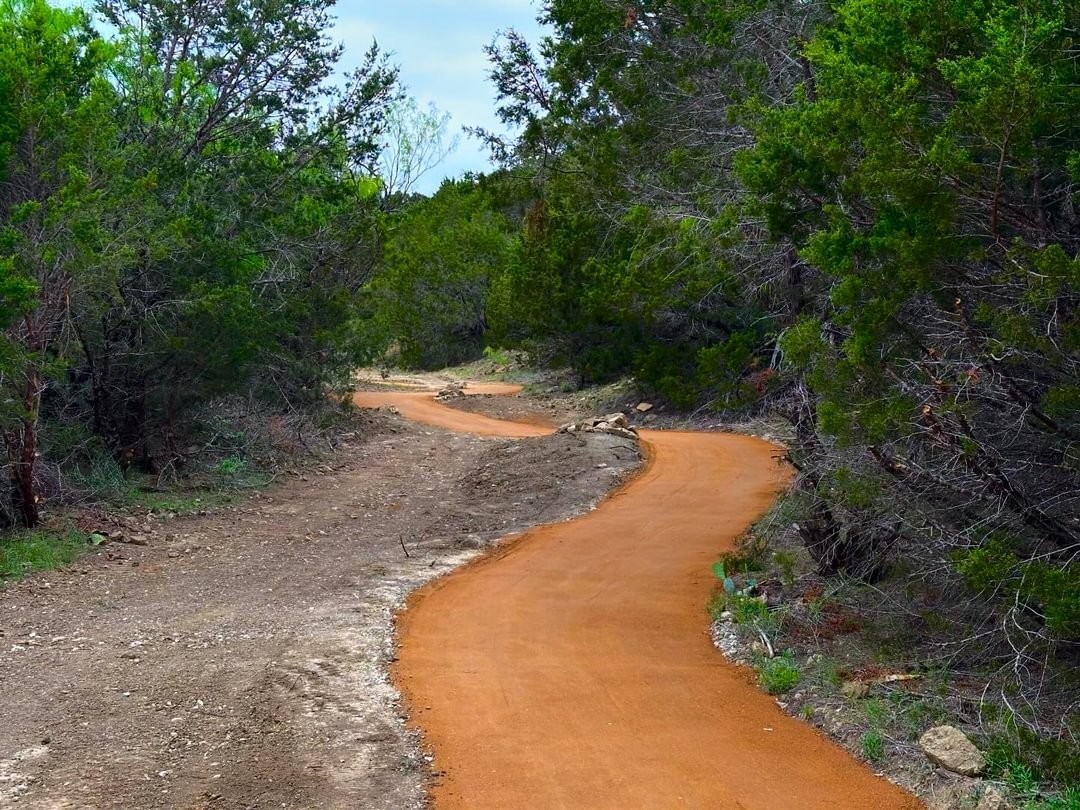 It’s possible you might see more trails like this in the future. Photo: Mike Carpenter.
Non-native materials have their advantages but don’t expect to see them completely replace native surfaces
Carpenter said that, in his experience, it’s easier to get the money to build new trails than it is to maintain existing ones. So, budgeting for the use of non-native materials when building a new bike park or trail system can save money down the road when it comes to maintenance.
According to Carpenter, using non-native materials like waxed granite makes sense, “but it is the Cadillac of all the products I’ve seen when it comes to price.” Other non-native materials like chip seal and Trail Armor are cheaper, but they have their own maintenance issues.
“You need specific materials and skills to patch a hole in a chip seal trail,” said Carpenter. “Most clubs won’t have the tools or the knowledge to do it.” Likewise, patching Trail Armor isn’t as simple as filling in a hole in the dirt.
Carpenter told Singletracks that he thinks the use of non-native materials on trail surfaces will continue to be most commonly used for bike parks or short-distance trails. It will be interesting to see if this remains the case, or if we see entire trail systems built using non-native materials like waxed granite in the future.
Keep up with the latest mountain bike news by adding Singletracks as a preferred source on Google.












 English (US) ·
  French (CA) ·