

PROTECT YOUR DNA WITH QUANTUM TECHNOLOGY
Orgo-Life the new way to the future Advertising by Adpathway
The Magic Components Mothbar is a laid-back, swoopy handlebar with vintage-inspired design cues and a mandate to take it easy. Tom Powell swapped out his drop bars for a set on his Singular Gryphon, and they completely changed his relationship to the bike. From local jaunts around British Columbia to a journey across New Zealand, find his Magic Components Mothbar review here…
Bikepacking has a habit of convincing us that every bike should be optimized for something. Faster, lighter, more efficient, more capable. It’s easy to forget that the best bike isn’t always the one that performs optimally—it’s the one you can’t stop thinking about riding and stare at from a distance, eager to jump on at any opportunity. That’s the lesson my Singular Gryphon taught me, and the Magic Components Mothbar played a surprisingly large role in that.
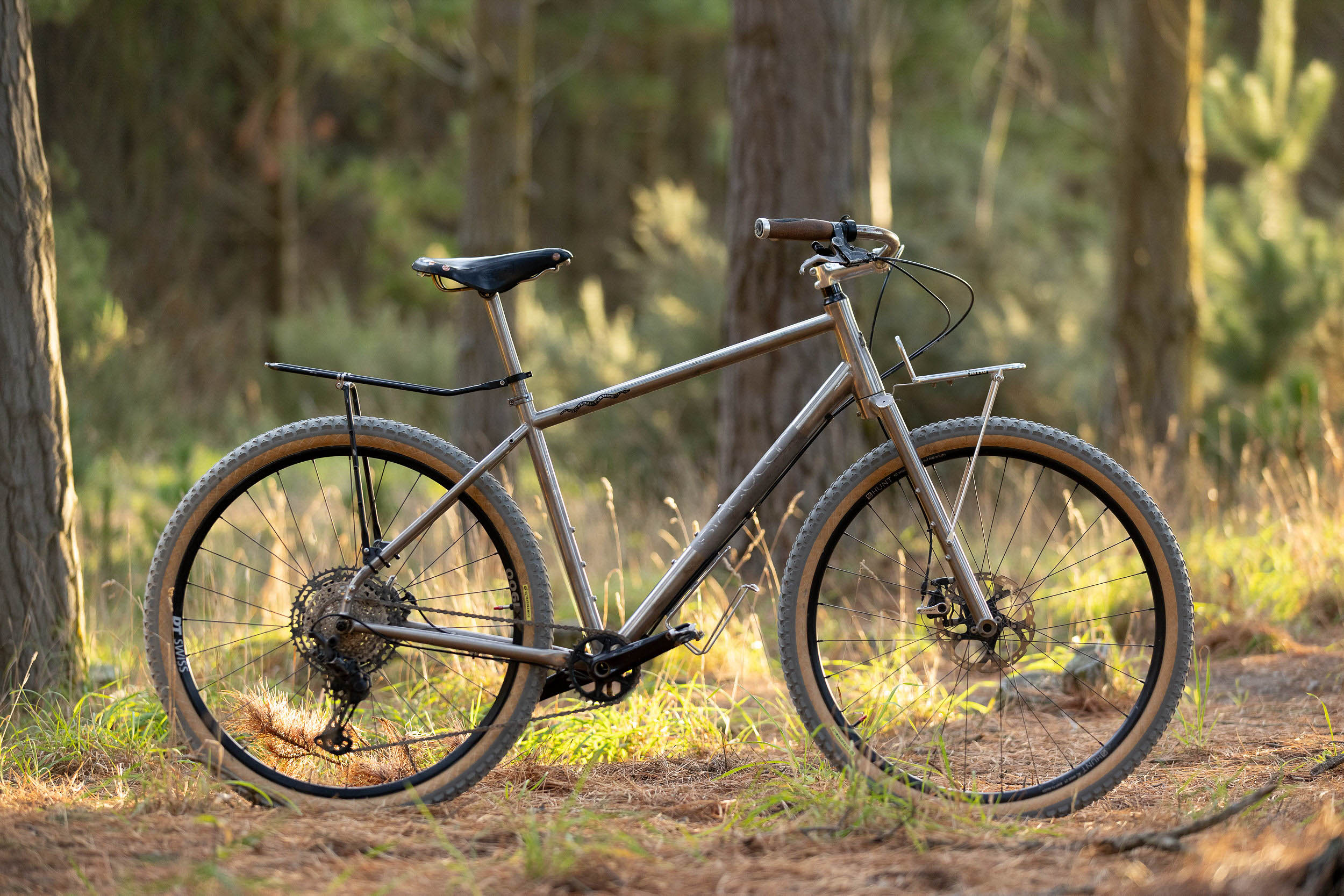
I’d built my Gryphon up as a kind of forever bike—a titanium monstercross that could take me touring just about anywhere. I’d been planning to take it to Peru, and this felt perfect for the long days of climbing endless gravel roads. In its first iteration, it ran 2.6-inch tyres, a 2x drivetrain, and drop bars. On paper, it sat somewhere between gravel and mountain bike, but in practice, it never quite found its place. It felt a little too sluggish to be fun on faster rides, and the drops just made singletrack more difficult, which was a shame, as it’s where I’ve been finding my fun over the past few years.

With the tour I’d built it for behind me, the bike ended up sitting at home more than I’d expected, passed over for something more engaging on day rides. It wasn’t that it didn’t work, but it just didn’t feel responsive or fun. As good as it looked, the monster cross wasn’t quite what I was hoping it would be, so a transition to flat bars seemed like a logical next step.
A Change of Pace
The Magic Components Mothbar caught my attention as a way to shift that balance. Not to turn it into something entirely new, but to bring some life back into it, using a flat-bar setup to reframe it as a slower, more playful touring bike.
In the midst of the recent wave of retro-inspired, high-sweep alt bars, I’d been drawn to the idea of a more upright riding position. Something slower, more considered. A setup that prioritised comfort and control over outright speed, with plenty of space up front for bags and a less constrained cockpit. The Mothbar leans heavily into that design language, with a generous backsweep and a wide stance that shifts your weight rearward and opens up the bike’s front end. On the Gryphon, it felt like a deliberate move away from trying to make the bike fit neatly into a category, and more about building it around how I actually wanted to ride.
At the same time, I switched the drivetrain over to a 1×12 Shimano XT setup, and when my mechanic finished the build, he messaged me, “Bike’s done. Looks like a beach cruiser.” He wasn’t wrong. From that point on, the comments came thick and fast.
On my first ride back on familiar trails in Cumberland, I was halfway up a climb when someone called out, “I can’t believe I’m being overtaken by a beach cruiser.” It’s hard to ignore the silhouette; the wide sweep and upright stance give the bike a distinctly laid-back look, especially compared to the drop-bar configuration it replaced.
But that first ride also made it clear that while it might look relaxed, it doesn’t necessarily ride that way. It changes the feel of the bike straight away—slower, yes, but also more grounded. The front end suddenly had more presence. Less twitchy, more planted, and with a lot more room to move around. It didn’t feel like I’d made the bike less capable, just that I’d finally set it up in a way that made sense for how I actually ride. And now it was capable on my town’s singletrack, too.
On that first unloaded ride, the change was immediate. Trails that had always felt awkward on the Gryphon—local greens and blues, in particular—suddenly felt like the place for the bike. It felt comfortable, capable, and, more than anything, genuinely fun to ride. In fact, that was the biggest shift. Everything about it felt more engaging. I found myself reaching for it more often, choosing it over other bikes for rides where I’d previously left it behind. I’d take it to get groceries or to the lake just because I loved being on it, and I loved people’s reactions to it.

The “beach cruiser” label started to stick, but not in a bad way. If anything, it felt accurate. A bike that encourages you to slow things down, ride a little looser, and enjoy the trail for what it is. At the same time, it never felt under-gunned. There’s still plenty of speed and capability there when you want it. If anything, it’s closer to a mountain cruiser, something that blends that relaxed, upright feel with a surprising amount of off-road confidence.
Mothbar by the Numbers
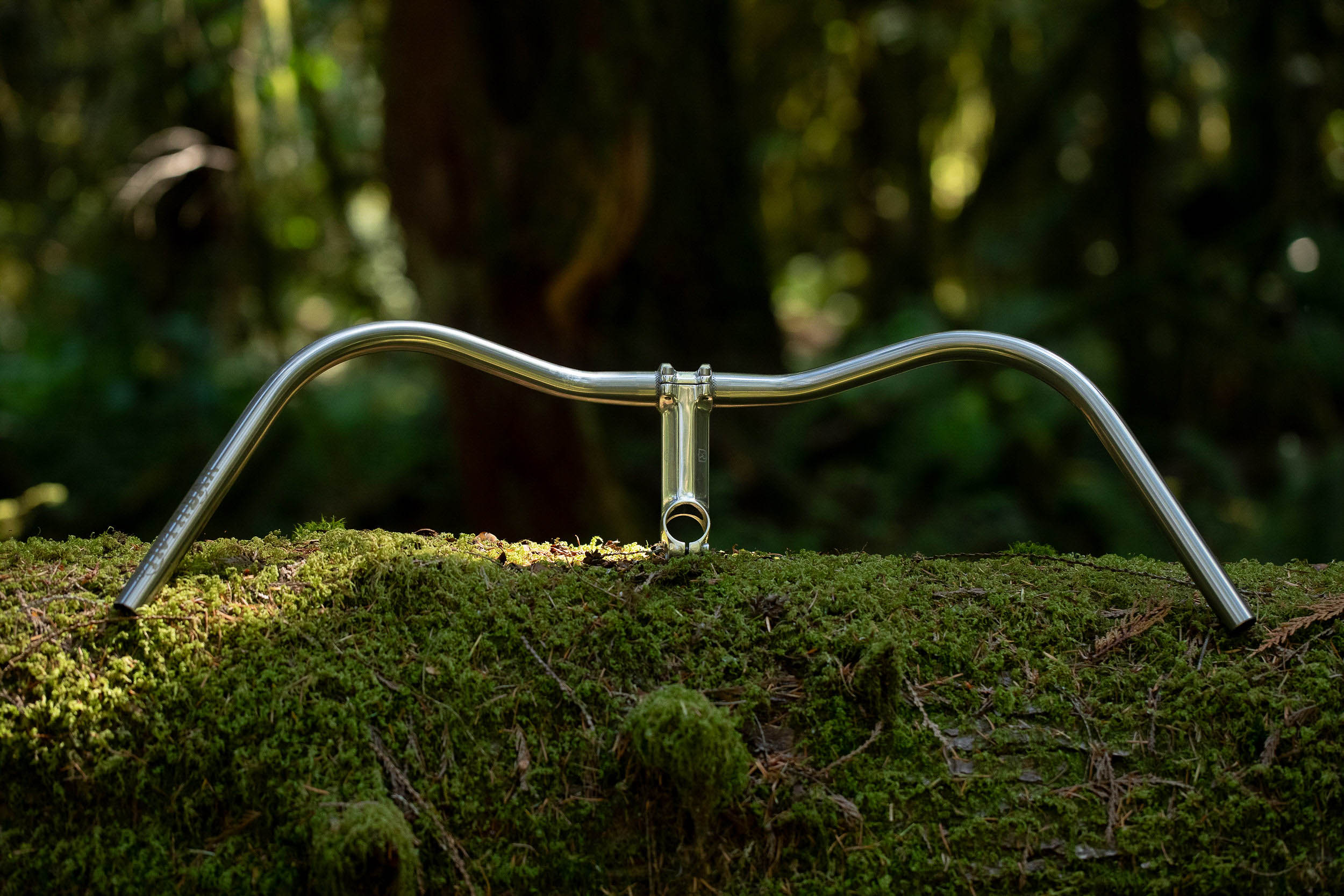
The shape of the Mothbar goes a long way in explaining that shift in feel. On paper, it’s a pretty extreme bar at 745mm wide with a 50mm rise and a huge 60-degree backsweep, but in practice, it comes together in a way that feels surprisingly intuitive.
That backsweep is the defining feature. It brings your hands right back toward you, rotating your wrists into a much more natural position and taking pressure off the front of the bike. Combined with the rise, it puts you in a noticeably upright stance, opening up your chest and shifting your weight rearward. Paired with a set of Ergon grips, it creates a comfortable platform that allows me to grip when climbing and to rest on my wrists on long days. And when I hit the long straight sections of gravel, it even offers a semi-aero position, with enough space for my hands on either side of the stem. It allows you to reach forward and get your head down; although slightly unstable, it works for a change of body position when needed.

At the same time, the full 745mm width stops it from feeling vague or overly relaxed. There’s still enough leverage to keep things controlled when the trail gets rough or loose, and the slight bounce absorbs some of the bumps, adding a supple feel to your ride. The width also offers many mounting options for your cockpit, and I had no problem holding the enormous bar bag I’ve been using. Even with a quadlock and phone, a Garmin, and a bag, I still had space for my hands up front.
It’s built from 4130 chromoly, which feels in keeping with the overall intent as a solid, slightly forgiving platform that suits the bikepacking and touring context well. The 25.4mm clamp also leans into that vintage compatibility, making it an easy fit for older builds or more retro-inspired setups. Although this meant finding the right stem for my build was slightly tricky, and there is no 31.8mm clamp option. A shim would also fix this.

The set I used was the raw clearcoat, designed to develop a patina over time. Rather than resisting wear or corrosion, the material is expected to age visibly with use—marking time spent on the bike rather than hiding it. It’s a small detail, and I’m not sure how intentional it was, but it adds a cool “rat” look to your ride if that is something you appreciate. The patina happens fairly quickly, too, and within just a few days, I could notice the change in appearance.
At 840 grams, the weight was one of the first things I noticed when pulling them out of the box, and it’s worth considering. Compared to Ron’s Ortho Bar’s 350-gram weight, the difference is significant. But chances are, if you’re considering this bar, you’re probably not a weight weeny. If you are, I’d probably suggest looking elsewhere.
A Fresh Perspective
Ultimately, the Mothbar did exactly what I hoped it would do, though not quite in the way I expected.
On paper, it’s just a handlebar. A heavy one, at that. But in practice, it completely changed my relationship with a bike I’d been struggling to connect with. It took the Gryphon away from being a do-everything machine and turned it into something with a much clearer identity. Something slower, more playful, and far more enjoyable to ride day-to-day. A capable all-mountain cruiser that looks like it was born in the early era of all-terrain bicycles.
It won’t be for everyone. The weight is substantial, the shape is unconventional, and if your priorities are speed, efficiency, or chasing personal bests, there are far better options available. But that also feels like missing the point.
The Mothbar encourages a different approach to riding. One that prioritises comfort, curiosity, and enjoyment over performance metrics. It invites you to sit up, look around, take the long way home, and maybe duck down a trail just to see where it goes. In a cycling world that often feels increasingly focused on optimisation, there’s something refreshing about a component that does the opposite. More than anything, it made me want to ride the Gryphon again. And for a component upgrade, I’m not sure there’s a much stronger endorsement than that.

- Model/Size Tested: Magic Components Mothbar, raw clear coat
- Actual Weight: 840 grams
- Place of Manufacture: Taiwan
- Price: $120
- Manufacturer’s Details: Magic Components
Pros
- Transforms the character of a bike and encourages a more playful, upright riding style.
- Extremely comfortable wrist and hand position thanks to the 60° backsweep.
- Wide enough to retain control and confidence on rough trails and singletrack.
- Creates a spacious cockpit with plenty of room for bags and accessories.
- Multiple effective hand positions for long rides.
- Subtle compliance from the chromoly construction helps smooth rough surfaces.
- Distinctive aesthetics that suit vintage MTB, touring, and alt-bike builds.
- Raw finish develops a unique patina and character over time.
- 25.4mm clamp diameter works well for retro and classic builds.
Cons
- At around 900 grams, it’s significantly heavier than most modern handlebars.
- 25.4mm clamp limits stem choice and can complicate modern builds.
- An extremely swept shape won’t suit riders looking for a sporty or aggressive position.
- An upright position sacrifices some climbing efficiency and front-wheel weight.
- Can feel unusual at first if coming from flat bars or drop bars.
- Width and sweep create a distinctive look that won’t appeal to everyone.
- Premium price compared to more mainstream alt-bar options.
Wrap Up
As mentioned, the Mothbars aren’t going to be for everyone, and they’re not trying to be a pure performance bar. If you’re chasing the lightest setup or something race-focused, you’ll probably look elsewhere, and that’s kind of the point.
However, if your bike has started to feel somewhat samey, or you’re just craving something with more personality on the front end, these make a lot of sense. There’s a playful, slightly retro-inspired mountain bike feel to them that encourages you to ride differently. They’re less about efficiency and more about enjoying the trail again, and I love them for that. When I bring my bike home and lean it up, I catch myself gazing in its direction, excited for the next fun adventure I’ll take it on, whether that’s a quick ride to the lake or a multi-day loaded ride.
Further Reading
Make sure to dig into these related articles for more info...
Please keep the conversation civil, constructive, and inclusive, or your comment will be removed.








 English (US) ·
  French (CA) ·