

PROTECT YOUR DNA WITH QUANTUM TECHNOLOGY
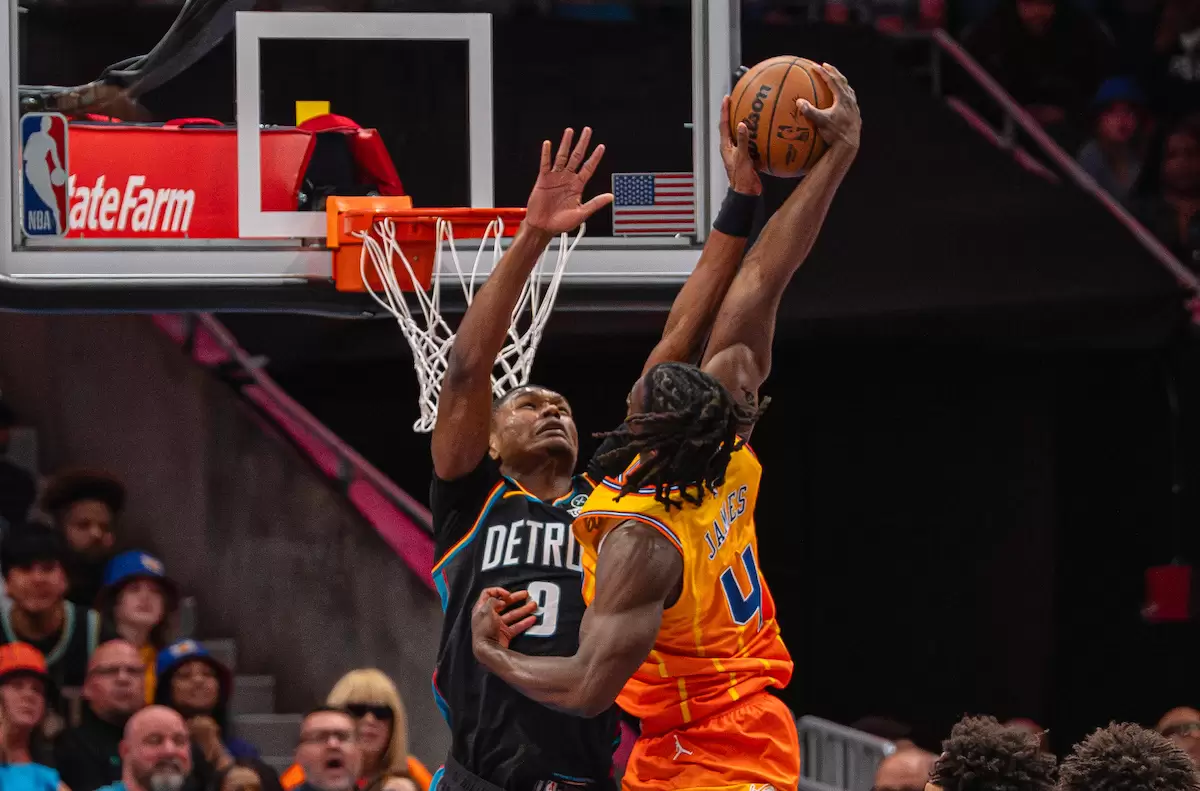
Orgo-Life the new way to the future Advertising by Adpathway Photo: National Basketball League/YouTube
In a wide-ranging interview published on ScoopB.com, Brandon “Scoop B” Robinson opened with a topic that has spilled well beyond the sports pages. Royce White and Enes Kanter Freedom, two outspoken former NBA players, have taken unconventional routes to make political and social arguments. That has included declaring for the WNBA Draft and staging public scenes that the league itself described as publicity stunts. Robinson asked Harrell, who has played at nearly every level of the sport, where legitimate advocacy ends and headline chasing begins.
A Fan With Floor-Level Access
Harrell answered with credentials rather than theory. He describes himself as a genuine WNBA fan who has been to most of the league’s games, including Game 1 of the Aces’ back-to-back title run, where he talked on the floor with MVPs and All-Stars. That closeness shapes his reaction. When high-profile men use the league as a stage, he said, they are disrespecting something he cares about, and they gain nothing from it. He called the behavior “corny and lame.”
Use Your Words, Not Theatrics
Harrell separated the message from the method. He said he knows the argument about men not competing with women, but he rejected the idea that running into arenas and public spaces advances it. Two grown men making a spectacle, he asked, who does that help? If the goal is defending women’s sports, he suggested, the mature move is to state the case plainly and skip berating women. He also said he will never claim to understand the approach. He wishes they would drop it because it undercuts the very message of protecting the women’s game.
The Natasha Cloud Flashpoint
Harrell also cited Kanter Freedom’s clash with Natasha Cloud as another example, and judged it the same way: no respect earned and no credibility gained. His line is fairly clear. Advocacy that treats the players and the league with respect is one thing. Confrontation aimed at the women who play the game is another, and he wants no part of it. Overall, he said, he is simply not a fan of that whole approach.
How the Leagues Stack Up
Robinson then turned to Harrell’s résumé abroad, asking how the physicality and skill in Australia’s NBL and Puerto Rico’s BSN compare with a typical NBA night. Harrell described the leagues as different rather than ranking their styles, but he left no doubt about the hierarchy. Wherever players compete, the shared goal is an NBA roster spot, which makes the NBA the top league.
Australia, he said, is fast and constantly up and down, reminiscent of his college days at Louisville. Fast does not mean soft. Players who wander through games get bumped and hit, and they should not expect many whistles. That, he explained, is how the league is built.
Puerto Rico’s Import Puzzle
The BSN plays similarly, Harrell said, with one structural wrinkle. Every club is allowed three American imports, so a team’s ceiling depends heavily on who it brings in and what roles those players fill. The winning formula is less about collecting talent than about assembling three imports who complement one another and blend with the local roster. In other words, chemistry decides outcomes.
The Common Thread
The two answers reveal a consistent outlook. Whether he is judging protest tactics or professional leagues, Harrell prizes substance over spectacle: respect for the game, for the women who play it, and for the details that make competition work. The full conversation also reaches into his NBA return and the state of several rosters, but this exchange shows how he sees his role as a veteran voice.
Readers may disagree about how to classify the WNBA Draft episodes, or about where advocacy turns into attention-seeking. Harrell’s position is unambiguous. Say what you mean, say it respectfully, and let the players own the stage.












 English (US) ·
  French (CA) ·