

 1 day ago
2
1 day ago
2
PROTECT YOUR DNA WITH QUANTUM TECHNOLOGY
Orgo-Life the new way to the future Advertising by AdpathwayA subtle shift in language can keep students coming back.
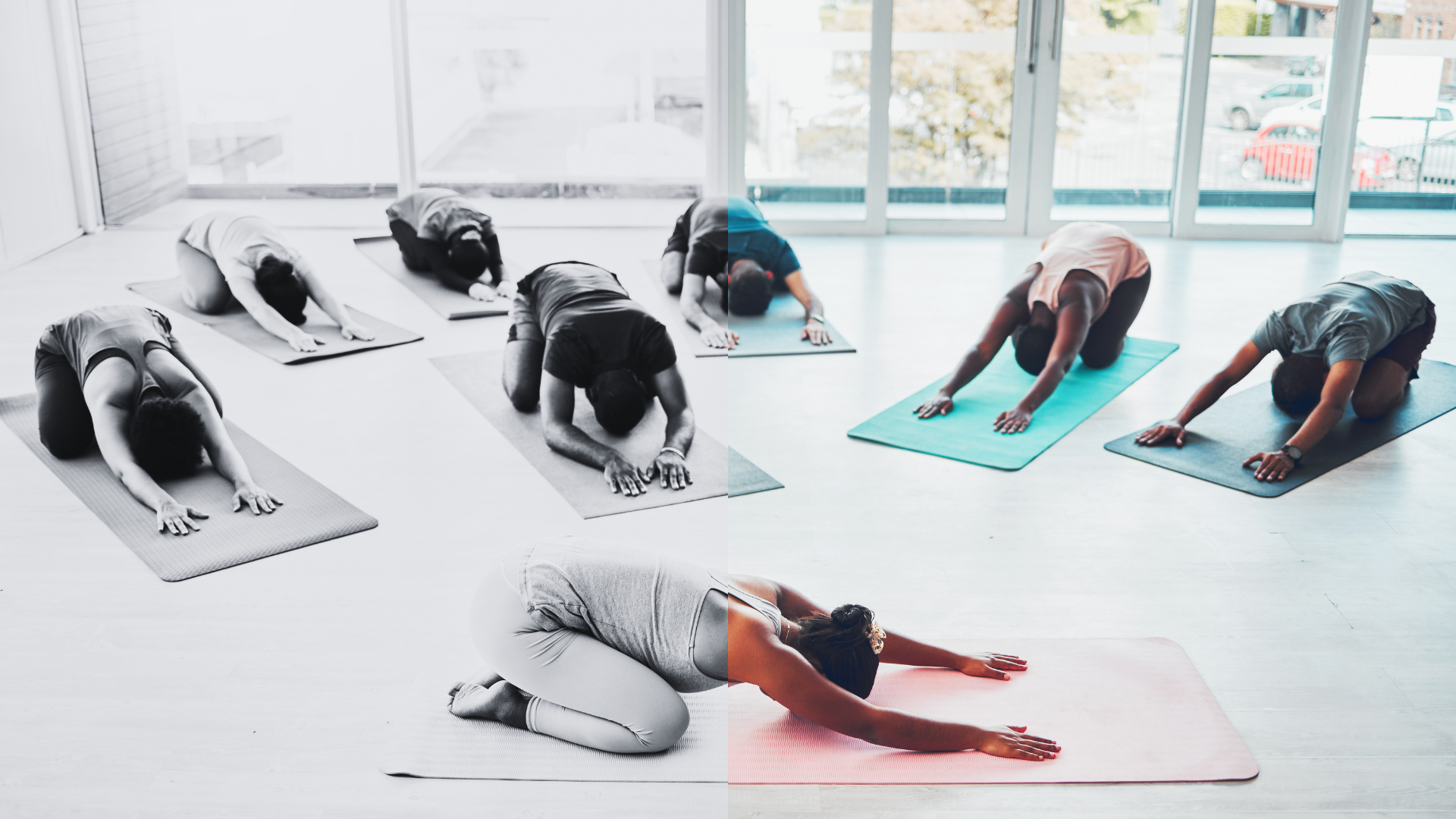
(Photo: Canva)
Published October 6, 2026 11:43AM
Coming up with helpful yoga cues is an art form unto itself. Yoga teachers’ cues need to be instructional, understandable by everyone, and perhaps even touch on something beyond the physical. Longtime teacher and teacher trainer Rachel Land explains the one component that many cues miss—and how to subtly incorporate it into your teaching repertoire.
Most students are willing to follow whatever cues a teacher shares. And knowing that, many yoga teachers spend a lot of time tweaking and refining their cues.
But yoga is not about improving someone’s ability to follow instructions. It’s about helping students experience enhanced self-awareness. Cues are not only how we instruct students into a posture, they are the means through which we communicate the kinds of details that shape the experience of yoga as much as the poses themselves.
Still, teachers tend to think of cues as explaining what students should do as well as how they’re maneuvering their bodies. There’s a missing layer of information that has the potential to revolutionize what students take away from class that many cues miss.
And that’s the why.
Why Yoga Teachers Should Cue the Why Behind a Pose
Sometimes the why behind a pose relates to strength or stability. For example, you might suggest that students activate all sides of the core by drawing their muscles toward the spine in Plank to prevent the low back from sagging. Or that by taking their feet hip-width apart in High Lunge, they’ll experience more steadiness than if they have a tightrope stance.
Other times, the intention of a cue is more subtle, such as encouragement to find an element of ease in a challenging place by noticing tension along the sides of the neck in Chair Pose. Or paying attention to the position of an (unseen) back hand in Warrior 2. These are mindful nudges toward actually experiencing what is happening in their bodies.
Sharing the why of a pose draws students’ awareness to how they are showing up to the present moment. And that’s exponentially more effective than focusing your words on coaxing them into a textbook-perfect shape.
Granted, there’s a time and place for minimal cues. There’s no need to overburden students with explanations for why they are practicing every single pose, especially familiar ones. But when a pose or transition is less familiar, or when it provides an opportunity to explore a key theme of class or something useful in everyday life, it’s worth conveying not only information but intention.
How to Cue the Why Behind a Yoga Pose
A cue can be as simple as the name of the next pose or it can include additional instructions to help focus the student’s effort and awareness. Most yoga teachers are accustomed to teaching the basic shape of a pose with some additional information on how to accomplish that. Here’s how those same cues can look with the inclusion of the underlying why.
Imagine students lying face-down on the mat in preparation for Cobra Pose (Bhujangasana). Sharing a basic cue choreographs the movement that creates the desired shape in students’ bodies. This type of cue is usually succinct yet sends the message. Including a little—or a lot—more guidance as to how to achieve that instructs students on the specifics of what they need to do to create that shape. Including the why enables students to know even more about where to focus their attention in their bodies.
Basic Cue
“Lift your chest into Cobra.”
Cue the How
“Engage your low belly by drawing your pubic bone toward your navel, then lift your chest into Cobra.”
Cue the Why
“Engage your low belly by drawing the pubic bone toward the navel to create more space along your low back. Keep that space as you lift your chest into Cobra.”
If you were a student whose low back felt crowded or compressed in backbends, which version of verbal cues would engage more of your interest? Which cue would you be more likely to remember and repeat the next time you’re in that pose or—even better—use any time you feel low back compression?
The same principle applies to informing students of the more subtle aspects of a posture.
For example, imagine students are in a challenging moment, perhaps fighting to hold steady in Plank, Chair (Utkatasana), or any balancing pose.
Basic Cue
“Stay here.”
Cue the How
“Can you hold strong here, and still allow your breath to move through you?”
Cue the Why
“Can you hold strong here, and still allow your breath to move through you? Explore that capacity here, and maybe it’ll be a little easier to find your breath next time you’re facing a challenging situation in your life.”
I like to think that students learning to understand the reason behind a cue is when the learning actually begins. Cue by cue, class by class, they move beyond following rote instructions to understanding the benefit of present. And that’s one of the ways you know the yoga is working.








 English (US) ·
  French (CA) ·