

 1 day ago
4
1 day ago
4
PROTECT YOUR DNA WITH QUANTUM TECHNOLOGY
Orgo-Life the new way to the future Advertising by Adpathway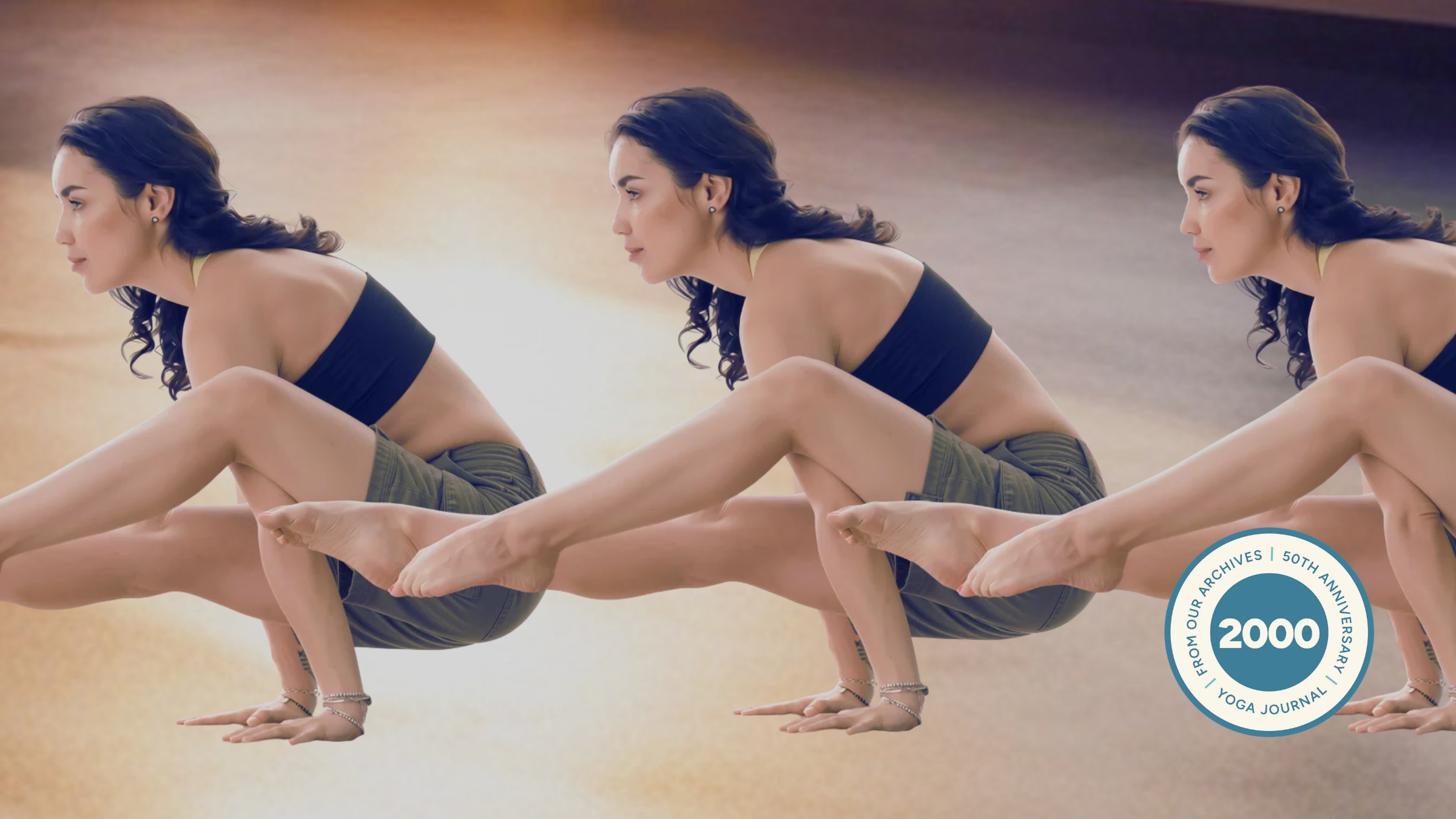
(Photo: Canva | Design in Canva by Laura Harold)
Published October 7, 2026 12:55PM
In Yoga Journal’s Archives series, we share a curated collection of articles originally published in past issues beginning in 1975. This article about Elephant Trunk Pose first appeared in the July-August 2000 issue of Yoga Journal. Find more of our Archives here.
While practicing an arm balance in yoga, your attention likely turns toward the more than considerable physical effort it requires to even attempt to hold your body in such a position. That’s a natural response. Still, focusing too much on the challenge of the pose might be distracting you from ways to bring a sense of light-heartedness to your practice so you can actually experience the joy of trying.
Letting go of your expectations and allowing yourself to experiment brings a greater sense of freedom to challenging yoga poses. For instance, as you turn your attention to Elephant Trunk Pose (Eka Hasta Bhujasana), bear in mind that your willingness to play with the pose may be more important than whether or not you can “do” it.
How to Practice Elephant Trunk Pose
Begin by sitting in Dandasana (Staff Pose). Stretch your legs out straight in front of you with your thighs together and your front thigh muscles (quadriceps) firmly pressing your thigh bones (femurs) deep into the backs of your legs. The grounding of the femurs in this manner is an important aspect of this pose and of Astavakrasana.
Place your palms on the floor beside your hips, fingers pointing forward. Move your inner shoulder blades (the part of the scapulae nearer the spinal column) downward toward your kidneys. Bend your right knee, drawing the knee back and up toward your torso.
With your right arm inside your right thigh, take hold of your lower leg with both hands. Hold the bottom of your right calf with your right hand and grip your inner right ankle with your left hand. Next, lift and place your right knee onto your upper right arm near the shoulder. Keep your left leg fully extended on the floor, both buttocks on the floor, and your chest lifted.
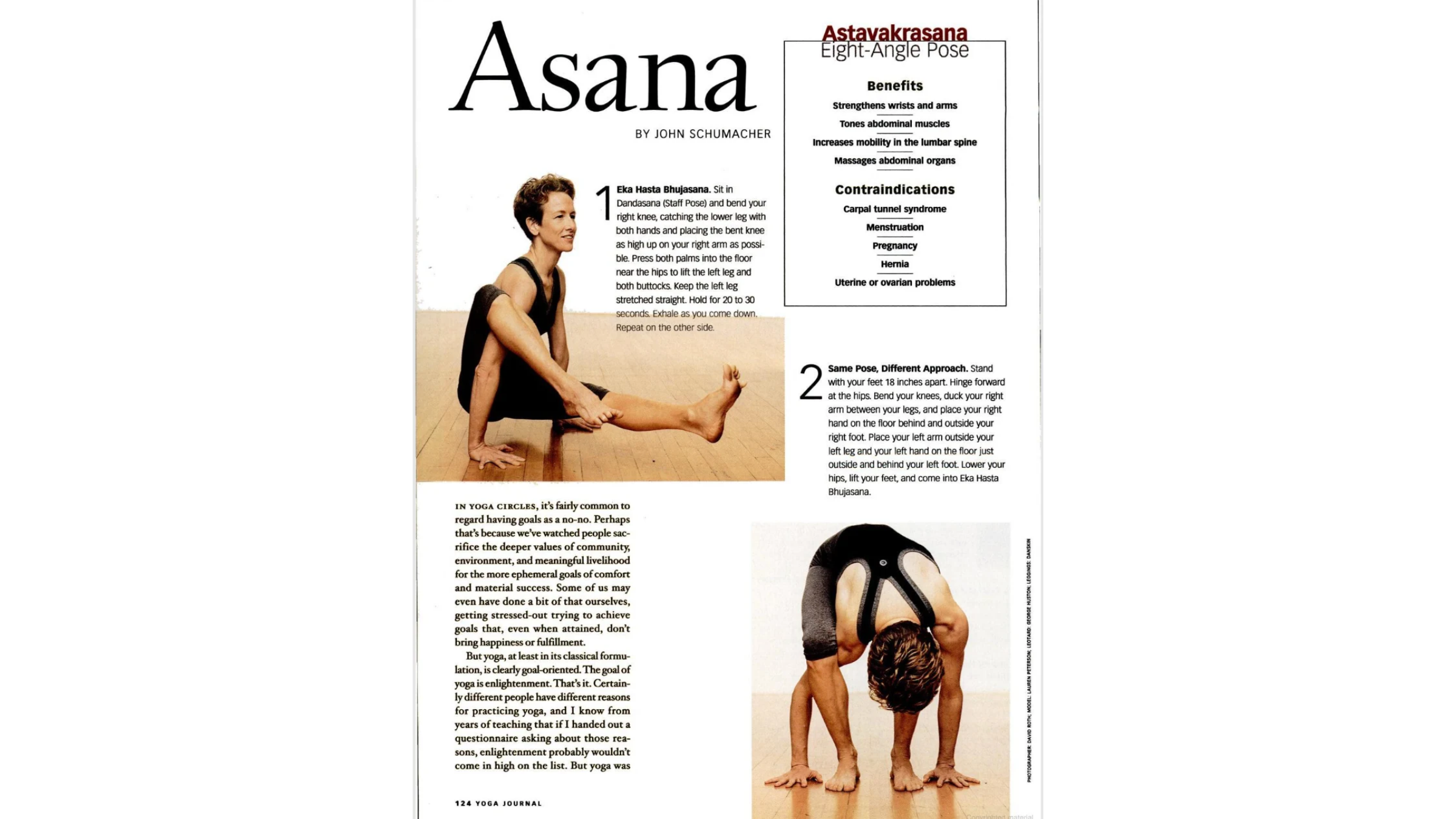 (Photo: Yoga Journal 2000)
If it is difficult for you to raise your right leg so that it is well up on your arm, it’ll help you to regularly practice standing and forward-bending poses until you have the necessary flexibility for the leg movement.
Once your right leg is positioned on your arm, release your leg with your right hand and place that hand on the floor about 6 inches outside and slightly in front of your right hip, fingers pointing forward. Your right arm will be bent.
Continue holding the ankle with your left hand, which will help keep the leg from sliding down your arm. But how do you keep this from happening once you let go of your leg with your left hand? Try this: While still holding your ankle with your left hand, stretch the arch of your right foot from the heel to the ball. Maintain that stretch and, without pointing your toes, point the inner ball of your foot (near the big toe) toward the floor. This action of the foot will help you to grip your upper right arm with your calf and your knee, much like a nutcracker grips a nut.
Even so, your leg may still slide when you let go with your hand, unless you grip with your inner knee more powerfully than with the outer. Try gripping with your outer knee, let go with your hand, and see what happens. Then reposition your leg if necessary, stretch the foot as described, grip with your inner knee, release the left hand, and observe the differences.
To continue exploring the pose, keep lengthening the arch of your right foot, press your inner right knee firmly against your upper right arm, and release your right ankle with your left hand. Place your left hand on the floor about six inches outside and slightly forward of your left hip. Roll your left thigh inward, and intensify the grounding of your left femur by broadening the ball of your left foot. Take a breath and, with an exhalation, press your palms and lift your left leg and both buttocks from the floor (Figure 1).
To access the full strength of your arms and wrists, press the mound of the thumb powerfully into the floor. Keep your left leg straight and parallel to the floor, and make sure you keep rolling your thigh inward so that the kneecap and the toes face the ceiling rather than allowing them to turn out. Stay in Eka Hasta Bhujasana for 20 to 30 seconds, and then, as you exhale, gently lower your buttocks and left leg to the floor.
This archive article has been edited for length and clarity.






 English (US) ·
  French (CA) ·