

PROTECT YOUR DNA WITH QUANTUM TECHNOLOGY
Orgo-Life the new way to the future Advertising by Adpathway
What happens when a bike brand leans on 15 years of design and building experience to create a modern steel hardtail mountain bike but has it made overseas to keep the price down? That’s exactly what Colorado’s Reeb Cycles set out to do with the Hall Pass: a 130mm-travel steel hardtail with an impressive array of features. Dig into Miles’s review after several months of trail riding and local bikepacking here…
Dale Katechis founded Reeb Cycles in 2011 after his bike was stolen and he decided he didn’t want to “just buy another overseas catalog bike.” For the last 15 years, Reeb’s identity has been centered around made-in-Colorado steel bicycles, independent manufacturing, and craft beer. So, when Reeb announced its first overseas production bike in March, I found myself wondering how this new era of business aligned with a brand that put so much value in local production.
There’s a misconception that Taiwan-made frames are lower quality than their US-made counterparts, but everything I’ve heard from framebuilders who have made this transition suggests the opposite. Taiwan-based framebuilding factories are masters of their craft and incredibly attuned to every little detail. Adam Sklar of Sklar Bikes went through the journey a few years ago and explained that the problem (and benefit) is that you get exactly what you send in for production. So, as long as your designs and drawings are accurate, the possibilities are virtually endless.
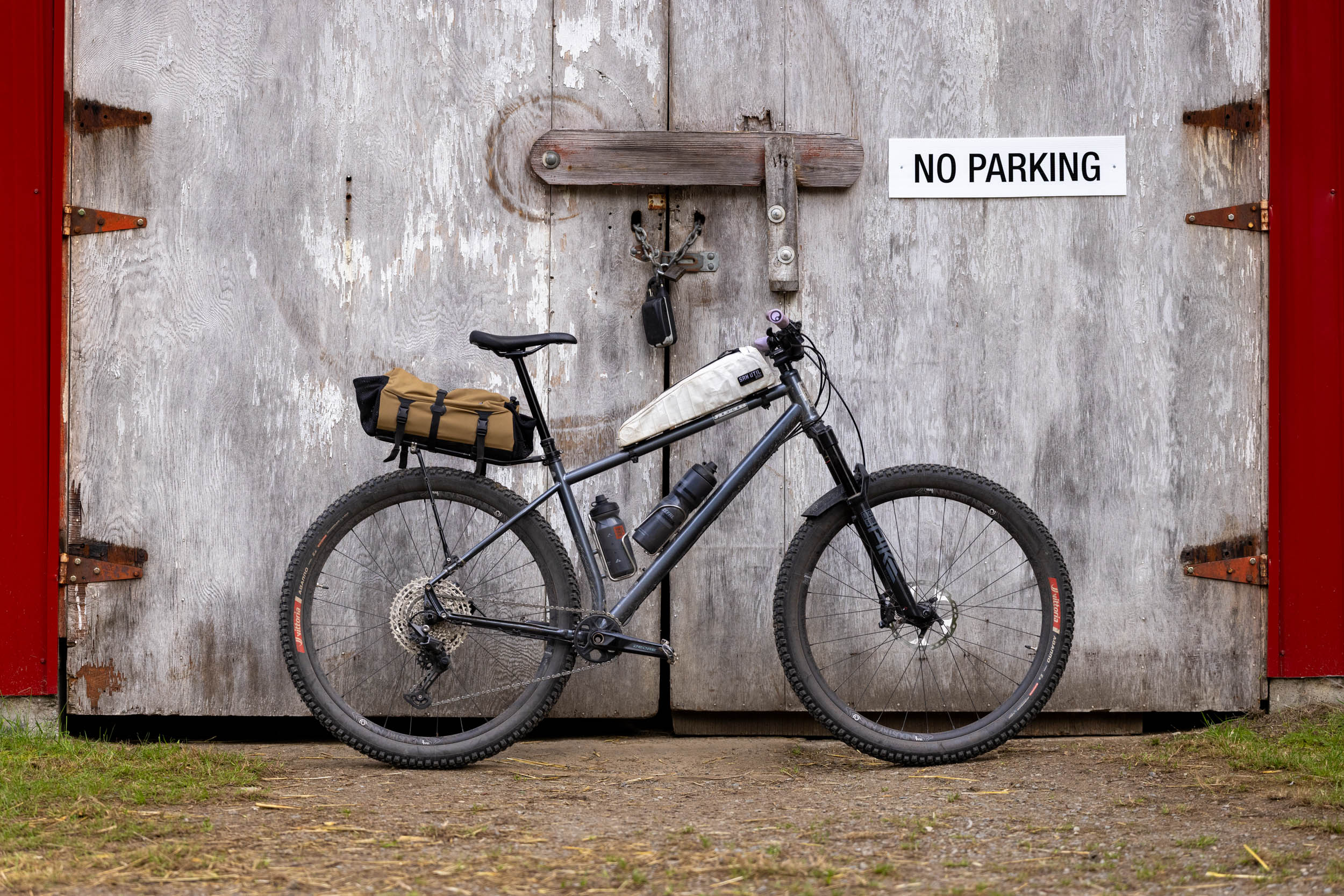
Earlier this year, Reeb Cycles released two new hardtails with identical angles and features, but one was made in the USA and the other, a more affordable option, was made in Taiwan. This seems to be a common theme these days, as established bicycle brands and framebuilders use Taiwanese production to expand their offerings and reach.
The US-made Reeb Re:Dikyelous starts at $2,395 USD for a frame-only, and the Taiwan-made Hall Pass frame costs just $1,299, with complete builds available for a little over $3,000. Throughout the last few months, I’ve been riding the Hall Pass with two things on my mind. First, what’s the baseline for a modern steel hardtail mountain bike? And second, what, if anything, are we missing from a Taiwan-made bike compared with a US-made version?
Hall Pass at a Glance
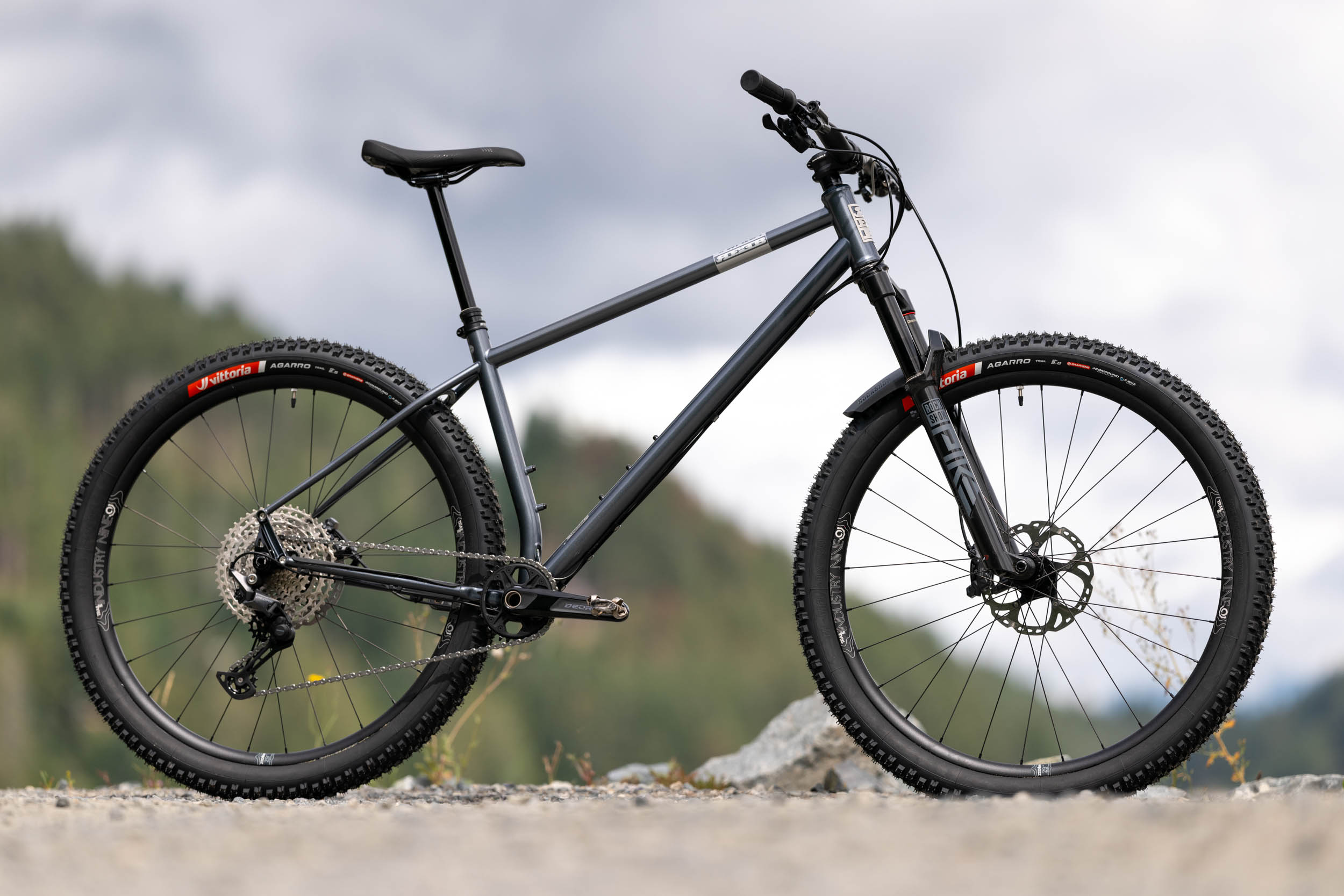
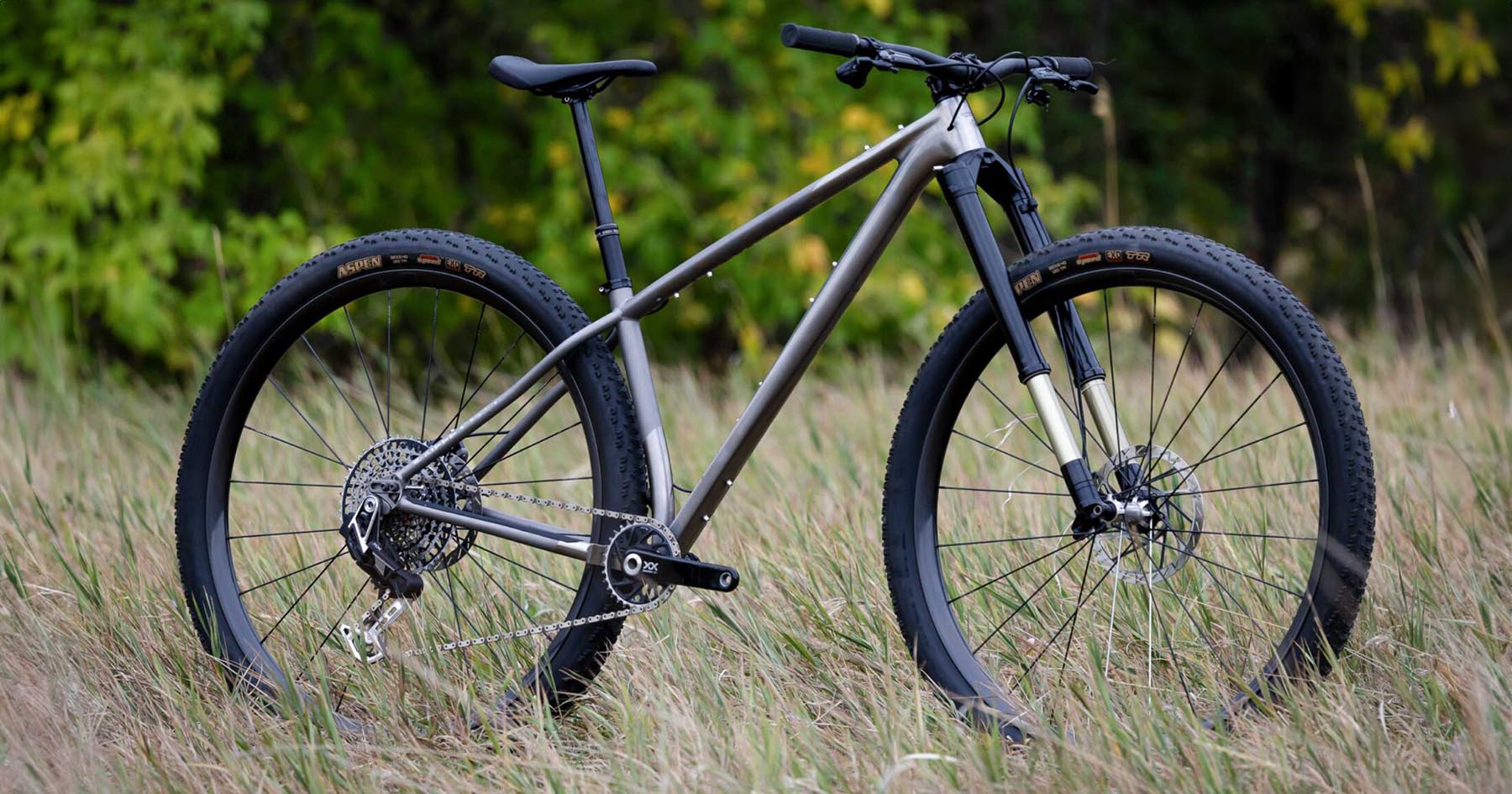
The Reeb Hall Pass shares the same geometry and specs as the Colorado-made Re:Dikyelous. The main difference is its place of production. The Hall Pass is a modern hardtail in every sense of the word, designed around a 130mm travel fork, a slack-ish 65.5-degree head angle, and clearance for 29 x 2.6” tires. While the Re:Dikyelous is fabricated from US-made Velospec steel tubing, the Hall Pass features a Taiwan-sourced, custom-drawn, double-butted steel tubeset. For comparison, Velospec tubing is a heat-treated, air-hardening chromoly steel often compared to Reynolds 853, which offers a higher strength-to-weight ratio than standard 4130 chromoly. The Re:Dikyelous and the Hall Pass also share the same frame specs, including butted top and down tubes with tapered chainstays and seatstays.
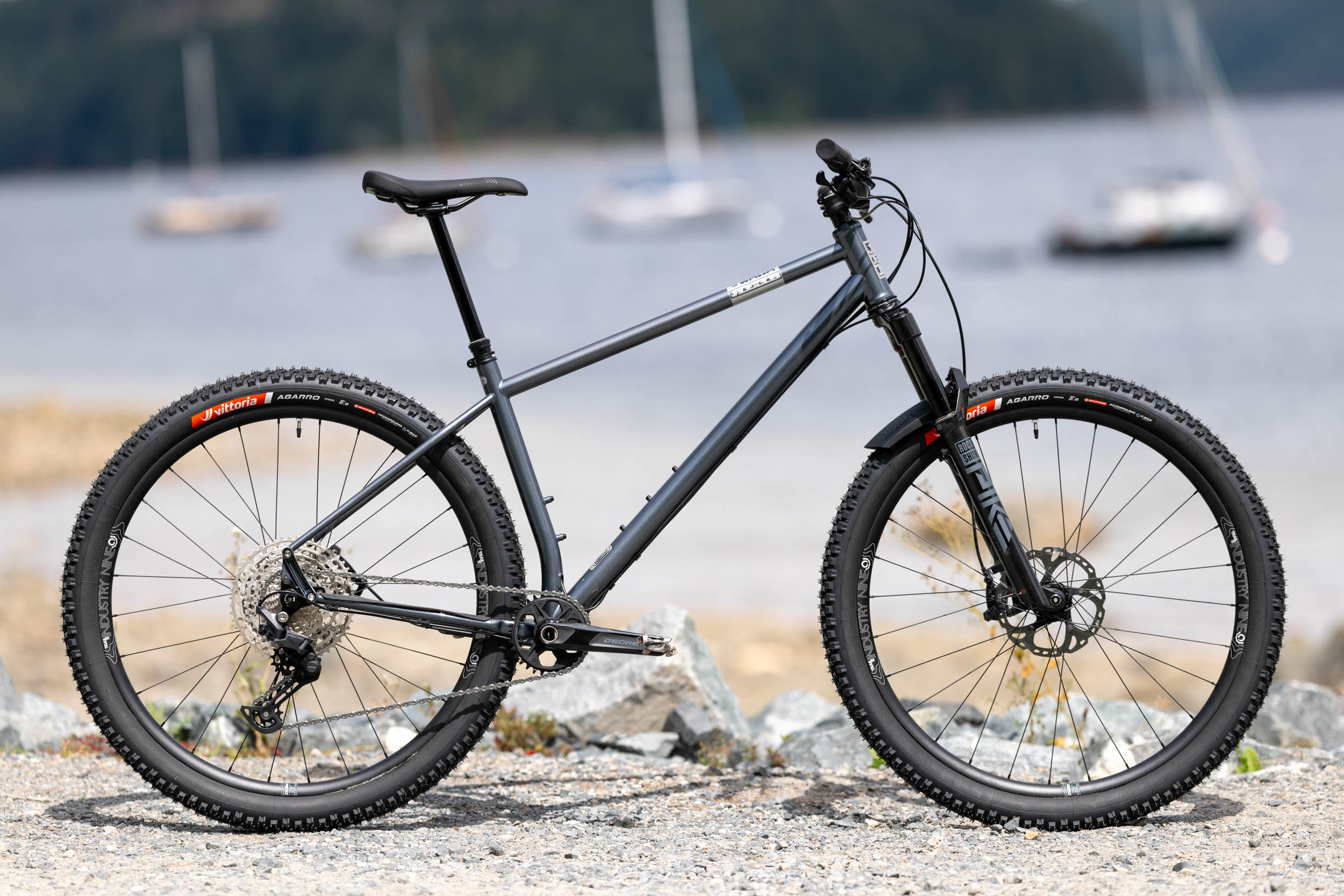
The original Re:Dikyelous was the signature model of Reeb brand manager Jeff Lenosky. He designed it when Reeb only had the Sqweeb full-suspension, so the Re:Dikyelous was meant to be super playful and cover all the bases, from 0mm of rear travel up to 150mm. As their lineup grew, they could be more intentional with the updated Re:Dikyelous and Hall Pass geometry, making it ideal for trail riding first while still being playful enough for super tech terrain and functional for bikepacking.
The Hall Pass has an impressive array of frame specs and details that make it a real contender for anyone hunting for a new hardtail. As a standard baseline, it has a 73mm threaded bottom bracket shell, boost hub spacing, a 31.6mm seatpost diameter, and three bottle mounts (two inside the main triangle and one under the downtube) on all sizes, but there are also several surprises. Reeb incorporated raised seat tube bosses that don’t restrict dropper post length, full external cable routing, 3D-printed chainstay yokes, and Esker’s adjustable Portage dropouts.
Reeb licensed Esker’s dropout after Jeff thought about what the perfect dropout looked like and realized it already existed. The Portage dropouts allow for chainstay length adjustments, tensioning singlespeed setups, and accommodating various derailleur standards, both current and future. Rack-mount bolts are also available that work with the upper mounting bolt on the dropouts, which is handy because the Hall Pass doesn’t have dedicated rear rack mounts.
The Hall Pass is available as a frame-only, complete, or a custom build. Stock kits range from $3,177 to $6,499 USD, and Reeb’s online custom bike builder lets customers choose virtually every component at no extra cost. Reeb encouraged me to use it to piece together the bike I wanted to ride, which helped me envision a thoughtfully specced but not overly expensive build, right around $4,000.
Made in Taiwan
When I asked Jeff at Reeb what customers are missing out on when ordering the Hall Pass instead of the US-made Re:Dikyelous, he replied, “the ability to customize the frame and share a beer with the person who made it.” They spent a lot of time ensuring the Hall Pass has the same features and quality as their domestically produced bikes. Components like bottom brackets and head tubes are easy to skimp on, but Reeb had custom tubing drawn to the same specifications as the tubing they use in-house, so the quality is virtually identical. The US-sourced Velospec tubing on the Re:Dikyelous is actually drawn (shaped into tubes) in Taiwan, and the Hall Pass is drawn to the exact same specifications.
“If you want a stock geo size large in one of two colors, it’s really hard to beat the Hall Pass’s price and quality. If you have your heart set on a custom color, want an extra set of bosses, or want a US-made product made in our shop, we’ve got that too! Both bikes have been selling well; they really complement each other,” added Jeff.
I ran this by Adam Sklar, who made a complete transition from custom, US-built bikes to Taiwan-made production bikes, and he echoed similar feelings. He said even after eight years of full-time framebuilding, the metal bikes coming out of Maxway, ORA, Lungyang, and others are so much better. However, Adam said the quality ultimately depends on the design, so it’s not entirely apples to apples. Just because these frame manufacturers are the best in the world doesn’t mean anyone can start a bike brand and produce a high-quality frame. “To put them all in one bucket would be like saying everyone who shops at that grocery store cooks the same okay food,” Adam said.
Daniel Yang at Neuhaus Bikes echoed these thoughts and added that Taiwan factories offer much better paint and ED-coating, and although he can’t speak for all frames, he’s fairly certain the factories’ quality-control and alignment tools result in straighter frames. As a customer, comparing the actual tubing isn’t easy. US framebuilders love thin tubing, but Daniel believes production bikes often use slightly thicker tubing (we’re talking ~0.1mm differences) so the bikes are stronger and can be ridden by a broader spectrum of people. The butting profile, including how thick the ends of the tubes are versus the middle, and how long the butts are, also plays a role in ride quality and weight. A high-end Velospec double-butted tubing that’s 0.7mm thick at the ends and 0.4mm in the center could potentially have the same weight and flex as a thicker production tube with longer butts.
That’s where brands like Reeb, Sklar, Neuhaus, Esker, and others really stand out. They’ve already put in the work, understand the product they want to make because they’ve been making it themselves, and aren’t interested in producing a lower-quality product. That said, I think the Reeb Hall Pass is a perfect example of what an informed, production steel hardtail looks like in 2026. I like how Jeff summed this up in the comments of our article announcing the Hall Pass: “They WILL build you whatever you want, so many manufacturers take that as an opportunity to increase margin, but the level of quality available is amazing IF you choose it.”
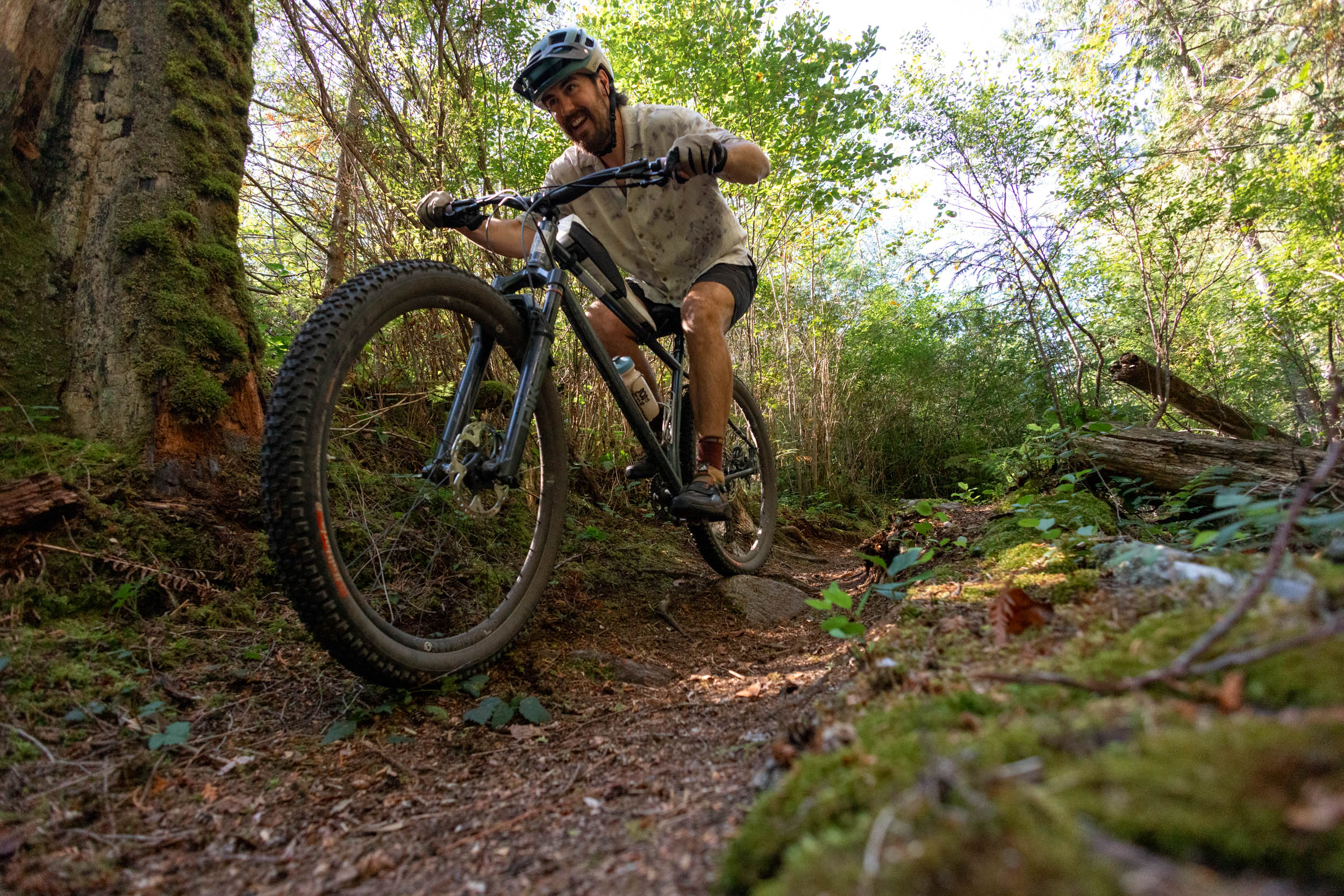
Snapshots from a recent spin Lucas took around Hall Ranch, which happens to be one of his local trail areas.
The moral of the story is that comparing bikes, no matter where they are made, isn’t easy. This may sound corny, but it comes down to whether you connect with the brand and/or framebuilder, and whether you get a chance to test the bike and feel how it rides. Daniel Yang described getting a custom handmade bike as being more about the “experience” than the bike itself, but I think there’s room for both.
First Impressions and Ride Feel
The Hall Pass is named after Hall Ranch in Lyons, Colorado, where Reeb began testing bikes more than 15 years ago. According to Jeff, this area has techy climbing and twisty, rocky downhills, which are perfect for the Hall Pass. Luckily for me, my local trails have all that and more, making them ideal testing grounds for a hardtail built for proper trail riding.
The Hall Pass I pieced together using Reeb’s online bike builder arrived perfectly packed and tuned, an added bonus of working with a brand that also offers custom, domestically produced bikes. Unlike production bikes that come straight to the customer or dealer from Taiwan, Reeb’s custom builds are still built up at Reeb’s workshop in Colorado. It lets customers choose the parts and price they want, and it also gives Reeb a chance to flex their hand-built muscles and attention to detail.
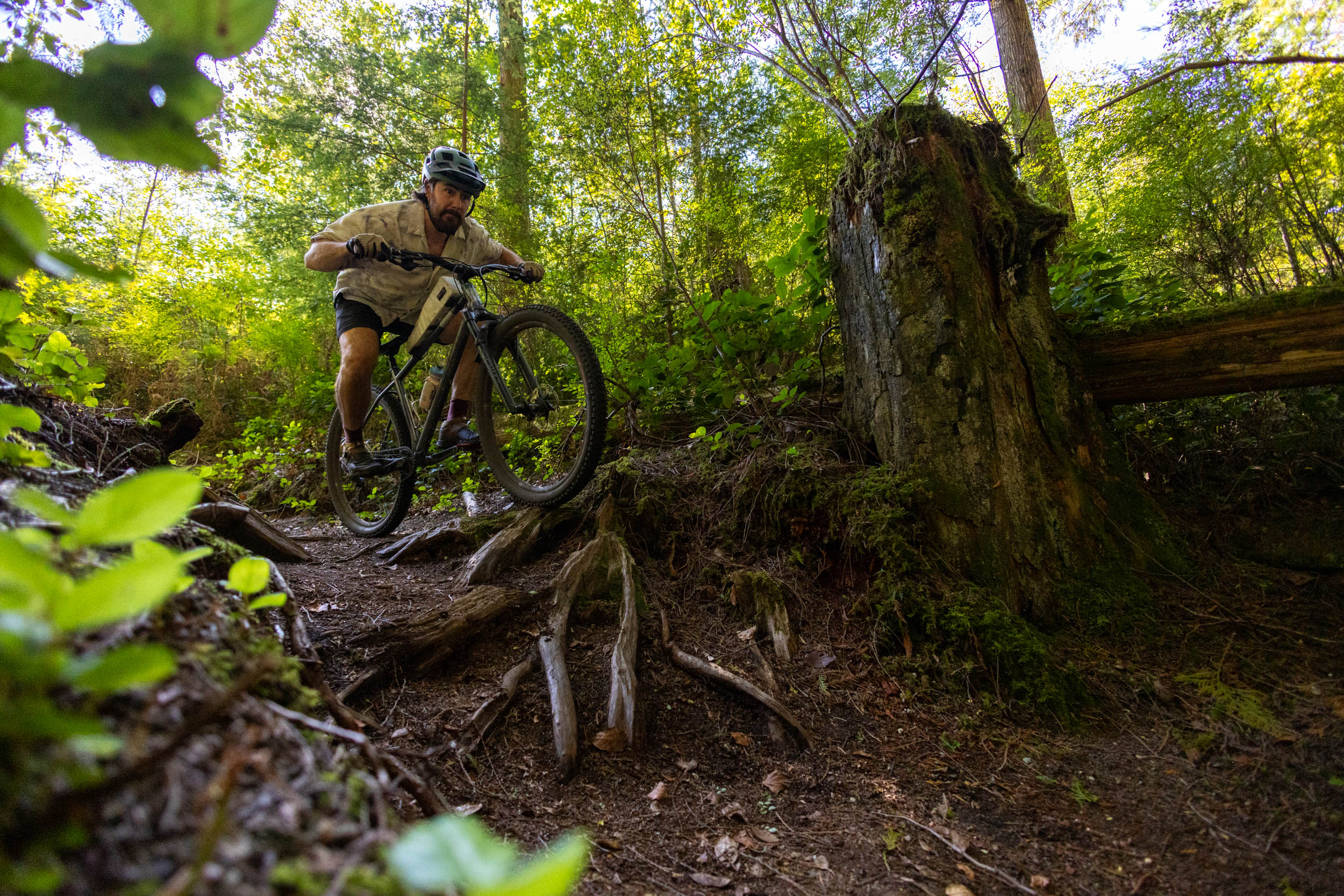
I’m not sure what I expected from the Hall Pass, but my first ride revealed much of what I’d experience over the next few months. There’s an energetic, nimble ride quality that’s hard to shake when you hop on the Hall Pass. It made me want to wheelie, fly around corners, and just go. Compared to many modern hardtails, which seem to take cues from bigger-travel trail bikes by going longer and slacker, the Hall Pass reminded me why I fell in love with hardtails in the first place. There’s a lot of things that feed into this, but I think the Hall Pass’s chunky downtube and seat tube make for a stiff, responsive ride quality that’s ideal for quick front wheel lifts, tight corners, and accelerating out of everything.
All told, the Hall Pass’s high-quality tubeset and geometry seem to pair perfectly, almost as if it were a custom bike from the start. As mentioned earlier, its Taiwan-made tubing is drawn to the same specs as the “higher-quality” Velospec tubing, and it comes through. The bike feels lively, responsive, and incredibly comfortable to ride hour after hour. I haven’t ridden the Neuhaus Hummingbird, but looking at Logan’s review, both bikes seem to share a similar demeanor. They also have similar angles, including adjustable chainstays with a short 420mm setting that makes the bike feel mobile and easy to move around on the trail. I’ve ridden plenty of steel hardtails that have felt harsh at times, and that’s simply not the case with the Hall Pass.
Geometry and Comparisons
The Hall Pass has a 65.5° head tube angle, 420 to 435mm chainstays, a 60mm bottom bracket drop, and is designed to run a 130mm travel fork. These numbers are consistent across the four frame sizes, and the major difference between the Hall Pass and other modern hardtails we’ve tested recently, such as the Esker Japhy and Neuhaus Solstice, is the shortened rear end and increased stack. It’s hard to imagine Jeff’s professional freeride and trials background hasn’t influenced the Hall Pass’s design, because it’s impressively agile and begs to move around.

Left: Hall Pass, Right: Neuhaus Hummingbird
I ran this by Jeff, and he said the early versions of the Re:Dikyelous, which inspired the Hall Pass, were fully intended to be fun, playful bikes for the technical riding he excelled at. In fact, the original model is the only bike to climb up Horsethief Drop in Fruita, Colorado. You can watch Jeff’s impressive effort here. The Hall Pass kept much of that bike’s DNA, but Reeb tweaked it to be more effective for all-day trail riding.
Reeb Hall Pass Geometry
| Seat Tube (C-T) | 405 | 435 | 450 | 465 |
| Effective Top Tube | 594.5 | 617 | 640.5 | 663 |
| Reach | 425 | 445 | 465 | 485 |
| Stack | 632.5 | 641.5 | 655.5 | 664.5 |
| Effective Seat Tube Angle | 75° | 75° | 75° | 75° |
| Head Tube Angle | 65.5° | 65.5° | 65.5° | 65.5° | Chain Stay Length | 420-435 | 420-435 | 420-435 | 420-435 |
| Head Tube Length | 95 | 105 | 120 | 130 |
| Fork Axle to Crown Length | 540 | 540 | 540 | 540 |
| Fork Offset | 44 | 44 | 44 | 44 |
| BB Drop | 60 | 60 | 60 | 60 |
| Wheelbase | 1150-1164 | 1174-1188 | 1200-1214 | 1224-1238 |
The Neuhaus Hummingbird shares many of the same angles and measurements as the Hall Pass, with the major difference being that the Hummingbird comes in five sizes, not just four. The four larger sizes all align neatly, but the smallest Hummingbird is much smaller than the smallest Hall Pass, spreading across a wider range of riders. It’s also not too dissimilar from the Neuhaus Solstice, but with the Hummingbird’s shorter, theoretically more agile wheelbase. Looking at the comparison chart below, which has been adjusted to show sagged figures, we can see the Hall Pass’s wheelbase is on the shorter end of the spectrum, and its stack is generously high when compared to other 120/130mm hardtails.
Steel Hardtails Compared (L)
| Reeb Hall Pass (130mm) | 66.6° | 1190 | 478/646 | 29×2.6″ |
| Marin Pine Mountain (120mm) | 67.5° | 1178 | 464/613 | 29×2.6″ |
| Neuhaus Hummingbird (120mm) | 67° | 1190 | 483/642 | 29×2.5″ |
| Neuhaus Solstice (130mm) | 66.1° | 1220 | 484/647 | 29×2.6″ |
| Esker Japhy (120mm) | 66° | 1192 | 470/625 | 29×2.8″ |
| Mason Raw (120mm) | 66° | 1204 | 471/628 | 29×2.6″ |
| Panorama Taiga (130mm) | 64.5° | 1213 | 480/621 | 29×2.8″ |
| Pace RC429 (120mm) | 65.5° | 1215 | 475/633 | 29×2.6″ |
| Fairlight Holt (120mm) | 67° | 1187 | 470/625 | 29×2.6″ |
Geometry displayed (or adjusted) for sag
The only downside to Reeb’s short chainstays is that they flare out aggressively toward the axle, and I regularly hit my heel on the chainstay during awkward trail moves or lazy foot placements. With my size 11.5 US shoes, I’m curious what riders with larger feet or those who like their feet position tight to the bottom bracket would experience.
Hall Pass Goes Bikepacking
For the first time since scouting it six years ago, I returned to the Powell River Sampler route to test the Hall Pass fully loaded. It offers the perfect mix of terrain to test mountain bikes. There’s a little bit of everything: steel gravel climbs, low-angle techy singletrack, some steep sections, and a mix of doubletrack and maintained gravel roads.
The added weight of a shoulder-season bikepacking kit subdued the bike’s playful demeanor, but only slightly. It still excelled on the techy, twisty sections of the trail that require light, nimble handling to ride comfortably. It’s not a point-and-destroy type of bike that plows through everything in its path. Instead, you’ll only get what you put into it, which can be as little or as much as you like. For more stability, the adjustable rear dropouts can increase the chainstays by up to 15mm, but I had a blast riding in the short position.
A few years ago, I might have complained about the lack of rack mounts, but with cargo axles and universal-fit racks, it’s easy to attach a lightweight rack. The main triangle isn’t massive, thanks to its low standover and short headtube, but I’m not surprised, since the Hall Pass isn’t necessarily meant to be a dedicated bikepacking rig. However, bikepackers will still appreciate features like adjustable dropouts (for emergency singlespeed setups), raised seat tube mounts, downtube mounts, and external cable routing.
Despite all the positives, it was clear the Hall Pass felt more at home on unloaded singletrack or big day rides. While comfortable, something didn’t feel quite right about grinding away for hours on end without a technical feature or move to keep things spicy. At times, it felt like the Hall Pass required active body movement and constant handling to keep it where I wanted it. This was fine on singletrack but less ideal on long, mixed-terrain rides. After all, playful and maneuverable aren’t always attributes that long-distance riders seek.

For another perspective, I let my good friend Harry Tudor ride the Hall Pass for a few days during a recent visit. Harry is by far the most talented, effortlessly creative rider I know. If he’s not wheelieing down the trail, he’s almost always manipulating the bike in ways I can’t quite comprehend. The best part? He’s not a dick about it. He rides because he loves it, and it shows.
Harry’s Two Cents: Wheelie Fun
The Hall Pass was shocking to wheelie. On my first zip around the block, I think I told Miles that the seated wheelie position almost felt more natural than seated pedaling, and I hold to it. I have never been on a bike so eager to cruise around on the back wheel, and I love it. Thanks, Jeff Lenosky; your style shines through. The unserious, fun-forward nature was evident the whole time riding this bike. Whether wheeling or not, the Hall Pass wants to play around—an attitude I wholly get along with.
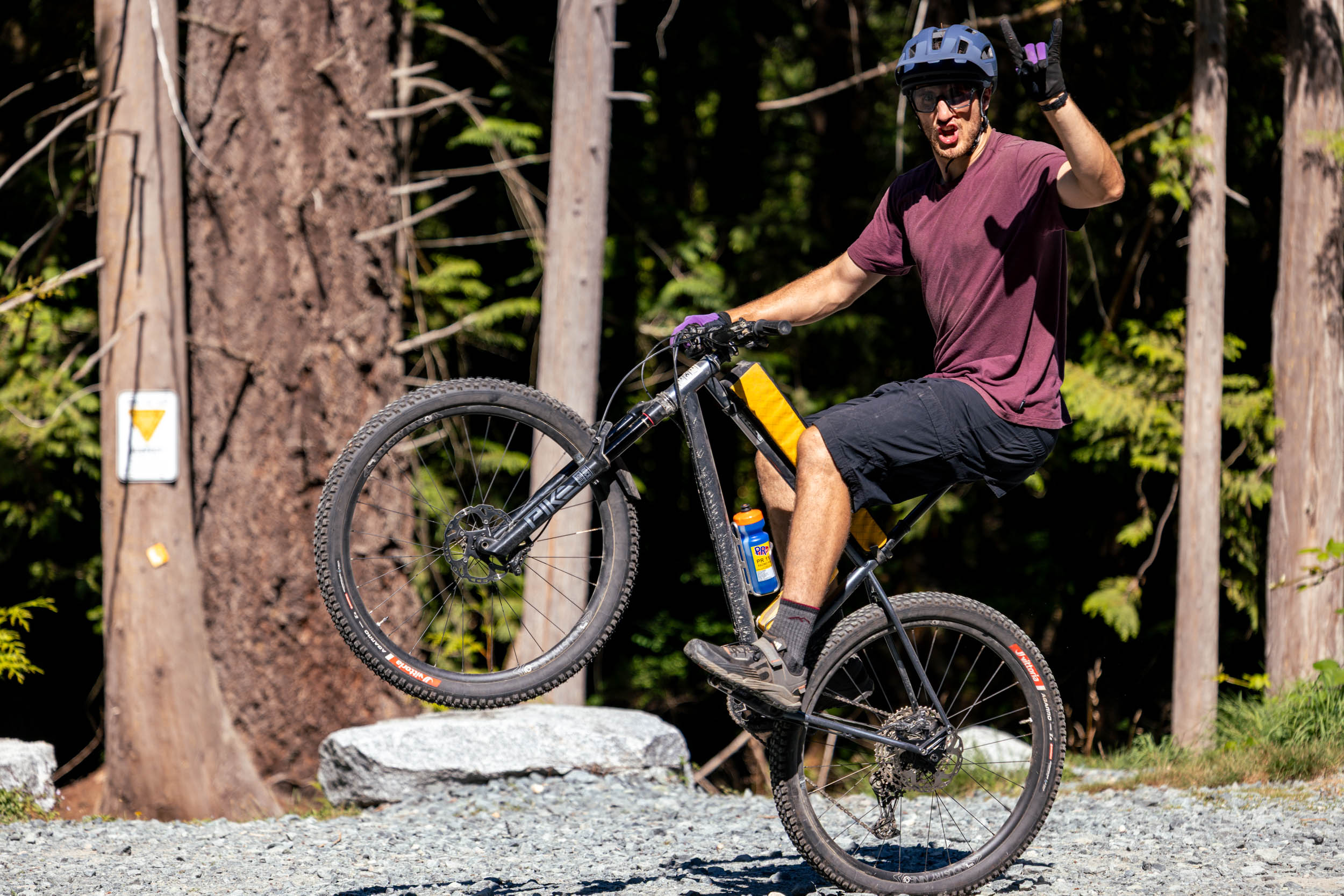
This bike flies on climbs. Its shorter reach and steep-ish seat tube create a nice upright climbing position, giving the rider plenty of front wheel control and a powerful pedaling position for awkward steeps. The seated position is comfortable when riding on flat ground (i.e., gravel or pavement), but not the most comfortable for me. At 6’5” tall, I tend to feel most comfortable on a bike with a reach of around 500mm, especially with the steep seat tubes that we find on most modern trail bikes nowadays. The 485mm reach, plus the 75-degree seat tube angle, gives me a pretty upright position for my body shape. Is it cramped? Not quite, but it’s flirting with cramped-ness.
Where the bike falls short for me is on long, flat rides. The whole setup just doesn’t feel quite as relaxed as longer bikes with slacker seat tubes. I don’t think this was a problem for Miles, however, and may just be a sizing thing. If I were between sizes and wanted to do extended bikepacking trips, I would likely size up.
I’d happily take that slight flat-riding tradeoff for how great it is on the trails. I wouldn’t change the geometry one bit for the downs, and I think the package that they’ve landed on is one of the most fun setups I’ve ridden if you love to bounce and play. While the short chainstays and slightly shorter reach (compared with other “hardcore” 130mm hardtails) may not make it the most “point and plow” bike I’ve ever ridden, I think those same numbers make the ride incredibly engaging and fun. Something about this bike makes you want to dive into corners, bunnyhop stumps, take cheeky lines, and generally goof off. It is so satisfying to have a thought and act on it instantly. See a rock, hop a rock. See a stump, bump a stump.
The Hall Pass lets you react instantly to intrusive trail thoughts, without needing things like “planning” and “caution.” It’s just wickedly, wickedly fun. With more time on this bike, I would have loved to play around with the chainstay length (I only rode it at the shortest setting) and try some meatier tires to see what upper limit of trail capability it could unlock. I suspect it would be surprisingly high.
Value + Getting Your Hall Pass
The Hall Pass is available in all sizes and most colors. A frame costs $1,299 USD, and Reeb offers several complete builds, starting at $3,177 for the Shimano Deore 12-speed build with a Marzocchi Bomber Z2 Fork. You can also use Reeb’s custom bike builder to select almost every component for a more tailored build.
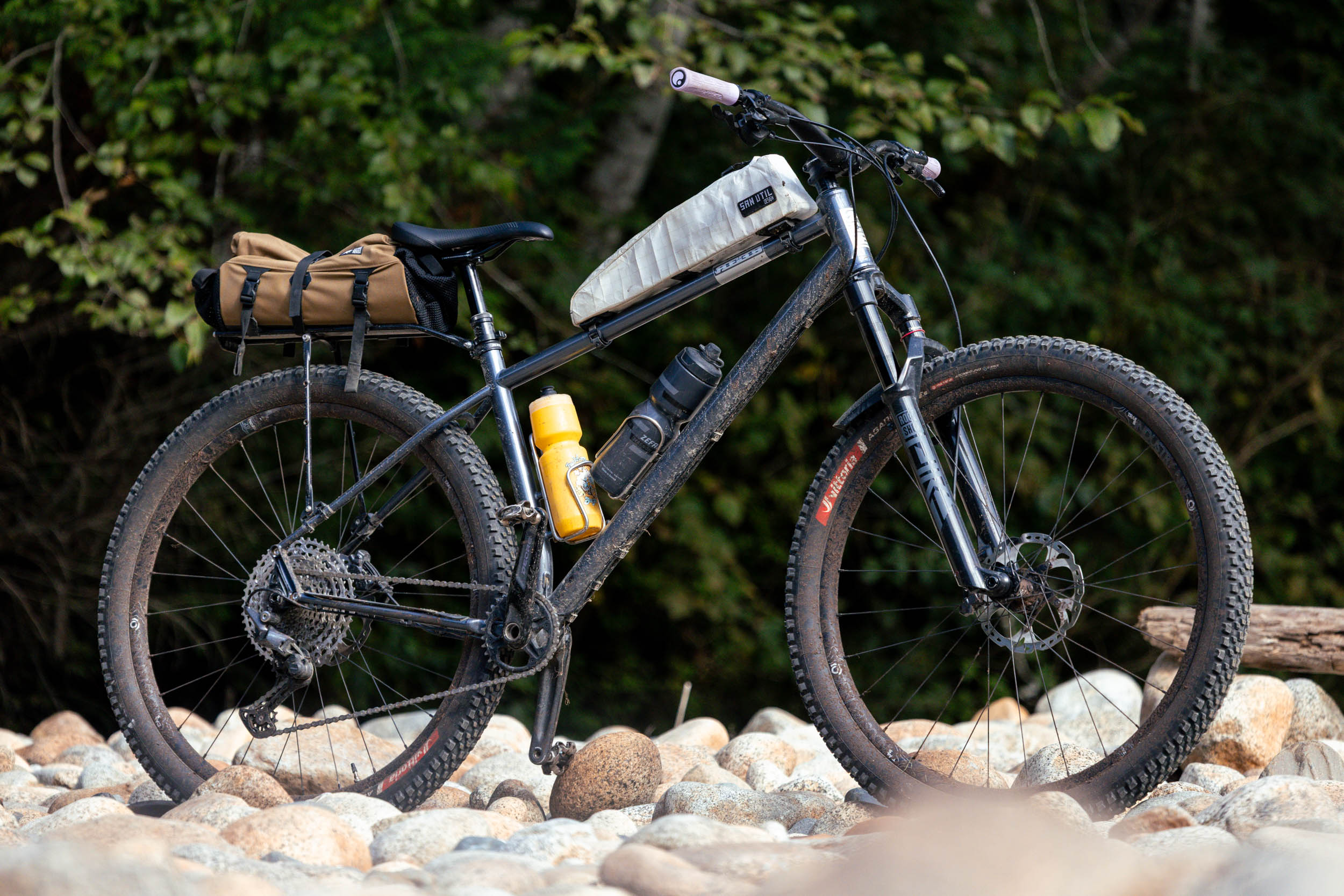
Curating your own build offers several perks. First, you get exactly what you want. In the case of the Hall Pass I tested, I wasn’t interested in a top-end build, which is what brands usually prefer to send for media reviews. I don’t blame them, as they look good and perform well, but in the case of a quality steel hardtail, the performance benefits of a $6,000 build versus a $4,000 build are mostly negligible in my experience.
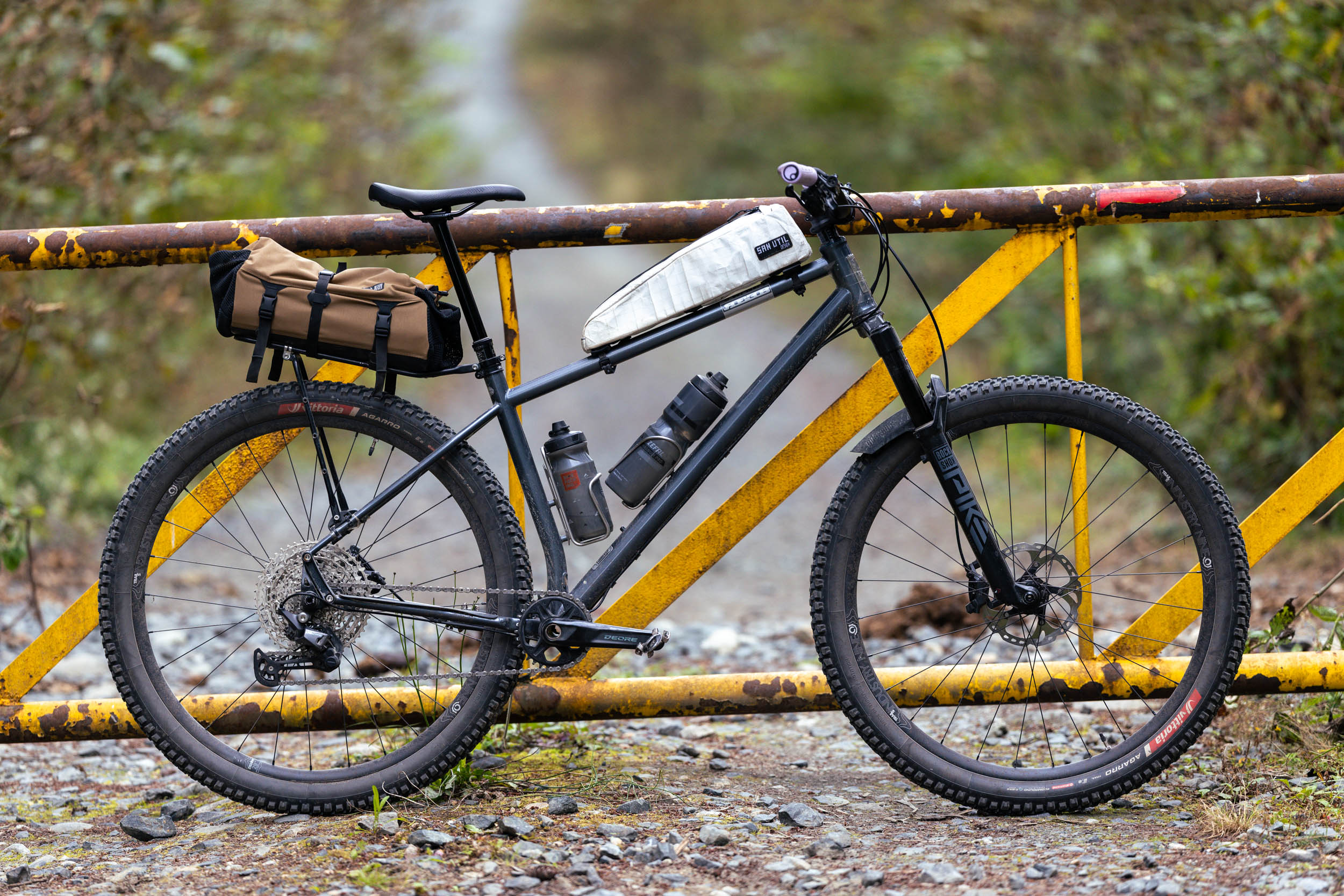
Custom Reeb Hall Pass Build Kit
- Frame: Reeb Hall Pass
- Fork: RockShox Pike Select Charger RC, 130mm
- Crankset: Shimano Deore 12-Speed
- Derailleur: Shimano Deore 12-Speed
- Shifter: Shimano Deore 12-Speed
- Cassette: Shimano Deore CS-M6100-12, 10-51T
- Bottom Bracket: Shimano 73mm BSA Threaded
- Front Wheel: Industry Nine 1/1 Trail, Alloy
- Rear Wheel: Industry Nine 1/1 Trail, Alloy
- Front Tire: Vittoria Agarro Trail 29″ x 2.6″
- Rear Tire: Vittoria Agarro Trail 29″ x 2.6″
- Headset: Cane Creek 40
- Handlebar: OneUp Carbon, 20mm Rise (swapped for 50mm rise)
- Stem: Race Face Aeffect R, 40mm
- Grips: OneUp Thick Lock-On
- Saddle: WTB Volt
- Seatpost: OneUp V3
- Dropper Lever: OneUp V3 Remote
- Brake Levers: Shimano XT 8200
- Brake Calipers: Shimano XT 8220, Four Piston
- Rotors: Shimano XT, Ice Tech
Using Reeb’s bike builder, I put together a $4,100 complete build that meets my demands from a modern hardtail. There are a few base-level components, including a Shimano Deore 12-speed drivetrain, which performed flawlessly and is cheap to replace, and Industry Nine alloy wheels with 1/1 hubs. The Shimano XT four-piston brakes are slightly more expensive than the other options, but good brakes are a worthwhile investment. Other parts, such as the OneUp dropper post and RockShox Pike Select fork, are perfectly suitable mid-tier components and also functioned great during my test period. The idea was to let the Hall Pass frame do the talking, and I feel like this build achieved that. The only downside of the build I pieced together is that it’s on the heavier side, at 31.5 pounds (14.2 kilograms), but that never seemed to hold it back.
- Model/Size Tested: Reeb Hall Pass, XL
- Actual Weight: 14.2 kilograms (31.5 pounds)
- Place of Manufacture: Taiwan
- Frame Price: $1,399 USD
- Build Price: $4,100 USD
- Manufacturer’s Details: Reeb Cycles
Pros
- Balanced, incredibly playful geometry that plays nicely on technical singletrack.
- Custom-drawn tubeset is responsive and comfortable on long rides.
- Just as nice as the US-made Re:Dikyelous but $1,000 less.
- Portage dropouts, external cables, raised seat tube bosses, and plenty of room for 29 x 2.6” tires.
- Great for wheelies!
Cons
- Playful demeanor isn’t as ideal for long-distance, multi-day rides.
- No rack mounts.
- Not as fun to ride with a heavy bikepacking setup.
- A little pricey compared to other steel hardtail frames.
- Chainstays flare out drastically and can result in heel rub.
Wrap Up
I didn’t expect Reeb to be so forthcoming about the similarities between the Re:Dikyelous and the Hall Pass, but I appreciate their honesty. Between ever-changing tariffs, shipping fees, and rising material costs, consumers seem to be extra sensitive to where products are made and the price that comes with it. And it feels like everyone is trying to save money where they can. “Made in Taiwan” gets a bad rap, but the Hall Pass shows just how good Taiwan-made bikes can be with the right inputs. Some sources say Taiwan exports more than two million bicycles every year (Taiwan Excellence, 2020). They’ve been at it longer than most, and it shows.
If you’re on the hunt for a high-quality, impossibly fun hardtail, the Hall Pass should be high on your list. You don’t have to be a wheelie master like Harry to have loads of fun on it, but some existing bike handling skills will surely fast-track it. It has all the right specs in the right places, and its lower price point will undoubtedly get Reebs into the hands of more riders.
Further Reading
Make sure to dig into these related articles for more info...
Please keep the conversation civil, constructive, and inclusive, or your comment will be removed.








 English (US) ·
  French (CA) ·